A colleague of mine — a veteran fund manager with 20 years under his belt — pulled me aside at a conference last month and said something that stuck with me: “Everyone’s watching NVIDIA’s earnings. Nobody’s watching the Brent crude chart. That’s the mistake.” At first, I thought he was just being contrarian. But the more I dug into the data, the more I realized he was onto something that most retail investors completely miss in 2026.
The relationship between oil price cycles and semiconductor industry cycles isn’t obvious at first glance. But once you understand the underlying mechanics — energy costs, geopolitical capital flows, emerging market purchasing power, and manufacturing input costs — you start seeing the correlation everywhere. Let’s work through this together.
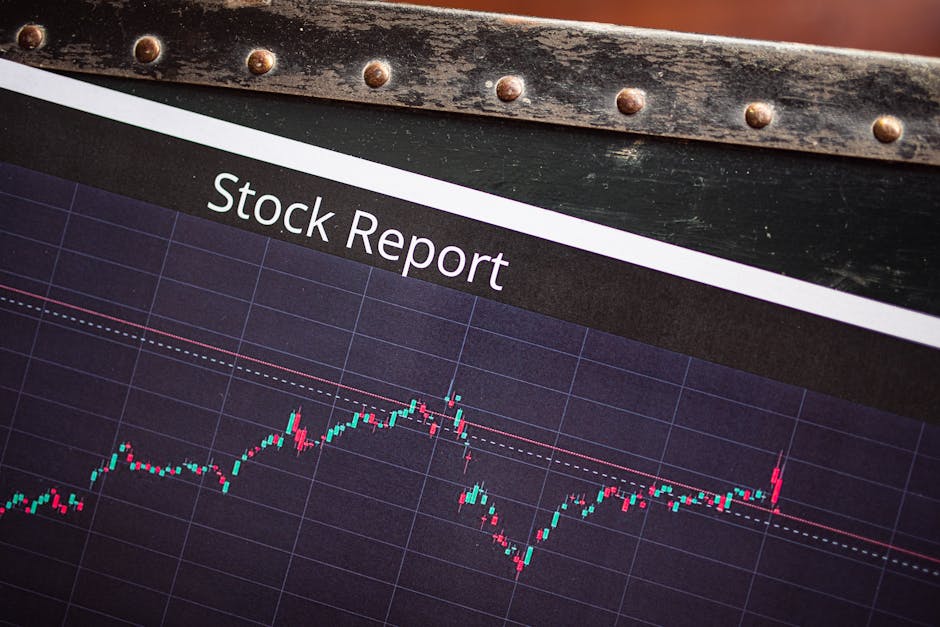
Why Oil Prices Actually Drive Semiconductor Demand
Here’s the foundational logic: when oil prices rise sharply (above ~$90/barrel WTI), petrodollar economies — Saudi Arabia, UAE, Kuwait, Norway’s sovereign wealth funds — flush with cash and start deploying capital into infrastructure, AI data centers, and industrial automation. That spending translates directly into orders for advanced semiconductors. Conversely, when oil crashes below $60/barrel, these same sovereign funds retrench, and a significant demand pillar for high-end chips quietly disappears from order books.
In 2026, we’re sitting at a particularly interesting inflection point. As of April 2026, WTI crude has been oscillating in the $72–$82 range after a volatile 2025 that saw prices spike to $96 following Middle East tensions and then crater to $63 during the Q3 2025 OPEC+ supply dispute. This mid-cycle positioning is historically one of the most nuanced periods for semiconductor investors.
The 2026 Semiconductor Landscape: Where We Actually Stand
Let’s get specific with the numbers. The global semiconductor market is projected to reach approximately $720 billion in 2026, according to data from WSTS (World Semiconductor Trade Statistics) and cross-referenced with Gartner’s Q1 2026 forecasts. After the brutal inventory correction of 2023 and the AI-driven recovery through 2024–2025, we’re now in what analysts at Morgan Stanley describe as a “mid-cycle normalization” phase.
Key data points to anchor your thinking:
- Memory (DRAM/NAND): HBM3E prices remain elevated at ~$18–22 per unit, but conventional DDR5 pricing has moderated ~15% YoY, suggesting the consumer/PC segment is still soft while AI infrastructure demand stays hot.
- Logic (Foundry): TSMC’s 2nm capacity is ramping at Fab 21 (Arizona) and Hsinchu, with utilization rates reportedly above 85% for advanced nodes — a healthy signal.
- Analog & Power Semiconductors: Still digesting 2024 inventory bloat, with lead times returning to 12–16 weeks. Industrial and automotive end-markets are the soft spots.
- AI Accelerators: NVIDIA H200/B200 and AMD MI350 remain constrained; CoWoS-L advanced packaging is the real bottleneck, not silicon itself.
- Oil-energy correlation: At current $75 WTI range, historical regression models suggest neutral-to-slightly-positive semiconductor demand conditions — not euphoric, but not contractionary.
Decoding the Oil-Semiconductor Cycle: Three Historical Patterns
After studying data going back to the 1990s, three distinct patterns emerge when mapping oil cycles against semiconductor up/down cycles:
Pattern 1 — The Petrodollar Amplifier (Oil $80–$100): High oil revenue flows into Gulf sovereign wealth funds (ADIA, PIF, QIA), which allocate heavily to tech infrastructure. This is historically the sweet spot for semiconductor equipment stocks like ASML, Applied Materials, and Lam Research. The 2021–2022 oil super-cycle period saw ASML hit record order backlogs precisely during this window.
Pattern 2 — The Energy Cost Squeeze (Oil $100+): Once oil sustainably exceeds $100, semiconductor fabs — which are among the most energy-intensive industrial facilities on earth, consuming 100–200 MW per large fab — see margin pressure. TSMC’s power costs in Taiwan became a material earnings discussion point in late 2022 for exactly this reason. This is when utility contracts and energy hedging strategy become stock price drivers.
Pattern 3 — The Demand Destruction Zone (Oil below $60): Cheap oil historically sounds good, but for semiconductors, a sustained low-oil environment signals broader economic weakness and emerging market currency stress (as petrodollar recycling dries up). The 2015–2016 oil collapse coincided almost precisely with a semiconductor industry downturn. Korea’s KOSPI semiconductor sub-index dropped ~28% during that window.
Case Studies: What Global Investors Are Doing in 2026
Let’s ground this in real-world moves happening right now.
Samsung & SK Hynix (Korea): Both companies have been vocal in 2026 earnings calls about energy cost management. SK Hynix signed a landmark 10-year renewable PPA (Power Purchase Agreement) in Q1 2026, effectively decoupling a significant portion of their fab costs from oil/gas price volatility. This is actually a sophisticated hedge that investors undervalue — check their IR materials at investor.skhynix.com for the details.
Saudi Aramco’s KAEC Chip Initiative: The Saudi government’s NEOM and KAEC (King Abdullah Economic City) semiconductor cluster — partially funded by Aramco’s upstream revenue — has attracted partnerships with GlobalFoundries and several Korean packaging firms in 2026. This is the petrodollar cycle in action in real time: high oil revenues literally funding chip capacity.
ASML’s Middle East Expansion: ASML opened a regional technical center in Dubai in late 2025, explicitly to service the growing semiconductor manufacturing ambitions of Gulf nations. This is a tells-you-everything-you-need-to-know data point about where oil money is flowing.
U.S. CHIPS Act Follow-Through: Intel’s Ohio fab, TSMC Arizona Fab 21, and Samsung Taylor (Texas) are all in various stages of 2026 ramp — with U.S. government subsidies partially insulating them from short-term oil-driven cost pressures. The policy layer is a new variable in the oil-semi correlation that didn’t exist in previous cycles.
The 2026 Investment Strategy: A Tiered Approach
Given all of the above, here’s how I’d structure a semiconductor portfolio in the current oil mid-cycle environment — and note, this is analytical framework, not financial advice:
- Tier 1 — Core AI Infrastructure Holdings (40–50% of semiconductor allocation): NVIDIA, TSMC ADR, Broadcom. These are relatively oil-price insensitive because hyperscaler AI capex ($500B+ committed through 2027 across Microsoft, Google, Meta, Amazon) has its own momentum. Hold through volatility.
- Tier 2 — Oil-Cycle Beneficiaries (15–20%): Semiconductor equipment stocks — ASML, Applied Materials, KLA Corp — tend to outperform when oil is in the $75–$95 range because it signals Gulf sovereign fund activity and global industrial investment. We’re in that range now.
- Tier 3 — Memory Turnaround Plays (15–20%): SK Hynix remains the cleanest HBM story. Samsung is the more contrarian bet with higher upside if their HBM4 qualification with NVIDIA closes in H2 2026. Watch for this catalyst.
- Tier 4 — Defensive Analog/Power Semi (10–15%): Texas Instruments, ON Semiconductor, Infineon. These underperform in a hot AI market but provide ballast if oil spikes above $95 and broad macro conditions deteriorate.
- Tier 5 — Emerging Market Fab Plays (5–10%): Exposure to the Saudi/UAE semiconductor buildout via GlobalFoundries or Japan’s Rapidus partnerships — higher risk, multi-year horizon.
Risk Scenarios You Need to Price In
No framework is complete without the bear cases:
- Oil spikes above $95 on geopolitical shock: Watch for margin pressure at energy-intensive fabs, and potential demand destruction in price-sensitive end markets (consumer electronics). Rotate toward energy-hedged operators (SK Hynix with their PPA) and reduce exposure to older-node fabs with no energy contracts.
- Oil crashes below $60 on recession signals: This is actually the more dangerous scenario. Reduce memory exposure immediately, shift to fabless companies (NVIDIA, AMD, Qualcomm) which don’t carry fab energy costs.
- U.S.-China tech decoupling escalation: SMIC and Chinese domestic chip ecosystems could disrupt global pricing dynamics independent of oil cycles. This is a 2026-specific geopolitical tail risk with no clean historical analog.
- AI capex slowdown: If one hyperscaler materially cuts data center spending — which would likely show up first in Microsoft or Google guidance — the AI semiconductor premium compresses fast. This is the one risk that has nothing to do with oil and everything to do with revenue model viability for LLMs.
The Practical Monitoring Framework
Here’s the actual workflow I use to stay ahead of cycle turns. Set up alerts on these specific indicators:
- WTI and Brent crude weekly close — flag any move outside $65–$90 range as requiring portfolio review
- SEMI Book-to-Bill ratio (published monthly by SEMI.org) — above 1.0 is expansionary, below 0.9 is early warning
- DRAM spot prices on DRAMeXchange (TrendForce) — momentum indicator for memory cycle direction
- ASML monthly order intake — the longest leading indicator for the entire industry (12–18 month lead)
- Saudi Aramco quarterly capex guidance — direct read-through to Gulf SWF risk appetite
- Taiwan MOEA semiconductor export data (monthly) — ground truth on actual shipment volumes
The beauty of building this monitoring framework is that you’re rarely surprised by cycle turns — you see them coming 2–3 quarters out, which is all the runway you need as an investor.
Now, a word of caution: don’t fall into the trap of treating the oil-semiconductor correlation as deterministic. It’s one input among many. In 2026, the AI infrastructure buildout has added a demand variable that partially decouples high-end chip demand from traditional macro cycles. The correlation is strongest in the memory and analog segments, weaker in AI accelerators and leading-edge logic. Calibrate accordingly.
If you’re not ready to build individual stock positions, semiconductor ETFs like SOXX (iShares Semiconductor ETF) or SMH (VanEck Semiconductor ETF) give you broad exposure while you develop conviction on individual names. They’re not perfect — both are heavily NVIDIA-weighted — but as a starting point while you study the cycle, they’re entirely reasonable.
Editor’s Comment : The oil price-semiconductor cycle relationship is one of the most underappreciated macro frameworks in tech investing — and in 2026, with the current $72–$82 WTI range sitting in the historical “sweet spot” for semiconductor equipment and infrastructure spending, the setup is genuinely interesting. The biggest mistake I see investors make is treating semiconductors as a pure tech sector story and ignoring the energy economics and petrodollar capital flow layer entirely. Layer in the AI capex tailwind that has partially decoupled top-tier chip demand from traditional cycles, and you have a complex but navigable investment landscape. Start with the monitoring framework, watch the leading indicators religiously, and let the data tell you when to lean in or pull back. The cycle always turns — the edge is knowing which direction it’s turning before the consensus catches up.
📚 관련된 다른 글도 읽어 보세요
- 원자재 ETF 장단점 수익률 완전 분석: 월가가 숨기는 진짜 리스크와 2026년 투자 전략
- Complete Guide to Health Screenings After Age 70: What You Must Check in 2026
- Small Modular Reactors (SMRs) in 2026: A Practicing Engineer’s Deep Dive into Safety, Pros, and Cons
태그: semiconductor investment 2026, oil price cycle semiconductor, chip market analysis 2026, TSMC Samsung SK Hynix investment, AI semiconductor stocks, petrodollar semiconductor demand, semiconductor cycle strategy