A few months back, I was sitting in on a grid reliability workshop in Seattle — the kind where utility engineers, policy wonks, and startup founders all end up arguing over coffee that’s gone cold. Someone from a Pacific Northwest co-op dropped a line that stuck with me: “We’ve been waiting 40 years for nuclear to get small enough to actually fit our problem.” That sparked a two-hour rabbit hole into Small Modular Reactors (SMRs), and honestly, I haven’t stopped digging since.
SMRs are no longer a fringe concept sketched on whiteboards. By April 2026, we’ve got operating units, construction permits, and a very heated debate about whether they’re as safe as their proponents claim — or whether the risks are being glossed over in the rush to decarbonize. Let’s actually look at the engineering, not just the marketing deck.
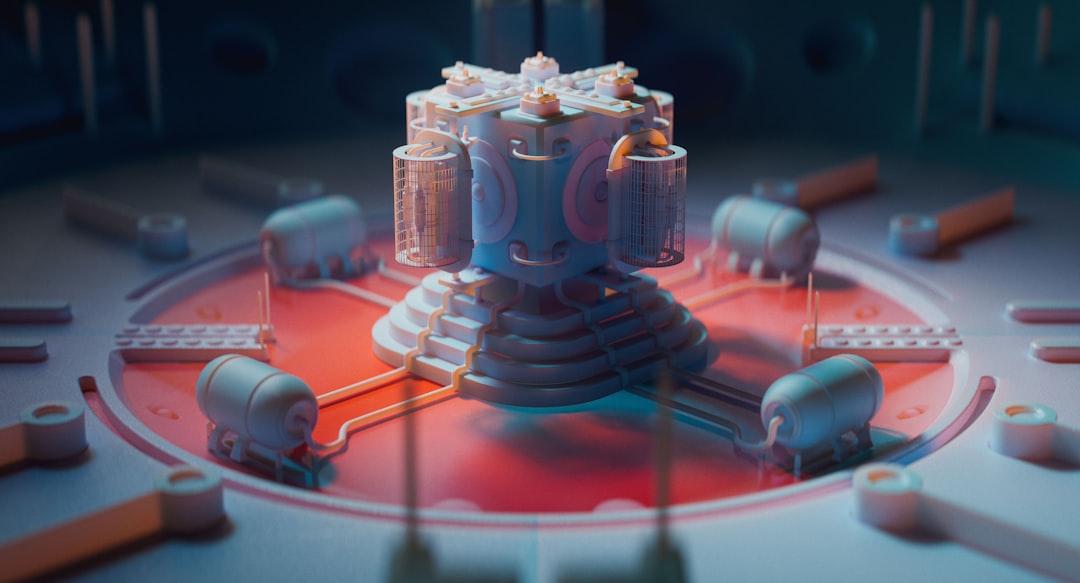
What Exactly Is an SMR? (Let’s Get the Definitions Right)
Before we go anywhere near safety analysis, we need to be precise — because “SMR” has become a bit of a catch-all term that covers very different reactor designs. The International Atomic Energy Agency (IAEA) defines SMRs as reactors with an electrical output of 300 MWe or less, compared to conventional large-scale reactors which typically run 1,000–1,600 MWe.
But within that bracket, you’ve got:
- Light Water Reactors (LWRs) — scaled-down versions of conventional pressurized or boiling water reactors (e.g., NuScale VOYGR, GE-Hitachi BWRX-300)
- High-Temperature Gas-Cooled Reactors (HTGRs) — use helium as coolant, graphite as moderator (e.g., X-energy Xe-100)
- Molten Salt Reactors (MSRs) — fuel dissolved in liquid fluoride or chloride salts (e.g., Terrestrial Energy IMSR)
- Sodium-Cooled Fast Reactors (SFRs) — use liquid sodium instead of water (e.g., TerraPower Natrium)
- Microreactors — sub-10 MWe units designed for remote or military applications
Each of these has a fundamentally different safety profile. Lumping them together in a safety discussion is like comparing a motorcycle and a semi-truck just because both have wheels.
The Core Safety Philosophy: Passive Safety Systems
Here’s where SMR advocates make their strongest argument — and to be fair, the engineering is genuinely compelling. Traditional large reactors rely heavily on active safety systems: electrically-driven pumps, redundant control circuits, operator interventions. When those fail (see: Fukushima Daiichi, 2011), the consequences cascade.
SMRs, particularly the LWR-based designs, are engineered around passive safety — physics does the work. No power, no pumps, no operator action required. Gravity, natural convection, and the physical properties of materials handle emergency cooling.
NuScale’s VOYGR design, for instance, received its Design Certification from the U.S. Nuclear Regulatory Commission (NRC) — making it the first SMR to do so. The reactor module sits submerged in a pool of water. In any accident scenario, decay heat is passively removed for an indefinite period. The NRC’s probabilistic risk assessment found a core damage frequency (CDF) of approximately 2.42 × 10⁻⁸ per reactor-year — roughly two orders of magnitude lower than conventional large LWRs, which typically sit around 10⁻⁶ per reactor-year.
That’s not marketing spin — that’s a real regulatory finding backed by fault tree analysis and thousands of hours of thermal-hydraulic modeling.
Quantifying the Safety Advantages: Where the Data Gets Interesting
Let me share some of the specific metrics that engineers actually use when evaluating nuclear safety:
- Core Damage Frequency (CDF): NuScale VOYGR targets ~2.4 × 10⁻⁸/reactor-year vs. ~10⁻⁶/reactor-year for Generation III+ large reactors
- Large Early Release Frequency (LERF): SMR designs target below 10⁻⁹/reactor-year — meaning the probability of a large radioactive release to the environment is essentially negligible on engineering timescales
- Emergency Planning Zone (EPZ): NuScale and other SMR vendors have applied for reduced EPZs — potentially down to the site boundary, compared to the 10-mile EPZ required for large reactors. The NRC approved a significantly reduced EPZ for VOYGR in 2023
- Decay heat load: Smaller core means physically less decay heat to manage post-shutdown — this is just thermodynamics, not design magic
- Modular construction: Factory fabrication reduces quality assurance variability vs. on-site construction
The South Korean SMART reactor (System-integrated Modular Advanced ReacTor) — a 100 MWe pressurized water SMR developed by KAERI (Korea Atomic Energy Research Institute) — received standard design approval from Korea’s nuclear safety commission and has been exported under a bilateral agreement with Saudi Arabia’s KACARE. Their passive safety validation data, published through IAEA TECDOC-1451 and subsequent updates, corroborates the passive cooling performance claims.
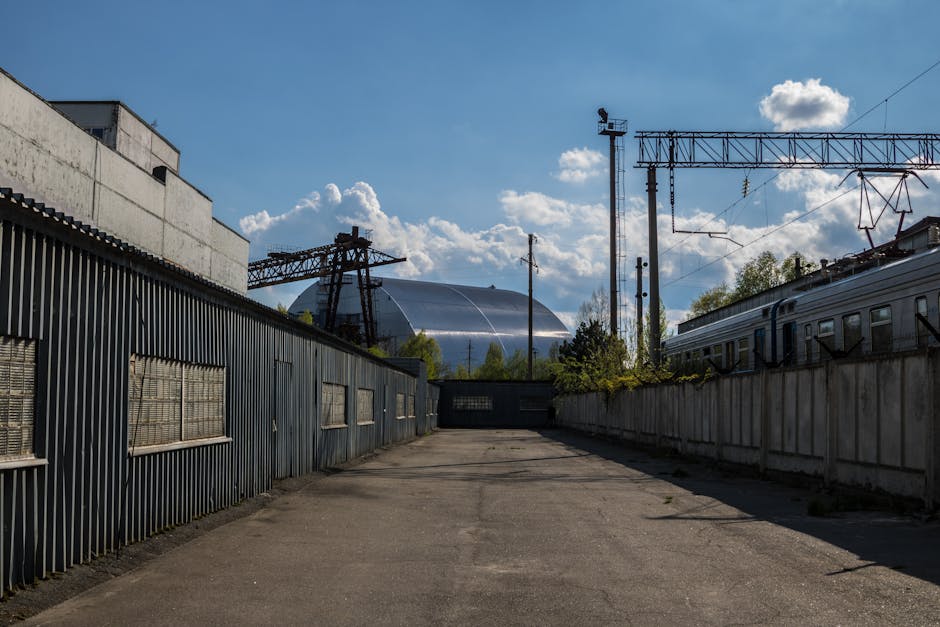
Now the Honest Part: The Real Risks and Disadvantages
I’d be doing you a disservice if I just handed you a vendor brochure. There are legitimate engineering and operational concerns with SMRs that deserve clear-eyed analysis.
1. Waste Complexity and Volume
Here’s a counterintuitive problem: SMRs may actually produce more radioactive waste per unit of electricity generated than large reactors. A 2022 study published in Proceedings of the National Academy of Sciences (PNAS) by researchers at Stanford and the University of British Columbia found that SMRs could generate 2–30 times more radioactive waste per unit energy than conventional reactors, depending on design type.
The physics reason: smaller cores have less neutron economy efficiency. More neutrons leak from the core (especially in small geometries), activating structural materials and coolants that wouldn’t be a problem in a large core. The activated coolant and structural components become low-to-intermediate level waste streams that require careful management.
Non-LWR designs face an even thornier waste problem. Sodium-cooled reactors produce activated sodium — a highly reactive material. MSRs create complex fluoride or chloride salt waste streams for which the nuclear waste management industry has essentially zero operational experience at scale.
2. Proliferation Concerns for Exported Designs
This one keeps security analysts up at night. SMRs are explicitly designed to be exportable — that’s a core part of the commercial pitch. But some advanced designs, particularly fast reactors running on higher-enriched fuel, or designs that could theoretically be configured for plutonium breeding, raise non-proliferation flags.
The IAEA’s safeguards framework was built around large centralized facilities with resident inspectors. A distributed network of smaller reactors — potentially in countries with less robust regulatory infrastructure — creates verification challenges that haven’t been fully solved. The Arms Control Association has flagged this in policy briefs through early 2026, and it’s an active area of negotiation in export licensing agreements.
3. Economics: The Factory Promise vs. First-of-a-Kind Reality
NuScale’s Idaho USNC Carbon Free Power Project was cancelled in November 2023 because the projected cost per MWh had ballooned — partly from supply chain inflation, partly from regulatory costs distributed over fewer MWe. The “economy of multiples” argument (build savings through serial factory production) only works once you’re actually producing at volume. The first few units carry enormous first-of-a-kind (FOAK) engineering costs.
As of early 2026, the Natrium project in Wyoming (TerraPower, backed partly by Bill Gates) is proceeding but cost projections have been revised upward significantly. Meanwhile, X-energy’s Xe-100 has faced funding gaps requiring additional DOE loan guarantees. The economic risk isn’t a safety issue per se, but project cancellations midway through construction introduce their own regulatory and waste management complications.
4. Cybersecurity Attack Surface
Modular, digitally integrated SMR control systems — designed for remote monitoring and potentially reduced on-site staffing — have a larger digital attack surface than older analog-heavy large reactor control rooms. The NRC’s cybersecurity framework (10 CFR 73.54) applies, but the specific threat modeling for highly networked modular fleets is still being developed. This isn’t a reason to abandon SMRs; it’s a reason to invest heavily in defense-in-depth cybersecurity architecture before deployment at scale.
International Case Studies: Who’s Actually Building These?
Let’s ground this in real-world progress rather than paper reactors:
- China — HTGR-PM (HTR-PM), Shidaowan: Two 250 MWt pebble-bed high-temperature gas reactors began commercial operation in late 2023, feeding a single 210 MWe steam turbine. This is the world’s first commercial SMR of its type. Early operational data shows the passive safety behavior of pebble-bed designs performs as predicted — no active SCRAM system required for many accident scenarios.
- Russia — RITM-200, Akademik Lomonosov: Russia’s floating nuclear power station uses RITM-200 reactors (50 MWe each). It’s been operating in Pevek, Chukotka since 2020. By 2026 it has accumulated meaningful operational hours — the Rosatom data, while not fully independently audited, suggests the passive cooling systems have performed within design parameters.
- Canada — Darlington New Nuclear: Ontario Power Generation selected the GE-Hitachi BWRX-300 for the Darlington site. Regulatory pre-licensing vendor design review (VDR) with the Canadian Nuclear Safety Commission (CNSC) completed the first phase. This is significant because the CNSC is conducting a joint review with the NRC — the first binational regulatory coordination of this kind.
- South Korea — i-SMR: Korea’s 170 MWe integral pressurized water reactor received preliminary design approval from NSSC in 2025, with construction targeting the early 2030s. KAERI’s passive safety test facility data is publicly available through their technical reports.
- United States — Natrium (TerraPower): The Kemmerer, Wyoming plant is under construction. The sodium fast reactor combined with a molten salt thermal storage system is an interesting design hybrid — but it’s worth noting that sodium fire risk (sodium reacts violently with water and air) is a known engineering challenge that requires rigorous secondary containment design.
Putting It All Together: An Honest Pros and Cons Framework
Genuine Safety Advantages:
- Passive safety systems reduce operator-error and station blackout risk significantly
- Smaller thermal inventory means less potential energy release in worst-case scenarios
- Reduced EPZ requirements could enable siting closer to industrial heat users or urban grids
- Factory fabrication improves quality control consistency vs. site-built large reactors
- Modular deployment allows incremental capacity addition — less single-point-of-failure exposure
Real Safety and Risk Concerns:
- Some designs may generate higher radioactive waste volumes per MWh
- Non-LWR coolants (sodium, molten salt, helium) introduce novel failure modes with less operational experience
- Distributed deployment complicates proliferation safeguards
- Digital control system cybersecurity frameworks still maturing
- Economic instability of early projects can create mid-construction regulatory complications
- Long-term spent fuel and activated waste management pathways not fully established for advanced designs
Realistic Alternatives and Complementary Approaches
If SMR economics don’t work out in your region’s context, or if regulatory timelines are too long for immediate decarbonization needs, the honest engineering answer isn’t “abandon nuclear” — it’s a portfolio approach:
- Large advanced reactors (AP1000, EPR2) offer proven passive safety in higher-output packages — better for large grid applications where economy of scale still applies
- Geothermal + SMR hybrid grids are being explored in Iceland and parts of the U.S. West — complementary baseload profiles
- Long-duration storage + renewables can bridge decarbonization gaps while SMR supply chains mature
- Life extension of existing large nuclear plants (like the Diablo Canyon extension in California) provides near-term low-carbon baseload without the FOAK risk of new SMR construction
The most intellectually honest position in 2026 is this: SMRs represent a genuine engineering advancement in nuclear safety philosophy, and the passive safety data from certified designs is compelling. But they are not a solved problem — particularly on waste management, economics, and cybersecurity. They deserve continued investment and rigorous independent safety review, not uncritical cheerleading.
Editor’s Comment : After spending serious time in the technical literature and talking with engineers actually working on these projects, my take is that SMRs are best understood as a necessary experiment rather than a guaranteed solution. The passive safety engineering is real and meaningful — the physics works. But the waste, proliferation, and economic challenges are equally real and require honest policy engagement, not hand-waving. If you’re a grid planner, a policy maker, or just a curious engineer like me, the right move is to follow the operational data from Shidaowan and Akademik Lomonosov closely — those are our best real-world signal sources right now. The next five years of operational experience will tell us far more than any simulation.
📚 관련된 다른 글도 읽어 보세요
- 노인 만성질환 관리 식단 추천 2026 | 고혈압·당뇨·고지혈증별 실전 가이드
- Oil Prices vs. Semiconductor Stocks in 2026: The Hidden Correlation Every Investor Needs to Know
- 아무도 안 알려주는 독거노인 건강 체크리스트 12가지 + 2026년 정부 지원 서비스 총정리
태그: small modular reactor safety, SMR advantages disadvantages, nuclear energy 2026, passive safety systems nuclear, SMR waste management, advanced nuclear reactor technology, NuScale TerraPower SMR