Picture this: Margaret, a 72-year-old retired schoolteacher, used to love gardening every weekend. But over the past two years, she noticed something unsettling — carrying a watering can felt exhausting, and getting up from her garden chair had become a small daily battle. Her doctor gave her a name for what was happening: sarcopenia. And here’s the thing — she’s far from alone.
Sarcopenia, the age-related progressive loss of skeletal muscle mass and strength, is quietly affecting hundreds of millions of older adults worldwide. The good news? It’s not inevitable. And in 2026, we have better, more accessible tools than ever to fight back — starting with smart, targeted strength training.
Let’s think through this together: what exactly is happening in our bodies, and what can we actually do about it?
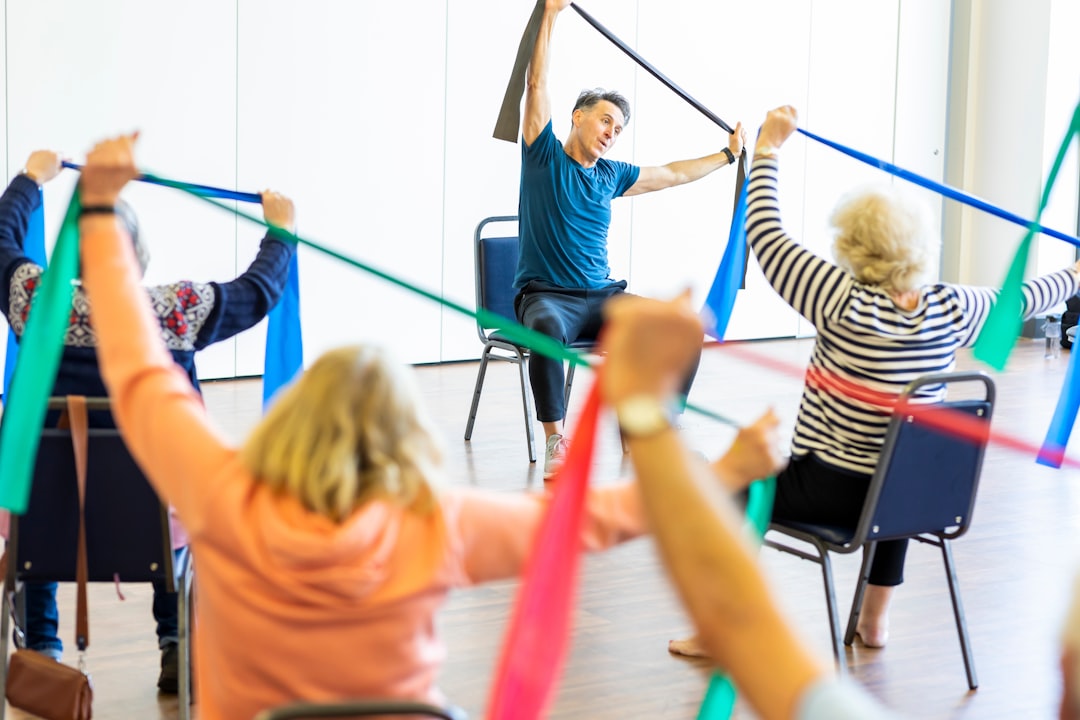
What Exactly Is Sarcopenia — And Why Should You Care?
The term comes from the Greek words sarx (flesh) and penia (poverty) — essentially, a poverty of muscle. After age 30, adults begin losing 3–8% of their muscle mass per decade, and that rate accelerates dramatically after age 60. By the time someone reaches their 70s or 80s, the cumulative impact can mean:
- Significantly reduced balance and coordination
- Higher fall and fracture risk (falls remain the #1 cause of injury-related death in adults over 65)
- Metabolic slowdown, making weight management harder
- Increased insulin resistance and risk of type 2 diabetes
- Reduced functional independence — the thing that matters most to most seniors
According to data from the International Osteoporosis Foundation, sarcopenia affects an estimated 10–27% of adults over age 60 globally, with prevalence rising sharply in those over 80. A 2025 meta-analysis published in The Journal of Cachexia, Sarcopenia and Muscle reinforced that resistance training remains the single most effective intervention — more impactful than dietary changes alone.
So let’s get into the “how.”
The Core Principles of Strength Training for Older Adults
Before jumping into exercises, it’s worth understanding why strength training works at a biological level. When muscle fibers are placed under controlled stress (through resistance), the body responds by repairing and building new muscle protein — a process called muscle protein synthesis (MPS). Older adults have a slightly blunted MPS response compared to younger people, which is exactly why consistency and adequate protein intake become so critical.
Here are the key principles tailored specifically for seniors:
- Progressive Overload: Gradually increase resistance or repetitions over time. The muscle must be challenged to grow — but safely and incrementally.
- Compound Movements First: Exercises that engage multiple muscle groups simultaneously (like squats, rows, and presses) deliver the most functional benefit.
- Frequency Over Intensity: For older adults, training 2–3 times per week with moderate intensity outperforms infrequent high-intensity sessions in terms of safety and long-term adherence.
- Recovery Matters More: Muscle repair takes longer as we age — 48–72 hours of rest between sessions targeting the same muscle group is ideal.
- Neuromuscular Training: Balance and coordination exercises alongside strength work help prevent falls — the downstream consequence of sarcopenia that we most want to avoid.
The Best Exercises to Prevent Sarcopenia in 2026
Let’s get practical. Here’s a curated set of movements — organized from most accessible to slightly more advanced — that address the major muscle groups most affected by sarcopenia (legs, core, upper back, and shoulders).
- Chair Squats (Sit-to-Stand): The king of functional lower-body exercises. Use a sturdy chair, stand up slowly, sit back down with control. Aim for 3 sets of 10–15 reps. This directly trains the quadriceps, glutes, and hamstrings — essential for walking stability.
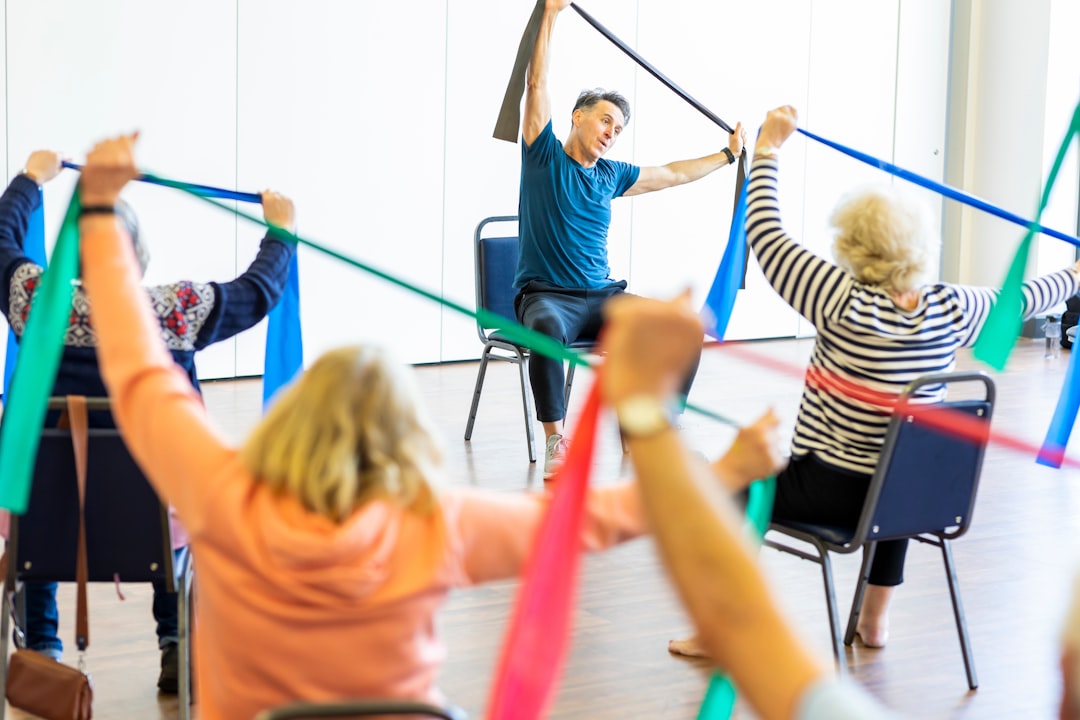
- Resistance Band Rows: Anchor a band at door level, pull back with both arms. Strengthens the upper back and rear shoulders — critical for posture correction and reducing the forward “hunch” common in older adults.
- Wall Push-Ups: A gentler modification of traditional push-ups that still effectively engages the chest, shoulders, and triceps. Excellent starting point for those with wrist or joint limitations.
- Standing Hip Abduction: Hold a wall for support, lift one leg out to the side slowly. Targets the gluteus medius — a key stabilizer muscle for fall prevention.
- Calf Raises: Stand behind a chair, rise onto your toes repeatedly. Calf strength is directly linked to balance and walking speed, both strong predictors of longevity in older adults.
- Deadbug (Core Exercise): Lying on your back, alternate extending opposite arm and leg. Builds deep core stability without compressing the spine — safer than crunches for older backs.
- Farmer’s Carry with Light Dumbbells: Simply walk while holding a weight in each hand. Surprisingly effective for grip strength, posture, and total-body muscle activation.
Real-World Examples: What’s Working Globally in 2026
We’re seeing some genuinely exciting developments in sarcopenia prevention programs around the world right now.
In South Korea, the government’s community health centers (보건소, bogeonso) have expanded their “Active Senior” programs significantly in 2026, offering free twice-weekly resistance training classes for adults over 65. Preliminary 12-month outcome data shows measurable improvements in grip strength and walking speed — two of the four key clinical markers used to diagnose sarcopenia under the Asian Working Group for Sarcopenia (AWGS) criteria.
In Japan, where over 29% of the population is now aged 65 or older, the concept of kenko juyu (健康寿命 — healthy lifespan) is driving national policy. Municipal gyms offer subsidized “locomotive syndrome” prevention classes combining balance training, light resistance work, and nutritional counseling — all under one roof.
In the United States, the YMCA’s “Enhance Fitness” program — now operating in over 800 sites nationally — has published compelling data showing that low-income seniors who participate for just 16 weeks see significant reductions in fall risk and improved functional independence. Telehealth-integrated resistance training coaching, a model accelerated by the post-pandemic digital shift, is also gaining serious traction in 2026.
The takeaway? The infrastructure and evidence are there. The barrier is usually access and awareness — and that’s exactly what we’re trying to lower right now.
Nutrition: The Critical Partner to Exercise
It would be a disservice not to mention this: strength training without adequate protein intake is like building a house without enough bricks. For older adults, current research (including updated guidelines from the European Society for Clinical Nutrition and Metabolism, ESPEN) recommends 1.2–1.6 grams of protein per kilogram of body weight per day — significantly higher than the outdated 0.8g/kg standard.
Practical sources include eggs, fish, Greek yogurt, legumes, and tofu for plant-based eaters. Timing also matters: consuming 25–40g of protein within 2 hours of a workout maximizes MPS in older adults, per current sports gerontology guidelines.
Realistic Alternatives for Those with Limitations
Here’s where I want to be genuinely honest with you: not every 75-year-old can or should start doing barbell deadlifts. And that’s perfectly okay. Let’s look at realistic alternatives based on common limitations:
- Arthritis or joint pain: Water aerobics and aquatic resistance training dramatically reduce joint load while still effectively stimulating muscle. Many community pools now offer dedicated senior aqua fitness programs.
- Osteoporosis concerns: Focus on weight-bearing exercises (standing movements) but avoid high-impact or forward-flexion spine movements. Always consult your physician before starting if you have a bone density diagnosis.
- Frailty or very low baseline fitness: Start with seated resistance band exercises and chair-based movements. Even very low-intensity resistance work produces measurable benefits in frail older adults — don’t let “it’s not enough” thinking become a barrier.
- No gym access or financial constraints: Body-weight exercises, resistance bands ($10–$20 online), and YouTube-based programs specifically designed for seniors are highly effective and essentially free.
- Cognitive barriers or motivation: Group-based exercise consistently outperforms solo exercise for adherence in older adults. Community classes, walking groups, or exercising with a friend or family member can make all the difference.
The bottom line here is this: the best exercise program for any individual senior is the one that is safe, sustainable, and actually gets done. Start where you are — not where you think you should be.
Editor’s Comment : What strikes me most about sarcopenia is how it sneaks up quietly — and how powerfully simple interventions can push back against it. You don’t need a fancy gym or a complicated program. Two or three focused, consistent strength sessions per week, combined with enough protein, can genuinely preserve independence, vitality, and quality of life well into your 80s and beyond. If you’re a caregiver or family member reading this, consider this your gentle nudge to bring this topic up at the next family dinner — or better yet, grab some resistance bands and exercise together. Movement is one of the most profound gifts we can give ourselves and each other, at any age.
📚 관련된 다른 글도 읽어 보세요
- 유가 충격, 삼성전자·SK하이닉스 주가 어디로? 2026년 반도체 투자 전망 완전 분석
- 2026 Senior Health Checkup Items & Procedures: The Complete Guide Every Older Adult Needs
- Energy Costs Are Killing Semiconductor Profits in 2026: What the Numbers Actually Tell Us
태그: [‘sarcopenia prevention’, ‘senior strength training’, ‘muscle loss in elderly’, ‘resistance training for seniors’, ‘elderly fitness 2026’, ‘sarcopenia exercises’, ‘healthy aging workout’]