Picture this: a fab manager in Arizona walks into a quarterly review meeting armed with record-breaking chip output numbers — only to watch the celebration deflate when the energy invoice lands on the table. It’s a scene playing out across the semiconductor industry right now, from Phoenix to Pyeongtaek to Dresden. The chips are selling. The fabs are humming. But somewhere between the wafer and the wallet, energy costs are quietly eroding margins in ways that even seasoned CFOs didn’t fully anticipate five years ago.
So let’s think through this together — not just what’s happening, but why it’s happening, how bad it actually is, and whether there are smarter paths forward for manufacturers at every scale.
The Raw Numbers: How Much Energy Does Chip Manufacturing Actually Consume?
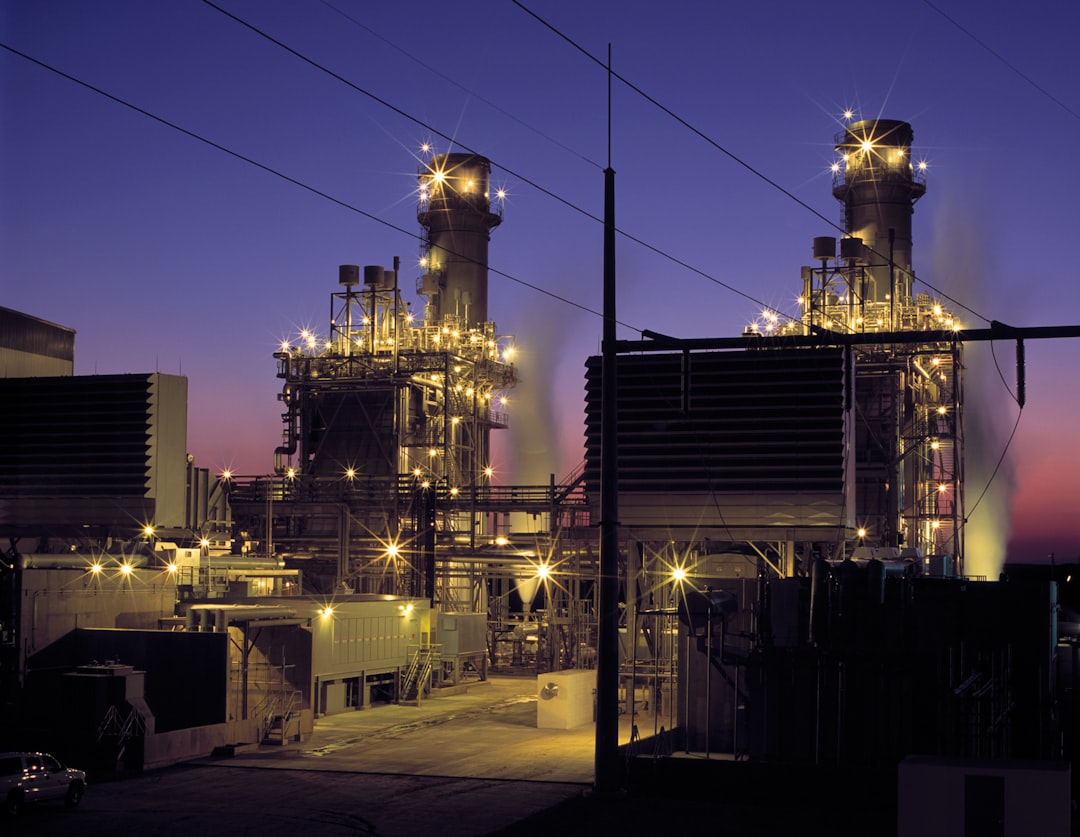
To understand the profit squeeze, you first need to appreciate just how energy-hungry semiconductor fabrication is. A cutting-edge 300mm wafer fab — the kind producing advanced logic chips at 3nm or 2nm nodes — typically consumes between 100 to 200 megawatts (MW) of power continuously. That’s roughly equivalent to powering a small city of 80,000 to 150,000 homes, running 24 hours a day, 365 days a year.
Breaking it down further, energy costs now represent anywhere from 8% to 15% of total cost of goods sold (COGS) for leading-edge fabs in 2026, up from roughly 5–7% in the early 2020s. This shift hasn’t happened in a vacuum — industrial electricity prices in the United States have climbed approximately 23% since 2021, while European energy markets remain structurally elevated following the geopolitical disruptions of the mid-2020s.
Here’s where it gets particularly interesting from a profitability standpoint. Semiconductor gross margins at leading foundries have historically hovered between 50–55%. But when you model out a 3-percentage-point increase in energy as a share of COGS — which is exactly what many fabs have absorbed since 2022 — you’re looking at a direct gross margin compression of 2 to 4 percentage points, depending on product mix and fab utilization rates. For a company generating $10 billion in fab revenue, that’s $200–400 million in annual profit quietly walking out the door via electricity meters.
The Utilization Rate Multiplier — A Factor Most Analysts Miss
Here’s a nuance worth dwelling on: semiconductor fabs have what engineers call a “base load” energy demand. Even when a fab is running at 60% utilization (meaning only 60% of its tool capacity is actively processing wafers), it still consumes roughly 70–80% of its peak energy draw. This is because cleanrooms, HVAC systems, chemical delivery systems, and equipment standby modes don’t scale linearly with production volume.
This creates a brutal dynamic in a soft demand cycle. When chip demand weakens — as it did in the memory segment through parts of 2024–2025 — fabs cut production but can’t proportionally cut their electricity bills. The fixed-energy-cost burden per wafer increases, compressing margins precisely when revenues are already under pressure. It’s a double-whammy that makes semiconductor manufacturing financially unique among heavy industries.
Global Examples: Who’s Feeling It Most, and Who’s Adapting Smartly
Let’s look at how this plays out across different geographies, because the energy cost story varies dramatically by location — and the strategic responses are genuinely fascinating.
South Korea — DRAM Under Pressure: Samsung and SK Hynix operate some of the world’s largest memory fabs in Pyeongtaek and Icheon. South Korea’s industrial electricity tariffs rose approximately 18% between 2023 and 2026, and both companies have been actively renegotiating power purchase agreements (PPAs) with KEPCO. SK Hynix, in particular, has begun co-investing in dedicated renewable energy infrastructure near its Cheongju facilities — a move that carries high upfront capital expenditure but promises to lock in more predictable energy pricing over a 15-year horizon.
Germany & the EU — The TSMC Dresden Calculation: The TSMC Dresden fab, which reached initial production phases in late 2025, was partly structured around substantial EU and German federal subsidies — and energy cost projections were central to why those subsidies were politically necessary in the first place. European industrial electricity prices remain roughly 2–3x higher than comparable US rates even in 2026, meaning TSMC’s European operation carries a structural energy cost disadvantage that subsidies are essentially compensating for. Analysts watching this fab will be tracking whether subsidy-adjusted economics hold as those incentive packages taper.
United States — The Arizona & Ohio Buildout: Intel’s fabs in Ohio and TSMC’s Arizona operations benefit from comparatively lower US industrial electricity rates, but they’re now facing rapid demand growth from neighboring data center clusters — particularly AI inference infrastructure — that is putting upward pressure on regional grid pricing. The irony is striking: the AI chip demand boom that’s driving fab revenues is simultaneously creating the energy demand surge that threatens fab margins.
Japan — Strategic Patience: Rapidus, the Japanese government-backed advanced logic foundry targeting 2nm production, is building its Chitose facility in Hokkaido partly because of the region’s access to renewable hydroelectric and geothermal energy. This is deliberate long-game energy strategy baked into the site selection — a model other new fab projects should be studying closely.

The Levers Manufacturers Are Pulling Right Now
- Power Purchase Agreements (PPAs) with renewables: Long-term contracts with wind and solar farms lock in predictable pricing, reducing exposure to spot market volatility. TSMC Arizona has committed to 100% renewable energy for its operations by 2030, and the financial logic — not just ESG optics — is driving this.
- On-site generation and microgrids: Some leading fabs are investing in natural gas co-generation or fuel cell systems to produce a portion of their own electricity, reducing grid dependency and improving power reliability (critical for yield management).
- AI-driven energy optimization: This is genuinely exciting — real-time ML models are being deployed to optimize cleanroom HVAC cycles, equipment scheduling, and chiller plant operations, with reported energy savings of 8–15% in pilot programs at several tier-1 fabs.
- Process technology efficiency gains: Advanced EUV lithography, while extraordinarily expensive equipment, can actually reduce the number of process steps required — fewer steps means fewer tool-hours means less cumulative energy per wafer out.
- Geographic diversification: Deliberately siting new fabs in regions with low-cost or renewable-heavy grids (think Pacific Northwest US, Quebec, or Hokkaido) is becoming an explicit part of capital allocation strategy rather than an afterthought.
- Demand-side flexibility programs: Some large fabs are entering agreements with grid operators to curtail non-critical loads during peak demand periods in exchange for favorable base rates — essentially functioning as a large-scale demand response resource.
Realistic Outlook: Can Margins Recover Without Structural Energy Reform?
Here’s my honest assessment: for mature-node fabs producing commodity chips (think 28nm and above), the energy margin squeeze is genuinely existential in high-cost regions. Without either subsidization or a fundamental shift in energy sourcing, we will see accelerated consolidation — smaller players closing older fabs and the industry concentrating further. This isn’t pessimism; it’s just arithmetic.
For leading-edge fabs, the calculus is more nuanced. The astronomical pricing power of advanced logic and cutting-edge memory chips provides a buffer that commodity producers simply don’t have. A single 2nm wafer generating $20,000+ in revenue can absorb higher energy costs per unit in ways that a $500 mature-node wafer cannot.
The most resilient strategy I see emerging in 2026 is what I’d call the “energy sovereignty” model — where fabs treat their energy supply chain with the same strategic seriousness as their chemical supply chain. Just as leading manufacturers don’t leave critical gas and chemical supplies to spot market chance, forward-thinking operators are building vertically integrated or deeply contracted energy positions. It requires capital upfront, but the operational stability and cost predictability it buys is worth modeling carefully.
For companies that can’t pursue that full model, the realistic alternative is aggressive regionalization — matching fab locations to energy cost realities rather than trying to fight the physics of electricity pricing with financial engineering.
Editor’s Comment : The energy cost story in semiconductor manufacturing is one of those slow-moving structural shifts that tends to be underestimated right up until it can’t be ignored anymore. What strikes me most, researching this topic in 2026, is how the industry’s response is bifurcating: the largest players are treating energy as a strategic asset to be controlled, while smaller and mid-tier manufacturers are increasingly squeezed between electricity bills they can’t manage and capital markets that won’t fund the solutions. If you’re watching semiconductor equities or considering this sector operationally, energy strategy is no longer a footnote in an ESG report — it’s a core competitive differentiator that deserves a seat at the same table as process node roadmaps and customer concentration risk.
📚 관련된 다른 글도 읽어 보세요
- South Korea’s Bitcoin ETF Landscape in 2026: What’s Actually Happening and What You Should Do About It
- Rising Energy Costs Are Squeezing Semiconductor Profits in 2026 — Here’s What’s Really Going On
- 2026년 인플레이션 헤지, 원자재 ETF로 자산을 지키는 현실적인 방법
태그: [‘semiconductor manufacturing costs’, ‘energy costs fab profitability’, ‘chip factory electricity consumption’, ‘semiconductor margin analysis 2026’, ‘renewable energy semiconductor industry’, ‘TSMC Intel Samsung energy strategy’, ‘semiconductor industry profitability trends’]