Picture this: it’s late 2025, and a mid-sized chip fabrication plant in South Korea just received its quarterly electricity bill. The number staring back at the operations manager? Nearly 40% higher than the same period two years ago. That’s not a typo — that’s the new reality of running a semiconductor fab in 2026. Energy costs have quietly become one of the most disruptive variables in the global chip industry, and the financial ripple effects are now too big to ignore.
Let’s think through this together, because it’s not just about electricity bills. It’s about how rising energy costs are fundamentally reshaping profitability, investment decisions, and competitive positioning across the entire semiconductor value chain.

Why Semiconductor Fabs Are Energy Monsters
First, some context. Semiconductor manufacturing is one of the most energy-intensive industrial processes on the planet. A single cutting-edge wafer fabrication facility — think TSMC’s 3nm or 2nm node plants, or Samsung’s advanced foundries — can consume anywhere between 500 megawatts to over 1 gigawatt of electricity continuously. That’s roughly equivalent to powering a mid-sized city.
Here’s why the energy demand is so staggering:
- Cleanroom HVAC systems: Maintaining ultra-precise temperature and humidity around the clock is relentlessly power-hungry.
- Lithography machines: Extreme ultraviolet (EUV) machines alone draw enormous amounts of power per wafer exposure cycle.
- Chemical mechanical planarization (CMP) tools: Continuous operation across thousands of wafers per day compounds energy use fast.
- Ultrapure water systems: Purifying and recycling water to sub-ppb contamination levels requires significant energy input.
- AI-driven process control: In 2026, real-time AI inference running on-premise for yield optimization adds a new layer of constant electrical demand.
The Numbers That Are Making CFOs Nervous
In 2026, global industrial electricity prices have climbed an average of 18–25% compared to 2023 baselines, driven by a confluence of factors: tightened carbon pricing in the EU and South Korea, natural gas market volatility following continued geopolitical tensions, and surging data center competition for grid capacity (yes, AI infrastructure is literally competing with chip fabs for electrons).
For a company like Intel, which is aggressively rebuilding its foundry business, energy costs now represent approximately 8–12% of total manufacturing cost of goods sold (COGS) at advanced nodes — up from roughly 5–7% in 2021. That shift sounds modest on paper, but when you’re talking about tens of billions in annual revenue, even a 3–5 percentage point margin compression is an existential concern for investors.
Meanwhile, gross margins across the foundry segment have come under meaningful pressure. TSMC, which long enjoyed gross margins above 50%, has seen those figures oscillate more cautiously in recent quarters partly due to utility cost escalation at its new Arizona and Japan facilities, where local electricity tariffs are considerably higher than at its legacy Taiwanese plants.
Real-World Examples: Who’s Feeling It Most
Let’s look at some concrete cases to ground the analysis.
Samsung Semiconductor (South Korea): South Korea revised its industrial electricity pricing framework in late 2024, reducing the preferential rate subsidies that heavy industrial consumers like Samsung had historically enjoyed. By Q1 2026, Samsung’s DS (Device Solutions) division reported that energy-related operating costs had increased by approximately KRW 800 billion year-over-year. The company has responded by fast-tracking investments in on-site solar generation and entering long-term Power Purchase Agreements (PPAs) with offshore wind developers.
Intel (USA — Ohio & Arizona Fabs): Intel’s much-publicized Ohio fab complex faces electricity costs that analysts estimate are 30–40% higher per kWh than comparable facilities in Taiwan. Intel has partially offset this through negotiated grid contracts with Ohio utilities and a push toward more aggressive energy efficiency at the equipment level, but the margin drag remains a talking point in every earnings call in 2026.
GlobalFoundries (Malta, NY & Dresden, Germany): The Dresden facility in Germany is arguably the poster child for energy cost pain. Germany’s industrial electricity prices, even after government interventions, remain among the highest in the developed world. GlobalFoundries has been vocal about this challenge, and it’s a key reason why the company is more selectively expanding capacity in Europe versus Southeast Asia.
TSMC (Arizona, USA): Despite strong demand for its Arizona capacity from U.S. defense and hyperscaler clients, TSMC has acknowledged that its American fabs operate at a significant cost premium to Taiwan — energy being a major component. This has pushed wafer pricing for Arizona-produced chips noticeably higher, which customers are beginning to scrutinize carefully.
The Strategic Responses Worth Watching
So how are the smartest players in the industry actually adapting? This is where it gets interesting, because the responses are highly differentiated — and the choices made now will likely define competitive positioning through the end of this decade.
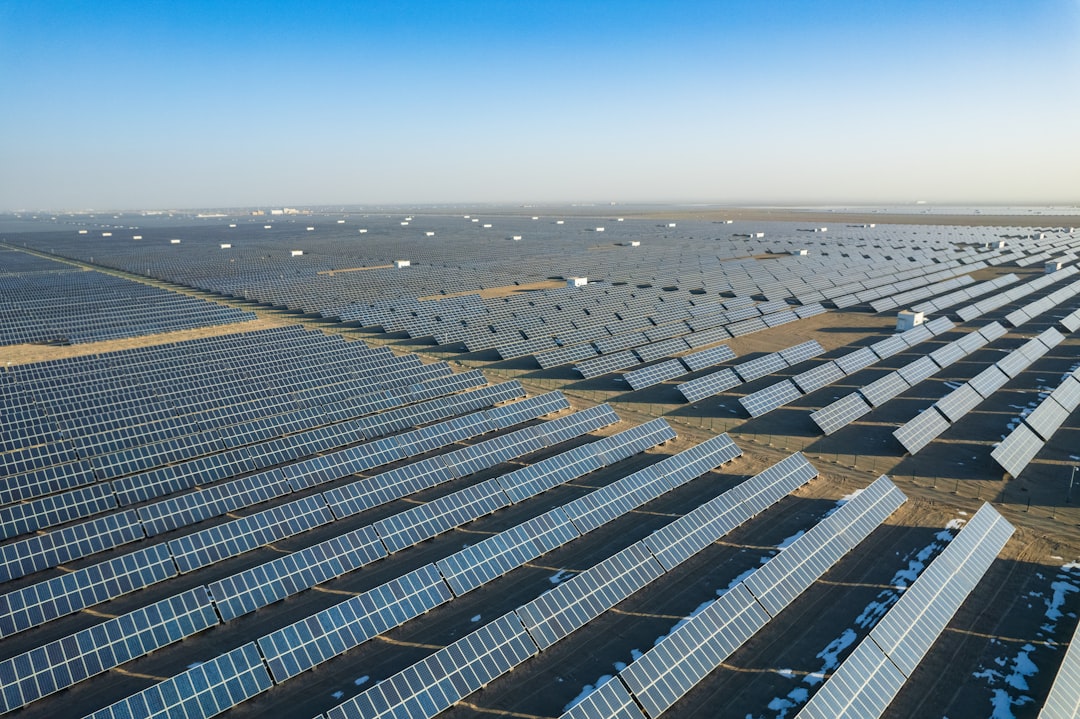
- Renewable energy PPAs: Long-term contracts with wind and solar developers lock in predictable electricity costs. TSMC has committed to 100% renewable energy by 2040, but interim PPAs are already providing partial cost hedges in 2026.
- On-site generation investment: Samsung and SK Hynix are both investing in rooftop solar and exploring fuel cell installations at Korean fab sites.
- Process-level energy efficiency: Newer EUV tools from ASML (the NXE:3800E and the upcoming High-NA variants) are being engineered with better power-per-wafer efficiency metrics — a quiet but important trend.
- Geographic arbitrage: Some fabless companies are routing leading-edge orders to TSMC’s Taiwan fabs rather than Arizona specifically because of the cost differential, accepting geopolitical risk to preserve margins.
- AI-driven energy management: Real-time AI systems that optimize cleanroom conditioning schedules, equipment idle states, and peak-load shifting are delivering 5–10% energy savings at several fabs — modest but meaningful at scale.
- Nuclear power partnerships: Perhaps most intriguingly, discussions between chip companies and small modular reactor (SMR) developers have accelerated in 2026. Microsoft’s precedent-setting nuclear deal has inspired semiconductor firms to explore dedicated nuclear offtake agreements for future capacity.
What This Means for Chip Pricing and the Broader Tech Ecosystem
Here’s the uncomfortable downstream truth: rising energy costs don’t stay contained within fab walls. They eventually flow through to wafer pricing, which flows to chip ASPs (average selling prices), which ultimately lands on the bill of materials of every smartphone, server, EV, and AI accelerator. In 2026, we’re already seeing foundry customers push back on price increases, creating a tension between fabs needing to recover costs and customers needing to protect their own margins in a competitive end-market environment.
For investors, this means the traditional “buy semiconductor stocks during a upcycle” playbook requires more nuance. Companies with better energy cost structures — either through geography, renewable hedges, or efficiency leadership — will compound better over time than those that remain exposed to spot electricity market volatility.
Realistic Alternatives and Paths Forward
If you’re an industry stakeholder trying to navigate this — whether you’re a fab operator, an equipment supplier, a fabless chip designer, or even a policy maker — here are some grounded options worth genuinely considering:
- Fab operators: Prioritize energy cost modeling as a first-class variable in all new site selection decisions. The 20-year cost of a fab’s energy exposure can dwarf its construction cost.
- Fabless designers: Build dual-source strategies that include at least one geographically diversified foundry partner with demonstrably lower energy cost exposure.
- Equipment suppliers: Energy efficiency per unit output is becoming a genuine differentiator — not just a marketing checkbox. ASML, Applied Materials, and Lam Research all have opportunities to win business here.
- Policy makers: Countries competing to attract semiconductor investment (EU, Japan, India, Vietnam) should recognize that stable, competitively priced electricity is now as important as subsidy packages in location decisions.
- Investors: Screen for energy cost resilience alongside traditional metrics like book-to-bill ratios and yield performance when evaluating semiconductor manufacturing equities in 2026.
The semiconductor industry has always been about managing complexity — physics, chemistry, logistics, geopolitics. In 2026, energy economics has firmly joined that list. The companies that treat this as a strategic priority rather than an operational annoyance will be the ones writing the next chapter of chip industry leadership.
Editor’s Comment : What strikes me most about this situation is that energy cost pressure might actually accelerate some genuinely positive long-term trends — faster adoption of renewables, more efficient manufacturing equipment, and smarter geographic diversification of the global chip supply chain. Yes, the near-term margin pain is real and significant. But industries under pressure tend to innovate in ways they wouldn’t have otherwise. The semiconductor sector has a long history of turning constraints into breakthroughs — and I wouldn’t bet against it doing so again here.
📚 관련된 다른 글도 읽어 보세요
- 목표 금액, 이제 계획적으로 모으세요! 무료 적금 계산기 완벽 활용법
- My 90-Day Sarcopenia Prevention Workout Journey: What Actually Worked for My 72-Year-Old Dad in 2026
- SMR Nuclear Reactors in 2026: The Next-Gen Energy Revolution Is Finally on Schedule
태그: [‘semiconductor profitability 2026’, ‘rising energy costs chip manufacturing’, ‘TSMC Samsung Intel energy expenses’, ‘fab electricity costs semiconductor margins’, ‘semiconductor industry trends 2026’, ‘renewable energy semiconductor fabs’, ‘chip manufacturing cost analysis’]