Picture this: it’s the late 1950s, and nuclear power was the ultimate symbol of human ambition — massive reactor domes rising from the landscape like monuments to progress. Governments poured billions into enormous plants that could power entire cities. Fast forward to 2026, and something quietly disruptive is happening. Engineers are asking, what if we made nuclear power… smaller? That’s essentially the premise behind Small Modular Reactors (SMRs), and the debate between SMRs and conventional large-scale nuclear plants has become one of the most fascinating energy conversations of our era.
Whether you’re an energy policy enthusiast, a student exploring sustainability careers, or just someone who pays an electricity bill and wonders where the power actually comes from — this comparison is worth your time. Let’s think through it together.
🔬 First Things First: What Are We Actually Comparing?
Before diving into pros and cons, let’s clarify the playing field.
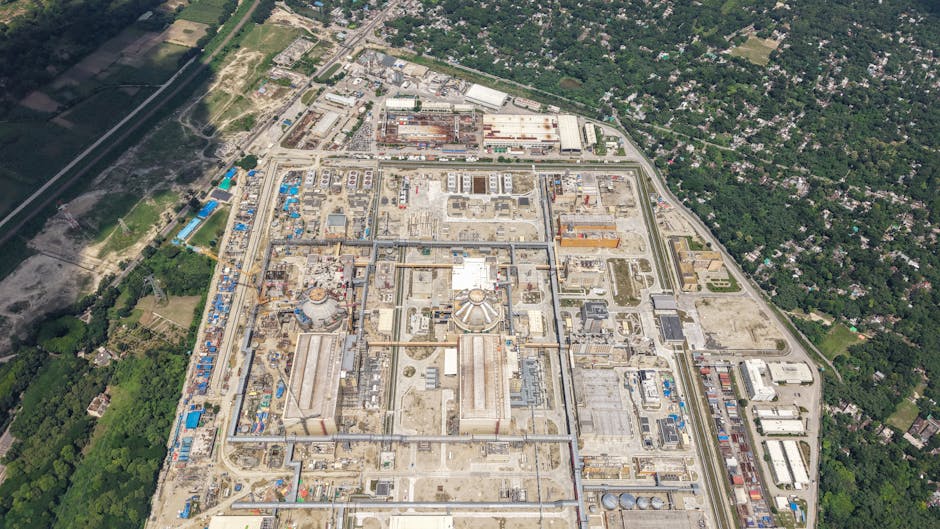
Large-Scale Nuclear Power Plants (LNPs) are the traditional giants — think South Korea’s Hanul complex, France’s Flamanville reactor, or the UAE’s Barakah plant. These typically generate 1,000 to 1,600 megawatts electric (MWe) per reactor unit. They require massive upfront investment, highly specialized infrastructure, and years (sometimes decades) to construct.
Small Modular Reactors (SMRs), by contrast, are defined by the IAEA as reactors producing under 300 MWe per module. The key innovation isn’t just size — it’s the modular manufacturing approach. Components are factory-built and assembled on-site, somewhat like industrial LEGO bricks. Companies like NuScale Power (USA), Rolls-Royce SMR (UK), and KEPCO’s subsidiary initiatives in South Korea are all racing to bring these to commercial scale.
📊 Capital Cost & Construction Time: Where the Numbers Get Interesting
Here’s where most energy analysts start sweating — because neither technology looks cheap on paper.
Large-scale plants like the two AP1000 reactors at Georgia’s Vogtle facility in the US ended up costing approximately $35 billion total — roughly double the original budget — and took over a decade to complete. France’s Flamanville EPR reactor ballooned to nearly €13.7 billion, compared to an initial estimate of €3.3 billion. These aren’t anomalies; they reflect a systemic pattern of cost overruns due to custom engineering, regulatory complexity, and skilled labor shortages.
SMRs promise to break this cycle through standardization. The theory is sound: if you’re building the 50th copy of the same reactor module in a controlled factory environment, you should benefit from learning curve economics — each successive unit becomes cheaper and faster to build. NuScale’s VOYGR design, for instance, targets a modular cost structure where individual 77 MWe modules can be deployed incrementally.
However — and this is crucial — SMRs haven’t yet proven this cost advantage at scale. As of early 2026, most SMR projects are still in early commercial or pre-commercial phases. The first utility-scale SMR deployments in Canada (Ontario Power Generation’s Darlington project) and the UK (Rolls-Royce SMR program) are providing real-world data, but full cost benchmarks aren’t finalized. Independent analysts at the Oxford Smith School noted in late 2025 that first-of-a-kind SMR costs may actually exceed large plant costs per kWh, until serial production volumes are achieved.
⚡ Power Output & Grid Suitability: Size Isn’t Everything
A 1,200 MWe large plant is a powerhouse — ideal for high-density grids in industrial nations. South Korea’s KEPCO, for instance, relies on large plants to provide roughly 30% of national electricity with remarkable capacity factors often exceeding 85-90%.
But SMRs unlock something large plants fundamentally cannot: distributed deployment. Regions with smaller or isolated grids — think Canadian remote communities, Pacific island nations, or industrial mining operations in Central Asia — can’t absorb a gigawatt of power without massive grid upgrades. A 100–300 MWe SMR fits naturally into these contexts.
Additionally, SMRs are being designed for load-following capability — meaning they can ramp up and down to complement intermittent renewables like solar and wind. Traditional large reactors are most economical when running at full output 24/7 (baseload), making them less flexible in increasingly renewable-heavy grids.
🌍 Real-World Examples Around the Globe in 2026
Let’s ground this in actual projects happening right now:
- Canada – Darlington SMR (Ontario): GE-Hitachi’s BWRX-300 is under active construction at the Darlington site as of 2026, targeting first power by the early 2030s. This is arguably the world’s most watched SMR deployment, and its cost trajectory will heavily influence global investment decisions.
- United Kingdom – Rolls-Royce SMR Program: The UK government has committed significant funding toward Rolls-Royce’s 470 MWe SMR design (technically on the upper boundary of “small”), with site selection underway. The program is seen as a cornerstone of the UK’s net-zero industrial strategy.
- South Korea – APR1400 Exports & SMART Reactor: Korea continues to operate and export its flagship APR1400 large-scale design (Barakah in UAE, potential deals in Czech Republic and Poland), while KAERI’s SMART (System-integrated Modular Advanced ReacTor) at 100 MWe represents Korea’s SMR ambitions — with Saudi Arabia remaining a key potential partner.
- United States – NuScale & TerraPower: NuScale faced setbacks after the Carbon Free Power Project in Idaho was cancelled in late 2023 due to rising cost projections. However, the company has pivoted toward industrial and international markets. TerraPower’s Natrium reactor (a sodium-cooled fast reactor with thermal storage) broke ground in Wyoming and represents a different design philosophy entirely.
- China – HTR-PM (Pebble Bed Modular Reactor): China’s Shidaowan demonstration plant continues operations, giving China a meaningful head start in certain SMR technologies that Western developers are still designing on paper.
☢️ Safety Architecture: A Genuinely Meaningful Difference
One area where SMRs make a compelling technical argument is passive safety. Traditional large plants rely heavily on active safety systems — pumps, valves, and electrical systems that must function correctly to prevent accidents. Post-Fukushima thinking accelerated interest in passive safety designs that use natural physics (gravity, convection, gas pressure) to cool the reactor without human intervention or external power.
Most modern SMR designs incorporate these passive safety features as a core principle. NuScale’s design, for instance, is submerged in a pool of water and claims the ability to achieve safe shutdown indefinitely without operator action or external power. This doesn’t make nuclear power risk-free, but it does represent a meaningful architectural improvement.
Large modern plants like the APR1400 and AP1000 also incorporate improved passive features compared to older designs, so this isn’t purely an SMR advantage — but SMRs tend to push this philosophy further due to their smaller thermal mass and simpler core designs.
♻️ Waste, Proliferation, and the Harder Conversations
Both technologies share nuclear’s fundamental challenge: radioactive waste management. SMRs, depending on their design and fuel type, may actually produce more waste per unit of electricity generated compared to large plants, because they’re less thermally efficient. This is a frequently under-discussed point in SMR promotional materials.
On the other hand, certain advanced SMR designs — particularly molten salt and fast-spectrum reactors — are specifically engineered to consume existing nuclear waste as fuel, which would be genuinely transformative. These are still mostly pre-commercial concepts, but they represent a compelling long-term pathway.
Proliferation risk (the concern that nuclear materials could be diverted for weapons) is another consideration. Smaller, potentially more distributed plants create different security challenges than a handful of large, heavily guarded facilities. This is an active area of policy research at the IAEA and among national security communities.
🔄 Realistic Alternatives: Choosing the Right Tool for Your Context
Here’s the honest synthesis, and it’s not actually a competition — it’s a context question:
- If you’re a large industrialized nation with a mature grid and high electricity demand: Large-scale plants (especially modern Generation III+ designs) remain highly cost-competitive per kWh and have decades of operational data. They make sense as baseload anchors. South Korea, France, and the UAE are proving this model still works when executed with strong institutional capacity.
- If you’re a remote community, industrial operator, or smaller nation with grid limitations: SMRs are genuinely exciting and potentially transformative — but be patient. Wait for cost data from Canada’s Darlington project and the UK program before committing. The economics should clarify significantly by 2028-2030.
- If you’re a policymaker trying to decarbonize quickly: Don’t pit nuclear against renewables — they’re complementary. SMRs specifically can fill the gaps that solar and wind leave, particularly in industrial heat applications and remote regions. Consider pairing SMR deployment plans with aggressive renewable expansion rather than choosing one over the other.
- If you’re an investor: Large-scale nuclear equity is tied to sovereign-level decision-making and long time horizons. SMR investment is essentially a bet on manufacturing innovation and regulatory acceleration. Both carry specific risk profiles that need careful due diligence.
The bottom line? SMRs are not a silver bullet, and large nuclear plants aren’t dinosaurs. They’re different instruments in an evolving energy orchestra — and the best energy systems of the 2030s will likely feature both, thoughtfully deployed based on geography, grid structure, and national capability.
Editor’s Comment : What I find genuinely exciting about this debate in 2026 is that we’re finally moving past theoretical arguments into real-world construction data. The Darlington SMR project in Canada and the Rolls-Royce program in the UK are essentially giant, expensive, and critically important experiments — and the results will shape nuclear policy globally for the next half-century. As a lifestyle and systems thinker, I believe the biggest risk isn’t choosing the wrong reactor type. It’s the paralysis of endless debate while the clock on climate change keeps ticking. Pick your tools, build your institutions, and iterate. That’s how complex problems get solved.
📚 관련된 다른 글도 읽어 보세요
- BlackRock Bitcoin ETF Returns in 2026: Is IBIT Still Worth Your Money?
- 노인 우울증 증상, 이렇게 다릅니다 — 2026년 가족이 꼭 알아야 할 돌봄 가이드
- Is Your Elderly Parent Just ‘Getting Old’ — Or Is It Depression? A 2026 Family Guide to Recognizing and Responding
태그: [‘SMR vs large nuclear power plant’, ‘small modular reactor 2026’, ‘nuclear energy comparison’, ‘SMR advantages disadvantages’, ‘future of nuclear power’, ‘clean energy technology’, ‘nuclear power plant economics’]