Let me paint you a picture. Margaret, a 72-year-old retired schoolteacher from Portland, slipped on a wet kitchen floor in early 2025. What seemed like a minor stumble turned into a 6-week hospital stay, a fractured hip, and months of painful rehabilitation. The heartbreaking part? Her doctor later told her that a consistent balance-training routine could have dramatically reduced her risk. Stories like Margaret’s aren’t rare — they’re alarmingly common. And in 2026, with global populations aging faster than ever, fall prevention for seniors has become one of the most urgent public health conversations we can have.
So let’s think through this together — not with generic advice, but with a real, evidence-based look at what fall prevention exercise programs look like in 2026, what the science actually says, and how you (or a loved one) can realistically start today.
Why Falls Are a Bigger Deal Than Most People Realize
Falls are the leading cause of injury-related death among adults over 65 worldwide. According to the World Health Organization’s updated 2026 aging report, approximately 37.3 million falls requiring medical attention occur globally each year among seniors. In the United States alone, the CDC estimates that 1 in 4 older adults falls each year — and only about half of them tell their doctor.
Here’s what makes this particularly sobering: it’s not just the physical injury. Falls trigger a psychological cycle called fear of falling, where seniors begin limiting their physical activity out of anxiety. That reduced activity leads to weaker muscles and worse balance — ironically increasing the risk of the very falls they’re trying to avoid. It’s a frustrating feedback loop, and breaking it requires intentional, structured movement.
The Science Behind Fall Prevention Exercise in 2026
Research has evolved significantly. A landmark meta-analysis published in the British Journal of Sports Medicine (updated in early 2026) reviewed over 108 randomized controlled trials and confirmed that exercise programs combining balance training, strength work, and functional movement reduce fall incidence by up to 23–40% in community-dwelling older adults. That’s not a small number — that’s potentially hundreds of thousands of preventable injuries each year.
What the research consistently highlights are three core pillars:
- Balance and proprioception training — Teaching the body to detect and correct instability in real time. Think single-leg stands, tandem walking, and wobble board exercises.
- Lower body strength training — Specifically targeting the quadriceps, hip abductors, and ankle stabilizers. These muscle groups are your “braking system” when you start to lose balance.
- Functional movement patterns — Exercises that mimic real-life actions like sitting-to-standing, stepping over obstacles, or reaching overhead while maintaining stability.
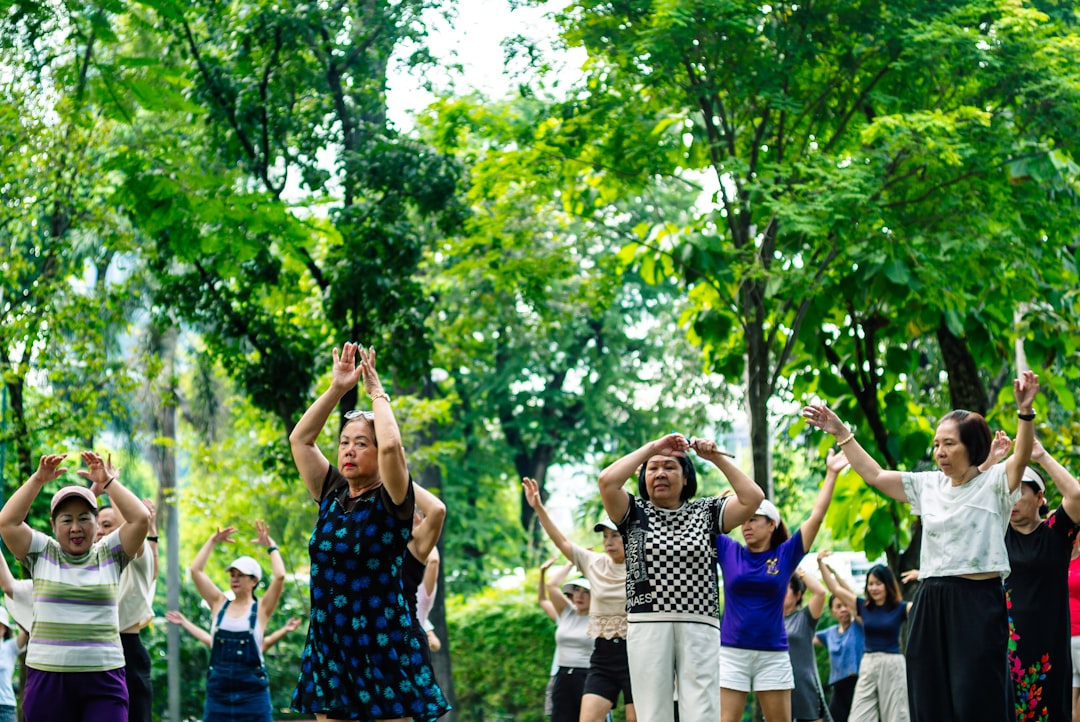
Interestingly, Tai Chi continues to dominate the research as one of the most effective single-modality interventions. A 2026 study from the Hong Kong Polytechnic University found that participants who practiced Tai Chi three times a week for 12 weeks showed a 47% reduction in fall risk scores, outperforming even some structured gym programs. The slow, deliberate weight-shifting movements appear uniquely suited to training the neuromuscular system in older adults.
Real-World Programs Making a Difference in 2026
Let’s look at what’s actually being implemented around the world, because theory is one thing — real programs in real communities are where the rubber meets the road.
🇰🇷 South Korea’s “Active Aging Centers” (액티브 시니어 센터)
South Korea, which has one of the fastest-aging populations globally, launched a national expansion of its Active Aging Center network in 2024, and by 2026 there are over 1,200 centers nationwide offering free or subsidized fall prevention programs. The curriculum integrates Korean traditional movement (like modified Taekkyeon footwork for balance) with evidence-based strength circuits. Participation rates have surged, partly due to community social incentives — seniors earn “wellness points” redeemable for health products.
🇦🇺 Australia’s “Stepping On” Program
Originally developed in New South Wales, the Stepping On program has been expanded and digitized in 2026 to include hybrid in-person/virtual sessions. It’s a 7-week community-based workshop combining exercise with fall-risk education and home hazard assessment. Independent evaluations show a consistent 31% reduction in falls among participants. What makes it stick is the peer-group format — seniors hold each other accountable.
🇩🇪 Germany’s “Sturzprävention 2026” Initiative
Germany’s statutory health insurance (GKV) system now mandates coverage for approved fall prevention exercise courses for adults over 65. The standardized curriculum includes progressive resistance training, vestibular stimulation exercises, and even virtual reality balance challenges — a technology that’s become far more accessible and affordable in 2026.
A Sample Weekly Routine You Can Start This Week
Okay, let’s get practical. If you or someone you care about wants to start building a fall-prevention habit, here’s a beginner-friendly weekly structure that aligns with 2026 clinical guidelines. Always consult a physician before starting, especially if there’s a history of cardiovascular issues or recent injury.
- Monday — Balance Focus (20 min): Single-leg stands (10 sec each, 3 sets), tandem stance holds, eyes-open and eyes-closed practice near a wall for safety.
- Tuesday — Rest or gentle walking (15–30 min): A flat-surface walk counts as active recovery and keeps circulation strong.
- Wednesday — Strength Focus (25 min): Chair squats (sit-to-stand x 10), calf raises at the kitchen counter, side leg lifts, and resistance band ankle dorsiflexion.
- Thursday — Flexibility + Coordination (20 min): Gentle yoga stretches, marching in place with arm swings, figure-8 stepping patterns.
- Friday — Functional Movement (20 min): Practice getting up from the floor safely, stepping over low obstacles, reaching exercises that challenge balance.
- Saturday — Group or Social Activity: A Tai Chi class, water aerobics, or even a walking group. The social element dramatically improves adherence.
- Sunday — Rest. Seriously. Recovery matters, especially for older muscles.
Realistic Alternatives for Different Situations
Not everyone has access to a gym, a community center, or even a safe outdoor space. Here’s where I want to be genuinely helpful rather than idealistic:
- If mobility is severely limited: Chair-based exercise videos (YouTube has excellent free resources in 2026 from certified geriatric fitness specialists) can deliver real balance and strength benefits. The key is progressive challenge — the exercises need to gradually get harder over weeks.
- If cost is a barrier: In the U.S., Medicare Advantage plans in 2026 widely cover fitness memberships (SilverSneakers is still the dominant network). In other countries, check your national health insurance — many now cover approved programs explicitly for fall prevention.
- If a senior lives alone and motivation is hard: Virtual group classes via tablet or smart TV have exploded in quality and availability. Platforms like SilverFit and Rendever now offer live instructor-led sessions designed specifically for seniors aging in place.
- If there’s a cognitive component (mild dementia): Music-based movement programs and rhythm-cued exercises have shown particular promise in 2026 research for this population — the auditory cues help bypass some of the cognitive barriers to coordinated movement.
The Overlooked Role of Home Environment
Exercise is powerful, but it works best as part of a broader strategy. The most effective fall prevention approaches in 2026 combine exercise with simple home modifications: removing loose rugs, improving lighting in hallways and bathrooms, installing grab bars, and wearing properly fitting non-slip footwear. These aren’t glamorous interventions, but data consistently shows that the combo of exercise plus environment modification reduces fall rates by up to 50% — nearly double the effect of exercise alone.
Conclusion: Small Consistent Steps Create Big Safety Nets
Here’s what I love about fall prevention research in 2026: the solutions are remarkably accessible. You don’t need expensive equipment, a personal trainer, or a fancy gym membership. What you need is consistency, progressive challenge, and a program that fits real life. Whether it’s a 20-minute Tai Chi video in the living room, a Wednesday morning class at the community center, or a twice-weekly virtual strength session — every intentional movement builds the balance and strength that could prevent the next Margaret moment.
The goal isn’t to wrap seniors in bubble wrap. It’s to keep them confident, capable, and connected to the activities they love for as long as possible. And that starts with taking the first small step — quite literally.
Editor’s Comment : What strikes me most about this topic is how often fall prevention gets framed as a problem to manage rather than a lifestyle to build. In 2026, we have better tools, better research, and better access than ever before — the gap is usually awareness and action. If you’re reading this and have an older parent or grandparent, share one exercise from this list with them today. Sometimes the most powerful thing isn’t a clinical program — it’s someone who cares enough to do a few balance exercises alongside them at the kitchen counter.
📚 관련된 다른 글도 읽어 보세요
- 반도체 주식 매크로 변수 분석 2026: 지금 사야 할까, 기다려야 할까?
- 내 진짜 나이는 몇 살? 만 나이 계산기로 정확하게 확인하세요!
- 2026 Commodities Market Outlook: How to Invest in Raw Materials ETFs Like a Pro
태그: [‘senior fall prevention 2026’, ‘elderly balance exercises’, ‘fall prevention program for older adults’, ‘aging in place safety tips’, ‘Tai Chi for seniors’, ‘geriatric fitness routines’, ‘senior health and mobility 2026’]