Picture this: It’s early 2024, and a friend nudges you at a dinner party — “Have you heard about BlackRock filing for a Bitcoin ETF?” Fast-forward to now, March 2026, and that same friend is either quietly gloating or anxiously refreshing their brokerage app. The BlackRock iShares Bitcoin Trust (IBIT) has become one of the most talked-about financial products of the decade, and the returns story in 2026 is far more nuanced than the headlines suggest. Let’s actually think through this together — because your financial future deserves more than a hot take.
Where IBIT Stands in 2026: The Numbers We’re Working With
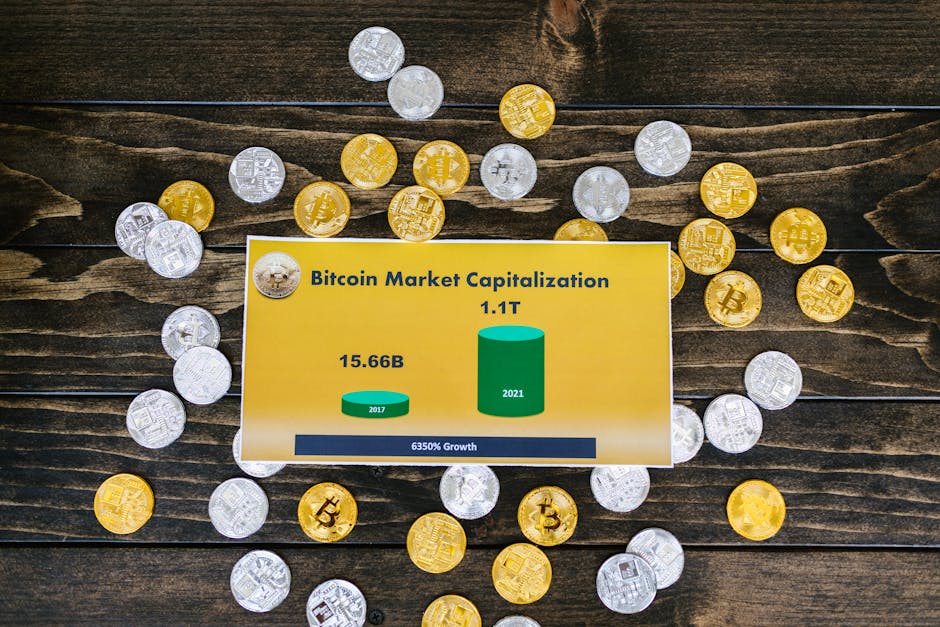
Since its January 2024 launch, IBIT has had a wild ride — and 2026 has added another dramatic chapter. As of Q1 2026, IBIT has accumulated over $58 billion in assets under management (AUM), cementing its position as the largest spot Bitcoin ETF globally. That’s not just impressive — it’s historically unprecedented for a commodity-based ETF at this stage of its life.
In terms of raw returns, here’s the picture from a performance standpoint:
- 2024 annual return: Approximately +112%, riding Bitcoin’s post-halving surge and institutional inflows.
- 2025 annual return: A more turbulent +34%, with mid-year corrections tied to Federal Reserve rate uncertainty and crypto regulatory noise.
- YTD 2026 (as of late March): Around -8% to -12%, reflecting broader risk-asset consolidation and profit-taking after Bitcoin’s late 2025 highs near $135,000.
So yes — if you bought IBIT in January 2024 and held through today, you’re likely sitting on a substantial gain. But if you chased the 2025 peak? You’re probably staring at a short-term loss and wondering what went wrong. That’s the difference between timing the market and time in the market — a concept worth keeping front and center here.
Why 2026 Has Been a Bumpier Road
Let me walk you through the main headwinds IBIT investors are navigating right now, because context matters enormously:
- Bitcoin’s consolidation phase: After surging past $130K in late 2025, BTC has been oscillating between $95K and $115K in Q1 2026. Consolidations after parabolic runs are normal — but uncomfortable if you’re holding an ETF.
- Macro pressure: The Fed’s “higher for longer” stance isn’t fully over. With core inflation still sticky at around 2.8% in early 2026, risk assets — including crypto — face headwinds from a strong dollar and elevated bond yields.
- Regulatory reclassification debates: The SEC and CFTC are still debating the jurisdictional boundaries of Bitcoin-adjacent products in 2026, creating some institutional hesitation.
- Competitor ETFs: Fidelity’s FBTC, Invesco’s BTCO, and several newcomers have driven expense ratio competition down. IBIT’s 0.25% fee is still competitive, but the product differentiation narrative has softened.
Global Perspectives: How Other Markets Are Reacting
Here’s something interesting that doesn’t get enough airtime in Western financial media — the reception to Bitcoin ETFs in other markets tells a parallel story worth examining.
In South Korea, where the keyword “블랙록 비트코인 ETF 수익률 2026” (BlackRock Bitcoin ETF returns 2026) has been trending on financial forums, retail investors are watching IBIT closely as a benchmark — even though Korean domestic crypto regulations still don’t permit direct spot Bitcoin ETF listings on Korean exchanges as of early 2026. Korean investors are accessing IBIT primarily through overseas brokerage accounts (like Mirae Asset’s global platform or Kiwoom Securities’ international service), and the conversations are sharp: they’re comparing IBIT’s dollar-denominated returns against KRW/USD exchange rate fluctuations, which adds another layer of complexity.
Meanwhile, in Europe, Bitcoin ETPs (Exchange Traded Products — the European regulatory equivalent) on venues like Euronext and Deutsche Börse have shown that institutional appetite for Bitcoin exposure isn’t fading. BlackRock’s European Bitcoin ETP, listed under a different ticker, has seen steady inflows even through the Q1 2026 dip, suggesting long-term conviction from pension and sovereign wealth allocators.
In Canada, which was ahead of the curve with purpose Bitcoin ETFs since 2021, the narrative by 2026 is mature: Bitcoin ETF holdings are treated almost like a standard portfolio allocation, not a speculative bet. That normalization is likely where the US and global markets are heading.
Is IBIT Right for You? Let’s Think Through Realistic Alternatives
Here’s where I want to get genuinely practical, because “should I buy IBIT” really depends on who you are. Let’s break this down:
- If you’re a long-term accumulator (5+ year horizon): IBIT remains one of the cleanest ways to get Bitcoin exposure without managing wallets or private keys. Dollar-cost averaging (DCA) into dips like the current Q1 2026 environment has historically rewarded patient investors. The 0.25% expense ratio is low, liquidity is exceptional, and the BlackRock custodial infrastructure is institutional-grade.
- If you’re a tactical, short-term trader: The current consolidation phase means you need a clear thesis. Trading IBIT like a stock without understanding Bitcoin’s on-chain metrics (like the MVRV ratio, which currently suggests BTC is in “fair value” territory) is a recipe for emotional decision-making.
- If you want Bitcoin exposure with less volatility: Consider a blended approach — perhaps 60% IBIT and 40% in a Bitcoin-adjacent equity ETF like one holding MicroStrategy (MSTR), Coinbase (COIN), and crypto infrastructure stocks. The volatility is still real, but the correlation profile is slightly different.
- If you’re crypto-curious but risk-averse: A multi-asset digital asset ETF, or simply a small 1-3% portfolio allocation to IBIT, is a more psychologically sustainable entry. You get real exposure without the anxiety of watching 20% swings on a major position.
- If you’re a Korean or international investor using overseas brokerage: Factor in your home currency’s strength vs. the USD. A 10% IBIT gain can be partially or fully offset by USD weakness against your local currency — or amplified by USD strength. Always run the FX math.
The Bigger Picture: What IBIT Tells Us About Bitcoin’s Maturation
Zooming out, the most meaningful thing about IBIT’s existence and performance in 2026 isn’t the YTD return number — it’s what the product represents. Bitcoin went from a cypherpunk experiment to a BlackRock product. That institutional legitimization doesn’t guarantee price appreciation, but it does fundamentally change the floor of demand. When pension funds, sovereign wealth funds, and endowments have IBIT in their portfolios, the sell-off dynamics are structurally different from the purely retail-driven crashes of 2018 and 2022.
That doesn’t mean Bitcoin can’t have a 40-50% drawdown again — it absolutely can, and investors should be mentally prepared for that. But the argument that Bitcoin is “going to zero” becomes less credible with each quarter that $50B+ sits in a regulated US ETF.
Editor’s Comment : IBIT’s 2026 performance is a perfect case study in the gap between a great long-term asset and a comfortable short-term hold. The Q1 2026 dip is real, the macro headwinds are real — but so is the institutional infrastructure that now underpins Bitcoin as an asset class. If you’re thinking about this product, stop asking “is now the right time?” and start asking “what percentage of my portfolio can I genuinely hold through a 30% drawdown without panic-selling?” That answer is your real position size. Start there, and everything else becomes much clearer.
태그: [‘BlackRock Bitcoin ETF’, ‘IBIT returns 2026’, ‘Bitcoin ETF performance’, ‘spot Bitcoin ETF’, ‘crypto investment strategy 2026’, ‘블랙록 비트코인 ETF’, ‘Bitcoin portfolio allocation’]