A colleague pinged me last month with a screenshot — her crypto ETF portfolio was up 34% year-to-date as of early April 2026, and she couldn’t figure out whether to take profits or ride the wave. “Is this normal?” she asked. Honestly, that question sent me down a rabbit hole of data, fund prospectuses, and more than a few late nights staring at Bloomberg terminals. What I found was both reassuring and genuinely sobering. Let’s unpack it together.
The Landscape: How Crypto ETFs Have Evolved by 2026
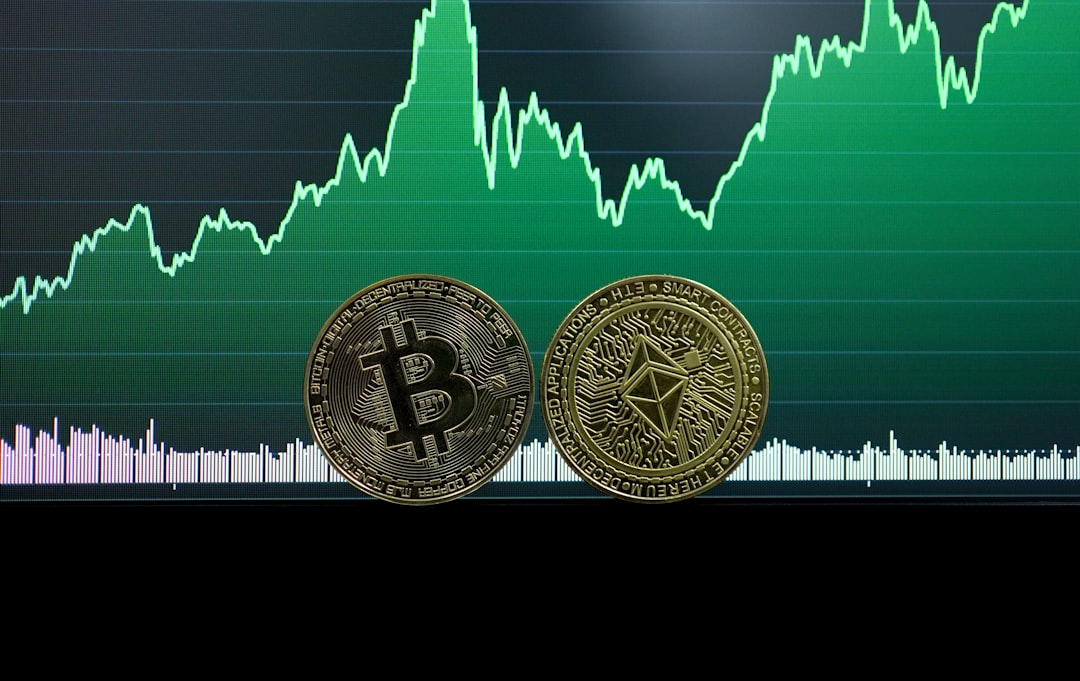
It’s worth stepping back for a second. Spot Bitcoin ETFs launched in the U.S. in early 2024, and by mid-2025 we saw the first wave of multi-asset crypto basket ETFs get regulatory clearance. Now in 2026, the market has matured considerably — but “matured” doesn’t mean “tame.” As of Q1 2026, there are over 60 distinct crypto-linked ETF products trading on major exchanges globally, with combined AUM (Assets Under Management) crossing the $180 billion mark according to data from CoinShares and Bloomberg Intelligence.
The top performers in early 2026 break down roughly like this:
- iShares Bitcoin Trust (IBIT): ~+41% YTD as of April 2026, benefiting from BTC’s push toward the $105K–$115K range in Q1
- Fidelity Ethereum Fund (FETH): ~+28% YTD, with ETH’s post-Pectra upgrade narrative driving institutional inflows
- Invesco Galaxy Crypto Economy ETF (SATO): ~+22% YTD, a broader basket play covering miners, exchanges, and infrastructure
- VanEck Digital Assets Mining ETF (DAM): ~+18% YTD, more volatile due to energy cost fluctuations and hash rate dynamics
- ProShares Bitcoin Strategy ETF (BITO): ~+12% YTD, still lagging spot products due to futures roll costs — a structural drag that hasn’t disappeared
Understanding the Return Gaps: Spot vs. Futures vs. Equity-Basket ETFs
This is where it gets genuinely interesting from a risk management standpoint. Not all crypto ETF returns are created equal, and the divergence in 2026 is starker than ever. Let’s be precise:
Spot ETFs directly hold the underlying asset. Their NAV tracks Bitcoin or Ethereum price almost 1:1, minus a small expense ratio (IBIT charges 0.25%, for example). In a bull run, this is your cleanest exposure.
Futures-based ETFs like BITO hold CME Bitcoin futures contracts, not actual BTC. The “contango decay” — the cost of rolling expiring contracts into new ones in an upward-sloping futures curve — can erode 5–15% annually compared to spot prices. In 2026’s environment, that drag is real and painful for long-term holders.
Crypto equity basket ETFs (holding stocks like Coinbase, MicroStrategy, mining companies) offer indirect exposure. They have higher liquidity in traditional brokerage accounts but correlate with both crypto markets AND broader equity sentiment. When macro conditions are mixed — as they’ve been in 2026’s rate environment — these can underperform pure crypto products significantly.
Risk-Adjusted Returns: The Metric Most Retail Investors Ignore
Raw return numbers are seductive. But when you run Sharpe ratios on these products through Q1 2026, the picture shifts. IBIT’s Sharpe ratio sits around 1.8 — impressive. BITO’s? Closer to 0.9. The equity basket funds cluster between 1.1 and 1.4. What that tells you is that per unit of risk taken, spot ETFs are currently the most efficient vehicle. That said, volatility on all these products remains 3–5x that of the S&P 500, so the “efficient” label is strictly relative.
International Case Studies: How Global Markets Are Playing This
It’s not just a U.S. story. Here’s what’s happening globally in 2026:
- Canada (Purpose Bitcoin ETF — BTCC): One of the world’s first spot Bitcoin ETFs, launched back in 2021, has seen renewed inflows in 2026. It’s up approximately 38% YTD, slightly underperforming IBIT due to CAD/USD dynamics and a higher expense ratio of 1.0%.
- Europe (21Shares Bitcoin ETP on SIX Exchange): European ETPs (Exchange Traded Products, structurally similar to ETFs) have seen AUM grow 60% since January 2026, with German and Swiss institutional buyers leading the charge. Regulatory clarity from MiCA (Markets in Crypto-Assets framework) has been a major catalyst.
- Hong Kong (CSOP Bitcoin Futures ETF): Asia’s crypto ETF market is accelerating. Hong Kong’s SFC approved spot crypto ETFs in late 2024, and by 2026, local products are attracting significant mainland-adjacent capital, though with considerable regulatory nuance.
- South Korea: Still operating under restrictive frameworks as of April 2026 — domestic spot crypto ETFs remain unavailable locally, pushing Korean retail investors toward U.S.-listed products through international brokerage platforms.
The Fee Compression Race of 2026
One genuinely good story for investors: expense ratios have been squeezed hard. BlackRock and Fidelity’s price war in 2024–2025 has cascaded into 2026, with several competing funds now charging 0.19–0.25% annually for spot BTC exposure. Compare that to the 0.95–2.0% fees on some 2021-era crypto equity funds, and you’re looking at a meaningfully better deal for the end investor. This fee compression is worth factoring into any long-term return projection.
What Could Derail These Returns in the Rest of 2026?
Being data-driven means acknowledging the tail risks, not just the upside. Key watch factors for H2 2026:
- Regulatory shifts: SEC Chair commentary in March 2026 signaled potential new disclosure requirements for crypto ETF custodians. Any enforcement action could trigger short-term volatility.
- Macro rate environment: The Fed’s pause-then-cut cycle is crypto-positive broadly, but any surprise hawkish pivot would likely hit high-beta assets like crypto ETFs disproportionately hard.
- Concentration risk: Over 65% of spot Bitcoin ETF AUM is concentrated in just three funds (IBIT, FBTC, ARKB). Redemption pressure from any major institutional holder could create cascading price impacts.
- Custody and counterparty risk: Even ETF wrappers aren’t immune — the custodial infrastructure (primarily Coinbase Custody for most U.S. spot ETFs) remains a single point of failure worth monitoring.
Practical Takeaways: How to Actually Use This Information
So back to my colleague’s question — should she take profits or hold? The honest answer is: it depends on her time horizon, her existing portfolio allocation, and her actual risk tolerance (not the one she thinks she has in a bull market). Here’s a framework I’d suggest regardless of which direction returns go from here:
- If crypto ETFs now represent more than 10–15% of your total investable assets, a partial rebalance back to target allocation is a disciplined — not a fearful — move.
- Favor spot ETFs over futures-based products for any position you intend to hold longer than 3 months. The roll cost erosion is not theoretical — it’s demonstrated in 2026 return data.
- Use tax-advantaged accounts (IRA/Roth IRA in the U.S.) to hold crypto ETF positions where possible — the volatility creates frequent rebalancing opportunities that generate taxable events in standard brokerage accounts.
- Set price-level alerts rather than making emotional decisions. Define your thesis before markets move, not during.
The 2026 crypto ETF landscape is genuinely different from what we saw in 2021’s retail-driven mania or 2022’s brutal de-risking. Institutional infrastructure is more robust, regulatory frameworks are more defined (if still evolving), and the product selection is far more nuanced. That’s not a reason to abandon caution — it’s a reason to apply it more precisely.
For ongoing tracking, resources like CoinShares’ weekly fund flows report, Bloomberg’s ETF IQ section, and Eric Balchunas’s ETF analysis on Bloomberg Intelligence remain the most reliable public-facing data sources I’ve found for staying calibrated without getting swept up in the hype cycle.
Editor’s Comment : If the +30–40% YTD numbers have you feeling FOMO, take a breath and zoom out. Crypto ETFs in 2026 are a legitimate financial instrument with real use cases for portfolio diversification — but they’re not a replacement for a thought-out allocation strategy. The best entry point is always the one aligned with your personal risk framework, not the one that feels most exciting on a given Tuesday afternoon. Start small, understand what you own, and let the compounding — or the volatility management — work in your favor over time.
📚 관련된 다른 글도 읽어 보세요
- Raw Material Prices & Semiconductor Supply Chain Investment Analysis 2026: Where the Smart Money Is Moving
- 2026년 노인 의료비 폭탄 피하는 법: 정부가 바꾼 핵심 정책 7가지와 실제 절감 금액
- 원자재 ETF로 쪽박 차기 전 필독: 2026년 장단점 완전 분석 + 초보자 생존 가이드
태그: crypto ETF 2026, Bitcoin ETF returns, cryptocurrency investment review, spot Bitcoin ETF performance, IBIT FBTC comparison, crypto portfolio strategy, blockchain ETF analysis