A friend of mine — let’s call him Junho — called me in a mild panic back in February. He’d been investing in Bitcoin ETFs through a U.S. brokerage account for most of 2025, made a decent return, and was now staring at a stack of transaction records with absolutely no idea what to do next. “Do I even have to report this? It’s an ETF, not crypto directly, right?” he asked. That question — innocent as it sounds — is exactly the kind that can get Korean investors into serious trouble with the National Tax Service (NTS, 국세청) if left unanswered.
The truth is, the regulatory and tax landscape around Bitcoin ETFs in Korea has evolved considerably, especially with the formal recognition and broader adoption of spot Bitcoin ETFs globally. If you’re in the same boat as Junho, let’s walk through this together — step by step, data in hand.
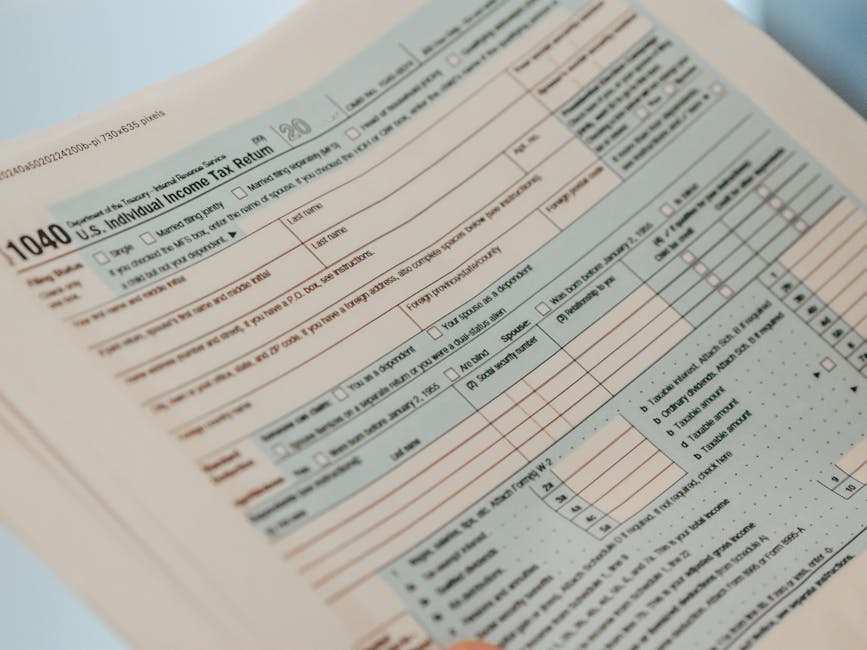
Why Bitcoin ETFs Are NOT the Same as Buying Bitcoin Directly (Tax-wise)
Here’s where most people trip up. Many investors assume that because Bitcoin ETFs hold Bitcoin, they’d be taxed the same way as holding crypto directly. In Korea, that’s not how it works — at least not yet in a fully unified framework.
As of 2026, Korean crypto taxation under the “Virtual Asset Income Tax” framework, originally scheduled to begin January 2025 (after multiple delays), is now formally in effect. However, Bitcoin ETFs listed on foreign exchanges (like the U.S.-listed iShares Bitcoin Trust ETF by BlackRock, or Fidelity Wise Origin Bitcoin Fund) are classified differently from direct virtual asset holdings. Here’s the breakdown:
- Direct Crypto (Bitcoin on Korean exchanges like Upbit, Bithumb): Taxed as “Virtual Asset Income” — gains above ₩2.5 million annually are taxed at a flat 20% (+ 2% local income tax = 22% effective rate).
- Foreign Bitcoin ETFs (e.g., IBIT, FBTC on NYSE/Nasdaq): Classified as “Foreign Financial Investment Income” under the overseas financial asset reporting rules — taxed at 22% on gains exceeding ₩2.5 million annually, but filed under a different tax form and process.
- Domestic ETFs tracking Bitcoin (if/when listed on KRX): Subject to standard ETF capital gains tax rules — a 15.4% withholding tax on gains within tax-advantaged accounts has specific nuances.
- Dividends or distributions from ETFs: Subject to financial income (금융소득) taxation, and may trigger the ₩20 million comprehensive financial income threshold rules.
The Real Numbers: What Triggers What in 2026
Let’s get specific, because vague advice is useless when you’re actually sitting down with your paperwork.
If your total overseas financial account balance exceeded ₩500 million at any point in 2025, you must file an Overseas Financial Account Report (해외금융계좌 신고) with the NTS by June 30, 2026. Failure to report carries penalties starting at 10% of the unreported balance — and that can escalate to criminal referral for amounts over ₩5 billion.
For capital gains from selling foreign Bitcoin ETFs:
- The reporting deadline is May 31, 2026 (for 2025 fiscal year gains) via the annual comprehensive income tax return (종합소득세 신고).
- You report gains under Schedule F (해외주식 양도소득) on Hometax (홈택스, hometax.go.kr).
- The basic deduction is ₩2.5 million per year — gains below this are tax-exempt.
- Above ₩2.5 million: flat 22% tax rate (20% national + 2% local).
- If you held the ETF across calendar years, you calculate gains per disposal event — not based on year-end value.
One thing many investors miss: foreign tax credits. If you paid capital gains tax in the U.S. (which most Korean residents don’t, since U.S. ETF gains aren’t typically taxed at source for non-U.S. persons), you could offset. But the nuance here is that for Korean tax residents, gains on U.S.-listed ETFs are generally NOT withheld at the U.S. level — meaning no credit to claim, and the full Korean tax applies.
Step-by-Step: How to Actually File on Hometax
This is what Junho actually needed — a walkthrough, not a lecture.
- Step 1 — Gather your records: Download your annual trading statement from your foreign brokerage (e.g., Charles Schwab, Interactive Brokers, Fidelity). You need purchase price (취득가액), sale price (양도가액), and dates of each transaction.
- Step 2 — Convert to KRW: All figures must be converted to Korean Won using the Bank of Korea’s base exchange rate (기준환율) on the date of each transaction — not the date of filing.
- Step 3 — Log in to Hometax: Go to hometax.go.kr → “신고/납부” → “양도소득세” → “해외주식 양도소득세 신고”.
- Step 4 — Enter asset details: Select “해외주식 및 ETF” as the asset type. Enter ISIN or ticker (e.g., IBIT), country (USA), and your gain/loss per lot.
- Step 5 — Apply the ₩2.5M deduction: Hometax will apply this automatically if you’re filing only overseas equity income.
- Step 6 — Pay by May 31: You can pay directly through Hometax using a linked bank account or card.

Case Studies: What Other Korean Investors Are Doing
I reached out to a few communities — including the popular Korean investing forum Clien (클리앙) and the overseas investing subreddit for Korean investors — to see how people are actually handling this in 2026.
One investor who had purchased approximately ₩30 million worth of IBIT (iShares Bitcoin Trust) in early 2024 and sold in late 2025 for a ₩12 million gain reported using a certified tax accountant (세무사) through the platform Samjong KPMG’s individual tax filing service and paid approximately ₩2.09 million in tax (22% of ₩9.5M after deduction). He said the accountant caught that he’d been incorrectly calculating his cost basis using average price rather than FIFO — a common error.
Another investor who was using Interactive Brokers Korea noted that IBKR now provides a Korean-language tax summary document, which significantly simplifies the KRW conversion calculation process — a huge time saver.
For those who want professional help, services like TaxBot Korea and Samil PricewaterhouseCoopers’ individual filing service have added Bitcoin ETF-specific modules in 2026 to handle the growing demand from retail investors who entered the space through the ETF route.
Common Mistakes to Avoid (Learn from Others’ Pain)
- Ignoring small gains: Even if you made “only” ₩3 million, you’re ₩500K above the threshold — still taxable.
- Wrong exchange rate: Using today’s rate instead of the transaction-date rate can swing your taxable amount by millions of won.
- Missing the overseas account reporting deadline: June 30 is separate from May 31 income tax. Many people file income tax correctly and completely forget the account report.
- Netting losses against gains incorrectly: You CAN offset losses from other foreign equities against Bitcoin ETF gains within the same tax year — use this strategically.
- Assuming ISA/pension wrappers cover ETFs: Korean ISA (개인종합자산관리계좌) accounts do NOT currently allow foreign-listed ETFs — only KRX-listed products apply under those tax shelters.
What If You Just Don’t File? (Spoiler: Not Worth It)
The NTS has been aggressively expanding its data-sharing agreements with foreign financial institutions and tax authorities through the Common Reporting Standard (CRS) and FATCA frameworks. As of 2026, the NTS receives annual reports from over 100 jurisdictions automatically. They will find out — the question is just when.
Voluntary disclosure (자진신고) before NTS contact results in a 50% penalty reduction. Filing after being notified? You face the full penalty plus interest (currently 8.03% annually per the 2026 NTS rate). For Bitcoin ETF gains that ran into the tens of millions of won, that’s not a theoretical risk — it’s a very real financial hit.
Realistic Alternatives and Planning Tips for 2026 and Beyond
If the tax burden feels heavy, here are some legitimate optimization strategies worth discussing with a tax professional:
- Tax-loss harvesting: If you have unrealized losses in other foreign securities, consider selling before December 31 to offset Bitcoin ETF gains within the same tax year.
- Spreading realizations: If you’re planning to sell a large position, consider whether phasing sales across two calendar years keeps each year’s gains near or below the ₩2.5M threshold.
- KRX-listed Bitcoin ETFs: As domestic Bitcoin ETF products potentially gain approval and list on the Korean Stock Exchange in the near future, they may offer access through tax-advantaged accounts like ISA — worth monitoring regulatory developments closely.
- Spousal allocation: If your spouse also invests independently, each person gets the ₩2.5M deduction separately — family-level planning can help.
The bottom line is this: Bitcoin ETFs are a legitimate, increasingly mainstream investment vehicle, and Korean tax law — while still catching up to the speed of crypto adoption — does provide a clear (if sometimes complex) framework for compliance. The cost of getting it right is your time or a modest accountant fee. The cost of getting it wrong is potentially much higher.
Editor’s Comment : If there’s one thing I’d tell Junho — and anyone else in his position — it’s this: treat your Bitcoin ETF holdings with the same seriousness you’d give any foreign stock investment. The “it’s crypto, maybe they won’t notice” era is genuinely over. But the flip side is equally true: the system IS navigable, the tools on Hometax have genuinely improved in 2026, and with a bit of preparation, you can stay fully compliant without it being a nightmare. When in doubt, a one-hour consultation with a tax accountant who handles overseas assets (해외주식 전문 세무사) is usually worth every won — especially if your gains are significant. This isn’t about fear; it’s about protecting the returns you worked for.
📚 관련된 다른 글도 읽어 보세요
- Senior Health Management in 2026: What’s Actually Working (And What Isn’t)
- 글로벌 에너지 위기가 반도체 공급망을 흔든다 — 2026년 투자자가 주목해야 할 핵심 변수
- SMR-Powered AI Data Centers in 2026: The Engineer’s Deep Dive Into Nuclear-Grade Computing
태그: Bitcoin ETF tax Korea, 비트코인 ETF 세금 신고, Korean cryptocurrency tax 2026, overseas ETF capital gains Korea, Hometax foreign stock filing, IBIT Korea tax, Korean crypto tax guide