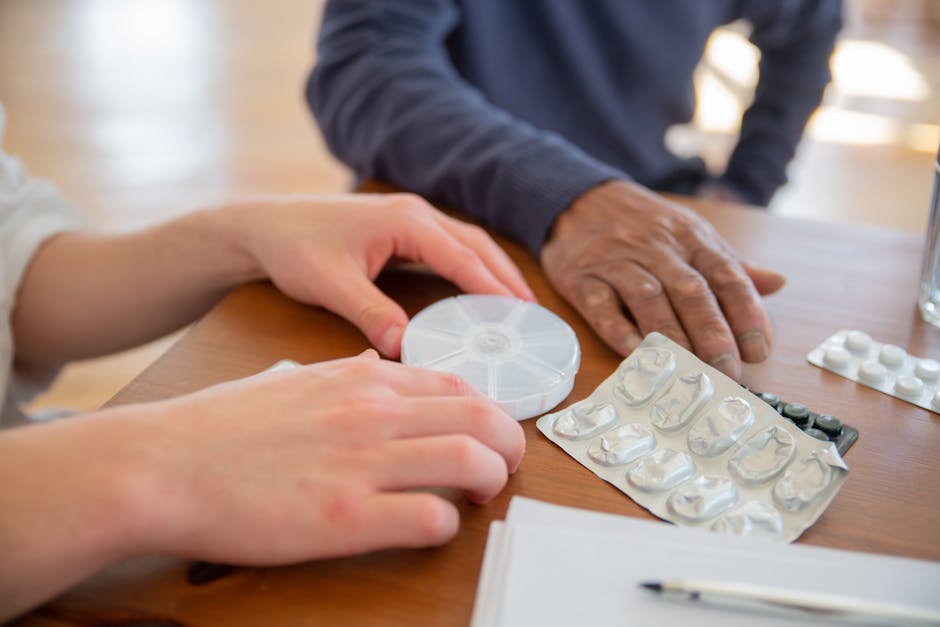
My neighbor’s father — a sharp 78-year-old who still does his morning tai chi — started a new blood pressure medication last winter. Within two weeks, his daughter called me in a panic. He’d been dizzy every time he stood up, had swollen ankles, and was sleeping far more than usual. She assumed he was just “getting old.” But when I looked at his pill bottles, I immediately recognized the classic side effect profile of a calcium channel blocker combined with an ACE inhibitor. She hadn’t been warned. The pharmacy printout was four pages of tiny legal text. Nobody had sat down and explained what to actually watch for.
That conversation stuck with me. Because this isn’t a rare story — it’s happening in millions of households right now. Managing hypertension in elderly patients is genuinely complex, and the side effects of antihypertensive drugs can look deceptively like “normal aging.” Let’s dig into this carefully, together.
Why Elderly Patients Are at Higher Risk for Antihypertensive Side Effects
First, let’s understand the physiology. As we age, several changes make drug side effects more likely and more dangerous:
- Reduced kidney function (GFR decline): After age 60, glomerular filtration rate drops roughly 1% per year. This means drugs stay in the system longer — even standard doses can become effectively “overdoses.”
- Decreased liver metabolism: Hepatic blood flow decreases by up to 40% in people over 70, slowing the breakdown of many medications.
- Impaired baroreceptor reflex: The body’s ability to compensate for sudden blood pressure drops diminishes significantly, making orthostatic hypotension (dizziness on standing) far more dangerous in seniors than in younger adults.
- Polypharmacy risk: According to the Korea Disease Control and Prevention Agency’s 2026 Senior Health Survey, 68% of Koreans over age 65 take five or more medications daily — creating enormous potential for drug-drug interactions.
- Lower total body water and muscle mass: This concentrates water-soluble drugs at higher plasma levels than expected from the dose alone.
The Main Drug Classes and Their Specific Side Effects in Seniors
There are five major antihypertensive drug classes commonly prescribed to elderly patients. Each has a distinct side effect fingerprint worth knowing:
1. Thiazide Diuretics (e.g., Hydrochlorothiazide, Indapamide)
These remain a first-line recommendation in most guidelines including JNC 8 and the 2026 updated ESC/ESH hypertension guidelines. However, in elderly patients, watch for:
- Hyponatremia (dangerously low sodium) — can cause confusion, falls, and even seizures. Studies show elderly patients are 3–5x more likely to develop severe hyponatremia than younger adults on the same dose.
- Hypokalemia (low potassium) — leads to muscle weakness and cardiac arrhythmia risk.
- Increased uric acid levels — can trigger or worsen gout.
- Dehydration — particularly dangerous in summer or during illness.
2. ACE Inhibitors (e.g., Enalapril, Lisinopril, Ramipril)
ACE inhibitors are excellent for seniors with diabetes or heart failure. But the classic side effect nobody warns patients about:
- Persistent dry cough — affects up to 30% of Asian patients (higher than Western populations due to genetic differences in bradykinin metabolism). Many seniors dismiss this as a cold or bronchitis for months.
- Hyperkalemia (elevated potassium) — especially dangerous when combined with potassium-sparing diuretics or NSAIDs like ibuprofen.
- Acute kidney injury risk — if the patient becomes dehydrated or takes NSAIDs concurrently.
3. ARBs — Angiotensin Receptor Blockers (e.g., Losartan, Valsartan, Telmisartan)
Often prescribed as a cough-free alternative to ACE inhibitors. Generally well-tolerated, but seniors should watch for:
- Dizziness and first-dose hypotension — especially with Losartan.
- Same hyperkalemia risk as ACE inhibitors.
- Rare but serious: angioedema (facial/throat swelling) — a medical emergency.
4. Calcium Channel Blockers — CCBs (e.g., Amlodipine, Nifedipine, Diltiazem)
Very commonly prescribed in Korea and East Asia. Amlodipine (marketed as Norvasc and various generics) is one of the most prescribed drugs in elderly Koreans. Key side effects:
- Peripheral edema — ankle and leg swelling affects up to 10–15% of elderly patients on amlodipine. This is often mistaken for heart failure.
- Facial flushing and headaches — particularly with nifedipine.
- Constipation — especially with verapamil; a real quality-of-life issue for seniors already struggling with gut motility.
- Gingival (gum) hyperplasia with long-term use of nifedipine.
5. Beta-Blockers (e.g., Metoprolol, Carvedilol, Bisoprolol)
Less commonly used as first-line for uncomplicated hypertension in seniors now, but frequently prescribed when heart failure or arrhythmia coexists. Side effects in elderly patients are particularly notable:
- Bradycardia (slow heart rate) — can cause fatigue, dizziness, and syncope.
- Masking hypoglycemia symptoms — dangerous for diabetic seniors on insulin or sulfonylureas.
- Cognitive effects — some older beta-blockers that cross the blood-brain barrier (like propranolol) can worsen memory or cause depression.
- Cold extremities and peripheral vasoconstriction.
- Exercise intolerance — reduces maximum heart rate, limiting physical activity.
The “Silent” Danger: Orthostatic Hypotension and Falls
This deserves its own section because it’s the most underappreciated risk. Orthostatic hypotension — a drop in systolic blood pressure of ≥20 mmHg or diastolic ≥10 mmHg within 3 minutes of standing — affects roughly 20–30% of community-dwelling elderly people on antihypertensives.
The consequence? Falls. And falls in seniors are catastrophic. According to the WHO 2026 Global Falls Prevention Report, falls are the second leading cause of accidental injury death worldwide, with hip fractures in elderly patients carrying a 1-year mortality rate of 20–30%.
Any antihypertensive can cause orthostatic hypotension, but the risk is highest with:
- Alpha-1 blockers (doxazosin) — now rarely recommended as monotherapy for seniors precisely because of this risk.
- Diuretics (especially loop diuretics like furosemide when used for hypertension).
- Combination therapy — using multiple antihypertensives together multiplies the fall risk.
Real-World Research and Clinical Guidelines Highlighting the Problem
The SPRINT Trial (Systolic Blood Pressure Intervention Trial) sparked enormous debate when it suggested intensive blood pressure control (targeting systolic below 120 mmHg) significantly reduced cardiovascular events. But the elderly subgroup analysis showed a notably higher rate of serious adverse events including syncope, acute kidney injury, and electrolyte disturbances compared to the standard-treatment group.
The HYVET Trial (Hypertension in the Very Elderly Trial), which specifically studied patients over 80, found that while treatment with indapamide ± perindopril reduced stroke and heart failure, it required very careful dosing — starting at half the usual adult dose — to avoid these side effects.
In Korea, the Korean Society of Hypertension’s 2026 Clinical Practice Guidelines now explicitly recommend the “start low, go slow” principle for patients over 75: begin at 50% of the standard adult dose and titrate over 4–6 weeks rather than 2 weeks.
The American Geriatrics Society’s Beers Criteria 2026 Update continues to flag several antihypertensives as potentially inappropriate in older adults, including:
- Alpha-1 blockers (doxazosin, prazosin) — high orthostatic hypotension risk.
- Central-acting agents like clonidine and methyldopa — can cause pronounced sedation and cognitive impairment.
- Short-acting nifedipine — associated with rapid blood pressure drops.
What Caregivers and Family Members Should Actively Monitor
If your parent or elderly loved one is on blood pressure medication, here’s a practical checklist based on the clinical patterns I’ve seen discussed most frequently:
- ✅ Morning blood pressure readings — take at the same time daily, after the patient has been sitting quietly for 5 minutes. Keep a log to share with the doctor.
- ✅ Sitting-to-standing check — have them stand up slowly, wait 1 minute, and ask if they feel dizzy or lightheaded. This simple check catches orthostatic hypotension.
- ✅ Watch for new coughs — especially 2–4 weeks after starting an ACE inhibitor. Don’t assume it’s a cold.
- ✅ Ankle swelling — photograph it weekly if on a CCB. Increasing swelling needs a doctor’s attention.
- ✅ Urine output changes — diuretics should increase urination. Sudden decrease could indicate kidney stress.
- ✅ Cognitive changes — new confusion, memory lapses, or personality changes after starting blood pressure medication can indicate electrolyte imbalance or drug interaction.
- ✅ Potassium-rich food interactions — patients on ACE inhibitors or ARBs should avoid large amounts of potassium supplements or very high-potassium foods (like excessive banana intake or potassium-based salt substitutes).
- ✅ NSAID alert — many seniors take ibuprofen or naproxen for joint pain. These interact dangerously with nearly all antihypertensives, raising blood pressure and increasing kidney injury risk. Acetaminophen (Tylenol) is a safer alternative for pain.
Realistic Alternatives and Complementary Approaches
Medication doesn’t have to carry the full burden alone. The 2026 guidelines from the American Heart Association emphasize that lifestyle modifications remain powerful adjuncts — not replacements, but genuine complements that can lower required medication doses:
- DASH diet adherence — consistently shown to lower systolic BP by 8–14 mmHg. Practically: less sodium (target under 1,500 mg/day for seniors), more fruits, vegetables, and low-fat dairy.
- Supervised resistance training — yes, even light weight training 2–3x per week has been shown to reduce systolic BP by 3–5 mmHg in elderly patients. It also builds the leg strength that prevents fall-related injuries from orthostatic hypotension.
- Home blood pressure monitoring — devices like the Omron HEM-7156T (popular in Korea) or Withings BPM Connect allow continuous tracking that reveals “white coat hypertension” — where readings are high only at the clinic, potentially leading to over-treatment.
- Regular medication reviews — request a full “polypharmacy review” from the primary care physician every 6 months. Sometimes a drug prescribed 5 years ago is no longer necessary or ideal.
The goal isn’t to be afraid of blood pressure medication — it genuinely saves lives and prevents strokes. The goal is to use it wisely, with eyes open to its specific risks in elderly bodies.
Editor’s Comment : After years of following geriatric pharmacology research, the pattern I keep seeing is that most medication-related crises in elderly patients aren’t caused by the drug itself — they’re caused by a lack of personalized monitoring and communication. The drug companies can’t individualize care. Algorithms can’t notice that grandpa seems more confused this week. People can. If you’re a caregiver or family member, your observations are genuinely clinical data. Write things down, bring a list to every doctor’s appointment, and never accept “that’s just aging” as the only explanation for a sudden change after a medication adjustment. Push for answers. That instinct has saved more lives than any single drug.
📚 관련된 다른 글도 읽어 보세요
- Bitcoin ETF Tax Strategies in 2026: Smart Ways to Keep More of Your Crypto Gains
- SMR 원전 수출, 한국은 지금 어디쯤 와 있을까? 2026년 글로벌 경쟁력 분석
- Bitcoin ETF Investment Strategy in 2026: What the Latest Trends Are Actually Telling Us
태그: elderly hypertension medication, antihypertensive side effects seniors, blood pressure medication elderly, senior medication safety 2026, orthostatic hypotension elderly, Korean senior health, geriatric pharmacology