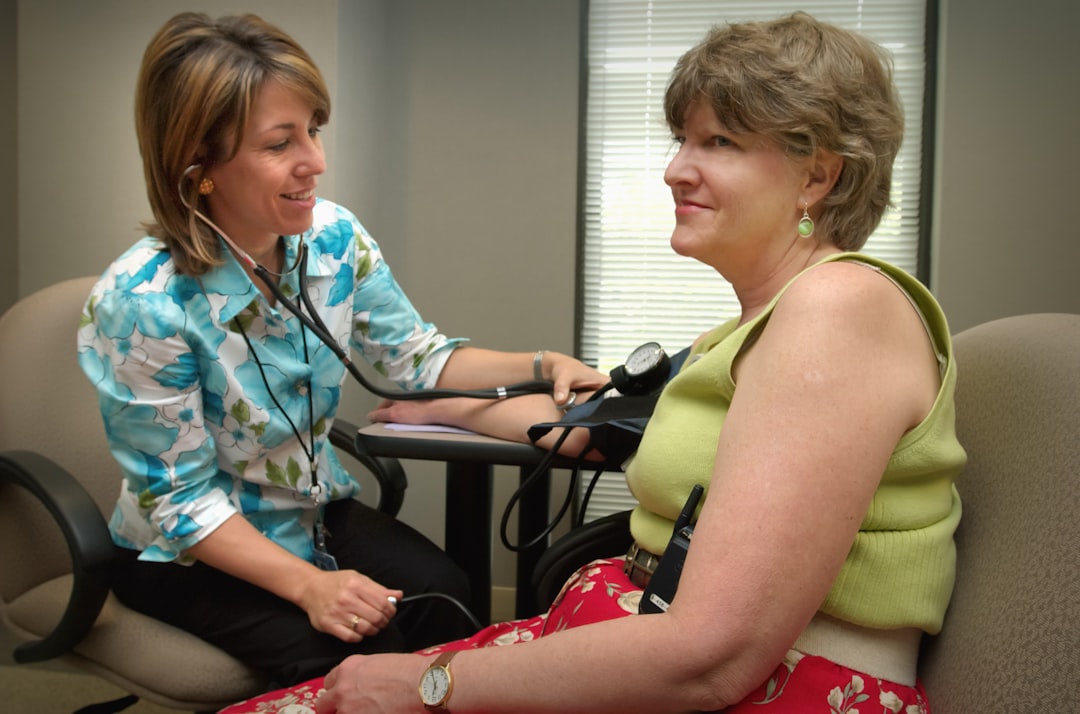
Picture this: Margaret, a sharp-minded 74-year-old retired schoolteacher, walks into her doctor’s office after her blood pressure reading clocks in at 148/88 mmHg. Her physician pulls up the latest 2026 hypertension guidelines on a tablet and says, “Actually, Margaret, let’s talk about what this number really means for someone your age.” That moment — where raw data meets lived experience — is exactly what the updated guidance is trying to capture.
For decades, doctors treated blood pressure targets the same way across age groups. But as we move deeper into 2026, the evidence is unmistakable: managing hypertension in adults aged 70 and older is a fundamentally different clinical — and lifestyle — challenge. Let’s think through this together.
What Do the 2026 Guidelines Actually Say?
The 2026 updates from both the American College of Cardiology/American Heart Association (ACC/AHA) and the European Society of Hypertension (ESH) have converged on several nuanced points that move away from the one-size-fits-all approach.
- Systolic target for adults 70–79: The recommended systolic blood pressure (SBP) target is under 130 mmHg, provided the patient tolerates treatment well and does not have significant frailty or orthostatic hypotension risk.
- Adults 80 and older: A slightly relaxed target of 130–139 mmHg systolic is now considered acceptable, reflecting the higher risk of falls and hypotension in the oldest cohort.
- Frailty assessment is now mandatory: The 2026 guidelines formally require a Clinical Frailty Scale (CFS) or equivalent frailty screening before setting individualized targets. This is a major shift from previous editions.
- Diastolic caution: Pushing diastolic pressure below 65–70 mmHg in older adults is now flagged as potentially harmful — a J-curve phenomenon associated with increased cardiovascular events.
- Polypharmacy review: Given that adults 70+ often take 5 or more medications simultaneously, the guidelines now explicitly call for annual medication reconciliation to reduce adverse drug interactions.
Why Does Age Change Everything?
Here’s where it gets genuinely interesting from a physiological standpoint. As we age, arterial walls become stiffer — a process called arteriosclerosis (not to be confused with atherosclerosis, which involves plaque). This stiffness means the gap between systolic (peak pressure) and diastolic (resting pressure) readings, known as pulse pressure, tends to widen. A reading of 155/65 mmHg in a 78-year-old tells a very different story than the same number in a 45-year-old.
Add to this the fact that baroreceptor sensitivity — the body’s internal pressure-regulation reflex — diminishes with age, making older adults far more susceptible to orthostatic hypotension (a sudden drop in blood pressure upon standing). This is a leading contributor to falls and fractures, which carry their own devastating morbidity in this age group. Treating aggressively without accounting for this is, frankly, trading one risk for another.
Global Perspectives: How Different Countries Are Applying the 2026 Framework
It’s worth looking at how the guidance is being rolled out in practice around the world, because cultural and systemic factors matter enormously.
South Korea has been particularly proactive. The Korean Society of Hypertension released a localized 2026 adaptation that integrates geriatric syndromes — including cognitive decline and sarcopenia — as formal modifiers of treatment targets. Korean community health centers (보건소) now offer standardized frailty screening alongside blood pressure checks, making the assessment genuinely accessible at a grassroots level.
Japan, with one of the world’s oldest populations, continues to emphasize home blood pressure monitoring (HBPM) over clinic measurements, citing white coat hypertension as a significant confounding factor in elderly patients. The 2026 Japanese Society of Hypertension guidelines recommend at least 14 days of morning and evening home readings before any treatment adjustment — a practice that reduces over-treatment substantially.
The United Kingdom’s NHS has embedded the updated targets into its Quality and Outcomes Framework (QOF) for GP practices, meaning family doctors now receive performance incentives tied to frailty-adjusted blood pressure control — a policy lever that the U.S. and many other systems haven’t yet fully adopted.

Lifestyle Interventions: Often Underestimated, Always Relevant
Medication is often the first conversation, but let’s not gloss over how powerful non-pharmacological strategies remain — even at 70+. The 2026 guidelines reinforce that these approaches can reduce systolic BP by measurable margins:
- Dietary Approaches to Stop Hypertension (DASH) diet: Consistent evidence shows a 8–14 mmHg reduction in systolic BP. Importantly, this diet is adaptable for older adults with reduced appetite or dental issues through softer food preparations.
- Sodium reduction: Limiting sodium to under 2,000 mg/day remains effective, though the guidelines acknowledge that older adults with poor appetite need careful monitoring to avoid unintentional undernutrition.
- Resistance and aerobic exercise: Even moderate-intensity activity (e.g., 30 minutes of brisk walking, 5 days/week) shows a 4–9 mmHg systolic reduction. Chair-based resistance exercises are specifically highlighted for those with mobility limitations.
- Alcohol moderation: Reducing to fewer than 14 units/week (for men) and 7 units/week (for women) remains a consistent recommendation.
- Stress and sleep: The 2026 update gives greater formal weight to sleep quality and chronic psychological stress as blood pressure drivers — particularly relevant for older adults who frequently experience sleep architecture changes.
When Medication Is Needed: What’s Changed?
For those who do require pharmacological treatment, first-line options haven’t dramatically shifted, but the sequencing and dosing philosophy has. Calcium channel blockers (e.g., amlodipine) and thiazide-like diuretics (e.g., chlorthalidone) remain preferred starting points. ACE inhibitors or ARBs are prioritized when diabetes or chronic kidney disease coexists.
What’s new is the emphasis on “start low, go slow” dosing in adults over 75. The 2026 guidance recommends initiating at 50% of standard adult doses and titrating over 4–8 weeks rather than 2–4, to minimize the risk of rapid blood pressure drops. It sounds cautious, and it is — deliberately so.
Realistic Alternatives for Different Situations
Not every 70+ adult has the same resources, health literacy, or support system. So let’s think practically:
- If clinic visits are difficult: Telehealth-integrated blood pressure monitoring devices (many now sync directly to patient portals) allow meaningful remote management. Brands offering validated devices specifically tested in older populations include those certified by the ESH’s 2026 validation protocol list.
- If multiple medications feel overwhelming: Ask your physician about combination pill formulations. Fixed-dose combinations can reduce pill burden from 4 tablets to 1–2 without compromising efficacy — and the 2026 guidelines explicitly endorse their use for adherence improvement.
- If exercise feels impossible due to joint pain or balance issues: Aquatic exercise and tai chi have robust evidence for both blood pressure reduction and fall prevention — a genuine two-for-one benefit that’s underutilized in clinical conversations.
- If cost is a concern: Generic versions of first-line medications (amlodipine, chlorthalidone, losartan) are widely available and inexpensive. The 2026 WHO Essential Medicines List continues to include all major antihypertensive classes, and many national health systems fully subsidize them for older adults.
The core message threading through all of 2026’s updated thinking is this: individualization isn’t a luxury — it’s the standard of care. A number on a cuff is just a starting point. What matters is how that number interacts with that particular person’s history, physiology, lifestyle, and goals.
If you’re in your 70s or caring for someone who is, the most empowering thing you can do right now is bring these conversations to the surface with your healthcare provider — armed with the knowledge that current guidelines actually support a more thoughtful, less aggressive approach than you might expect.
Editor’s Comment : The shift in 2026 hypertension guidelines toward frailty-adjusted, individualized targets for adults 70+ reflects a broader maturation in how medicine thinks about aging — not as a uniform state, but as a spectrum. The most encouraging part? Many of the most impactful interventions are accessible, low-cost, and firmly within patients’ own control. The best blood pressure management plan is always the one you can actually sustain.
📚 관련된 다른 글도 읽어 보세요
- 인플레이션 헤지, 원자재 ETF 투자로 돈 지키는 법 (2026년 완전 정리)
- Rising Energy Costs Are Squeezing Semiconductor Profits in 2026 — Here’s What’s Really Going On
- 노인 낙상 예방 운동 추천 2026 | 집에서 쉽게 하는 균형 강화 루틴 총정리
태그: [‘hypertension management 2026’, ‘blood pressure guidelines elderly’, ‘seniors cardiovascular health’, ‘high blood pressure over 70’, ‘antihypertensive treatment older adults’, ‘DASH diet hypertension’, ‘frailty and blood pressure’]