Picture this: It’s early 2026, and a major fab in Arizona has just announced a three-week production slowdown — not because of a chip shortage or labor dispute, but because the regional power grid simply couldn’t keep up with demand. That scenario, once dismissed as a fringe concern, is now a boardroom-level conversation across every semiconductor company on the planet.
The collision between the global energy crisis and semiconductor supply chains is one of the most consequential investment themes of our time. And if you’re not thinking about it, you might be missing both a significant risk and a remarkable opportunity. Let’s reason through this together.
Why Semiconductor Fabs Are Energy-Hungry Giants
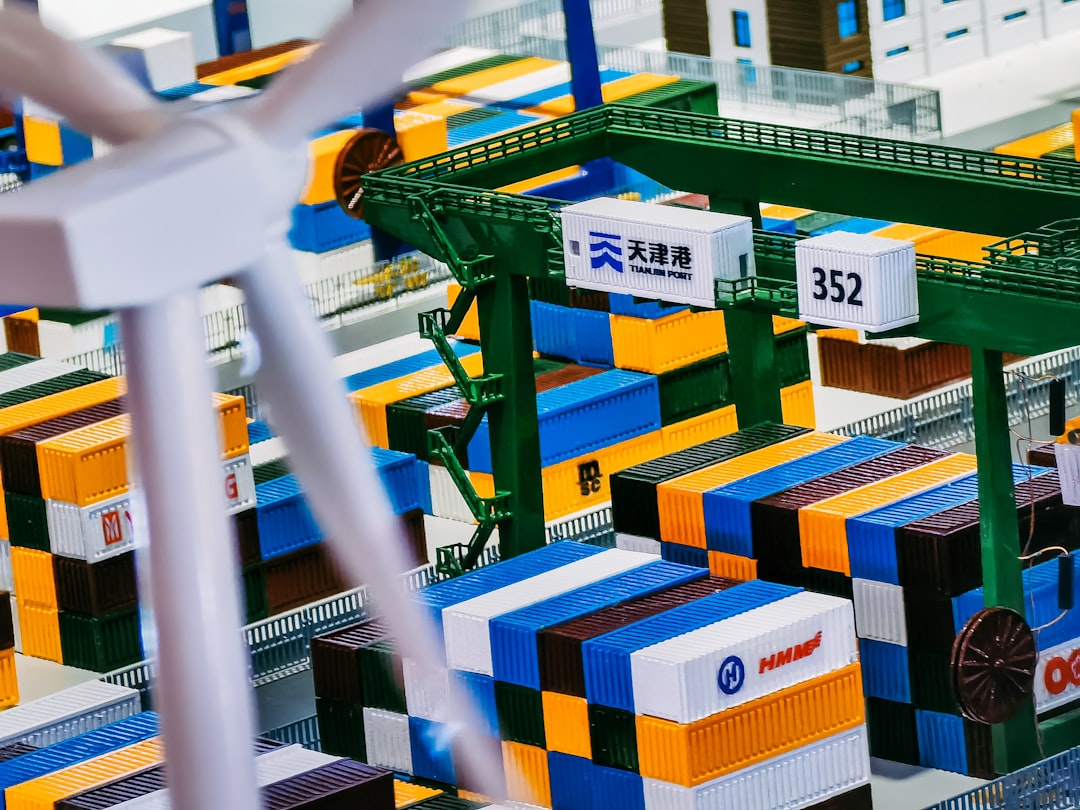
To understand the stakes, let’s start with the basics. A modern semiconductor fabrication plant — or “fab” — is one of the most energy-intensive industrial facilities ever built. TSMC’s advanced nodes (think 3nm and below) consume roughly 200–300 megawatt-hours per day per facility. For context, that’s enough to power a mid-sized city. When you multiply that across the dozens of new fabs being constructed globally as part of reshoring efforts — the CHIPS Act in the US, the EU Chips Act, and South Korea’s K-Chips strategy — you’re looking at a colossal new draw on already-strained power grids.
And here’s the compounding problem: the AI boom, which is itself fueling unprecedented chip demand, is also driving massive energy consumption at data centers. So we have a double-bind: more chips needed → more fabs → more energy needed → grids under greater stress → fabs at risk of disruption.
The Data Doesn’t Lie: Supply Chain Vulnerabilities in 2026
According to the International Energy Agency’s 2026 outlook, global electricity demand from semiconductor manufacturing is projected to grow by 40% through 2030 compared to 2023 baselines. Meanwhile, renewable energy infrastructure buildout is lagging behind by an estimated 18–24 months in key manufacturing hubs including Taiwan, Germany, and the American Southwest.
The ripple effects are already visible:
- Taiwan’s grid tension: TSMC has been negotiating dedicated renewable power purchase agreements (PPAs) directly with offshore wind developers because the national grid simply cannot guarantee uptime at the level a fab requires.
- Germany’s industrial energy costs: With electricity prices still elevated post-Russia crisis, Intel’s Magdeburg fab project has faced repeated cost revisions — the energy bill alone is now a primary variable in ROI calculations.
- Arizona’s water-energy nexus: Chip fabs also consume enormous amounts of ultrapure water for cleaning processes. In drought-prone Arizona, where TSMC, Intel, and others are expanding, water and energy constraints are being evaluated together as a dual infrastructure risk.
- South Korea’s nuclear pivot: Samsung and SK Hynix are quietly lobbying for priority access to next-generation small modular reactor (SMR) output, recognizing that stable baseload power is non-negotiable for advanced packaging and HBM memory production.
- Japan’s strategic energy buffer: TSMC’s Kumamoto fab (Fab 2 now under construction) has been co-designed with an on-site solar microgrid and battery storage system — a model increasingly cited by analysts as the “fab of the future.”
Investment Angles: Where the Opportunity Actually Lives
Now, here’s where it gets genuinely interesting from an investment standpoint. The instinct might be to simply buy semiconductor stocks — but the smarter play in 2026 might be the infrastructure layer that makes chip manufacturing possible.
Think of it this way: during the Gold Rush, the people who reliably made money weren’t always the miners — they were the ones selling picks, shovels, and denim jeans. The modern equivalent? Energy infrastructure for fabs.
Key Investment Categories Worth Watching
Let’s break down the realistic investment landscape into digestible tiers:
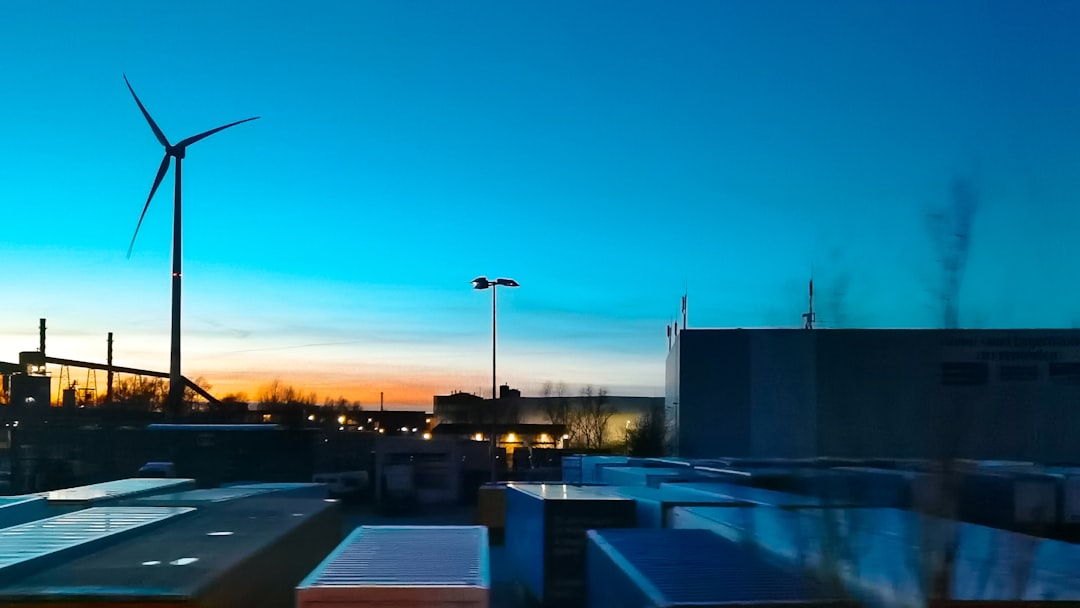
- Tier 1 — Direct Energy Suppliers: Companies with existing or contracted PPAs tied to semiconductor clients. NextEra Energy, Orsted (offshore wind), and NuScale Power (SMR development) are all positioned here. These are relatively lower-volatility plays with longer-term contracted revenue.
- Tier 2 — Grid Resilience Technology: Firms providing battery storage systems, grid software, and power quality management. Fluence Energy and companies in the HVDC (high-voltage direct current) transmission space are quietly becoming critical infrastructure players.
- Tier 3 — Fab-Adjacent REITs and Industrial Real Estate: Industrial REITs that own or develop land near power-stable corridors (think Prologis in energy-rich regions) are benefiting from a new wave of fab-adjacent logistics demand.
- Tier 4 — Semiconductor Equipment with Energy Efficiency Focus: ASML, Lam Research, and Applied Materials are all under pressure from chipmakers to deliver more energy-efficient process tools. Equipment makers that can demonstrably reduce energy per wafer will have a genuine competitive moat.
- Tier 5 — ETF Approach for Diversification: If individual stock picking feels too risky, thematic ETFs that blend clean energy infrastructure with semiconductor supply chain exposure are emerging in 2026. Look for funds that explicitly disclose fab-related energy holdings in their methodology.
Realistic Alternatives for Different Investor Profiles
Not everyone has the same risk tolerance or portfolio size, so let’s be practical about alternatives:
If you’re a conservative investor: Focus on utility companies with long-term contracted fab power agreements. The upside is capped, but so is the downside — and dividend yields in the 3.5–5% range are attractive in a world where energy security commands a premium.
If you’re a growth-oriented investor: SMR developers and grid software companies carry higher risk but potentially transformative upside. NuScale, Oklo, and similar firms are essentially pre-revenue bets on whether next-generation nuclear becomes the “always-on” solution that fab operators desperately need. Position sizing matters enormously here.
If you’re an ESG-conscious investor: The good news is that energy-efficient fab infrastructure and green energy investment are increasingly the same trade. Renewable PPAs, battery storage, and demand-response grid technologies all tick both the financial and sustainability boxes simultaneously.
If you’re outside the US: Don’t overlook the Korea and Japan angle. Both governments are treating semiconductor energy security as a national strategic priority in 2026, creating policy-backed tailwinds for domestic energy infrastructure companies — often with less valuation froth than their US counterparts.
The Risk Factors You Shouldn’t Ignore
Being intellectually honest means we also have to acknowledge the headwinds. Policy risk is real — subsidy structures can change with elections. Technology risk exists in SMR timelines, which have historically slipped. And concentration risk is a concern: if too much fab capacity clusters in regions with energy instability (looking at you, Taiwan), a single grid event could cascade across global supply chains in ways that no individual investment position can fully hedge.
Diversification across geography and energy type isn’t just financially prudent — in this context, it’s structurally necessary.
The bottom line? The global energy crisis and semiconductor supply chain aren’t two separate stories. They’re chapters in the same book, and 2026 is a pivotal year for understanding how that story ends. The investors who recognize the infrastructure layer — not just the chip layer — as the strategic battleground are likely to find the most durable opportunities in the decade ahead.
Editor’s Comment : What strikes me most about this theme is how it forces a genuinely systems-level way of thinking about investment. It’s not enough to ask “will chips be in demand?” — because of course they will. The sharper question is “what does it physically take to make those chips, and who controls that?” Energy is the answer that most mainstream semiconductor coverage still underweights. If you’re building a portfolio for the next five years, I’d argue energy infrastructure for advanced manufacturing deserves a dedicated allocation — not as a niche bet, but as a foundational position.
📚 관련된 다른 글도 읽어 보세요
- Sarcopenia in Seniors: The Best Strength Training Methods to Prevent Muscle Loss in 2026
- 에너지 비용이 반도체 제조 수익성을 결정한다 – 2026년 최신 분석
- South Korea’s SMR Nuclear Export Race in 2026: Can K-Nuclear Become the Next K-Wave?
태그: [‘semiconductor supply chain 2026’, ‘global energy crisis investment’, ‘fab energy consumption’, ‘chip manufacturing infrastructure’, ‘clean energy semiconductor’, ‘SMR investment 2026’, ‘CHIPS Act energy strategy’]