Picture this: it’s a cold winter morning in a mid-sized city in Wyoming, and the lights stay on — not because of a distant coal plant or a sprawling solar farm struggling under cloud cover, but because of a compact, modular nuclear reactor sitting quietly on the outskirts of town. That image isn’t science fiction anymore. In 2026, Small Modular Reactors (SMRs) have moved from whiteboard dreams to concrete construction timelines, and the global energy conversation has shifted dramatically as a result.
I’ve been tracking clean energy transitions for years, and I’ll be honest — SMR development has been one of the most fascinating slow burns I’ve ever followed. Let’s think through where we actually are, what the data says, and what this means for you as someone trying to understand where energy (and maybe investment, policy, or career paths) is heading.
What Exactly Is an SMR, and Why Does It Matter?
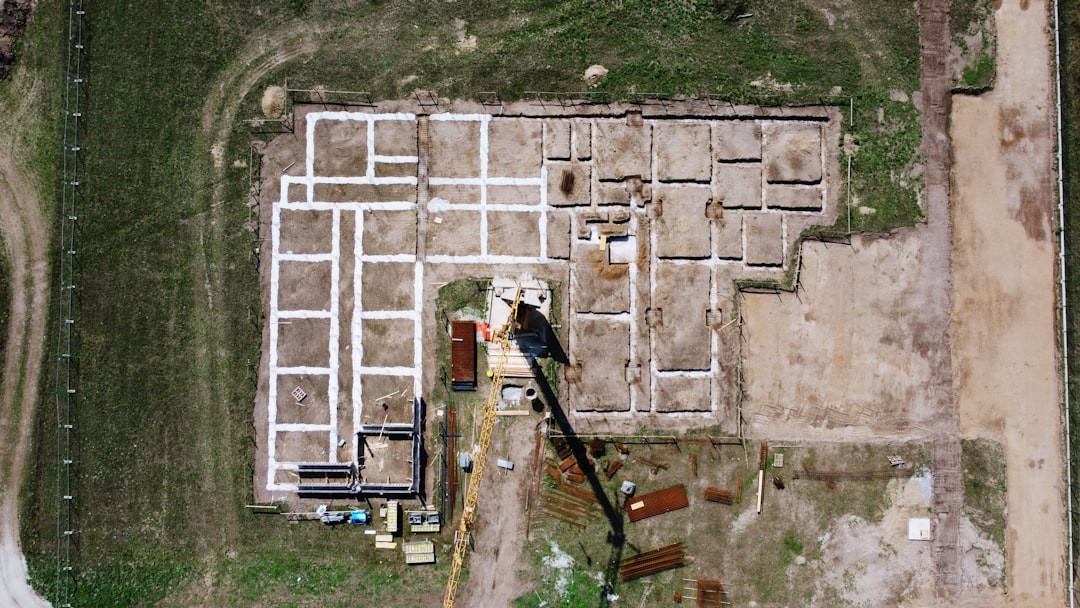
Before we dive into timelines, let’s get grounded. A Small Modular Reactor is essentially a scaled-down nuclear power plant — typically generating between 50 to 300 megawatts of electricity (MWe), compared to the 1,000+ MWe output of conventional large nuclear plants. The “modular” part means key components are factory-manufactured and shipped to site, which theoretically slashes construction time and cost overruns — the two historic killers of nuclear economics.
SMRs use the same fission principle as traditional reactors but with design innovations that improve passive safety, reduce water usage, and allow deployment in remote or grid-constrained locations. Some designs go even further with advanced coolants (molten salt, liquid metal, helium gas) under the broader “Advanced SMR” or Generation IV umbrella.
The 2026 Global Commercialization Landscape: Where Do We Actually Stand?
Here’s where it gets really interesting. Let’s look at the hard data as of early 2026:
- NuScale Power (USA): Despite the high-profile cancellation of the Carbon Free Power Project in Idaho in late 2023, NuScale has pivoted. In 2026, the company holds active licensing agreements in Romania and Poland, with the Romanian Doicești site targeting a first-of-kind commercial operation date (COD) of 2030–2031. Their VOYGR™ design received NRC Design Approval in 2022 — still the only SMR to do so in the U.S.
- Rolls-Royce SMR (UK): This is arguably the most watched project right now. The UK government committed £196 million in co-funding, and Rolls-Royce’s Generic Design Assessment (GDA) with the Office for Nuclear Regulation is progressing. Target COD: early 2030s, with sites under evaluation in Wales and northern England.
- GE Hitachi BWRX-300: Ontario Power Generation (OPG) in Canada broke ground at the Darlington New Nuclear Project in 2024 and is pushing toward a 2029–2030 operational date — the most aggressive Western timeline currently active.
- Russia’s RITM-200 (Rosatom): Already technically operational via floating nuclear power plants (the Akademik Lomonosov), Russia is marketing land-based RITM-200 units aggressively across Central Asia and Africa, with several contracts signed in 2025.
- China’s ACP100 (CNNC): The Changjiang SMR in Hainan Province is the world’s first land-based commercial SMR under construction, with grid connection targeted for late 2026 to 2027. China is, characteristically, moving fastest.
- TerraPower (USA): Bill Gates-backed TerraPower’s Natrium reactor in Kemmerer, Wyoming broke ground in 2024, targeting 2030 operations. It pairs a sodium-cooled fast reactor with a molten salt energy storage system — a genuinely novel grid integration approach.
Why Commercial Schedules Keep Slipping — And Whether That’s Changing
Let’s be real here. The nuclear industry has a credibility problem with timelines. The promise of “cheaper and faster” via modularity has repeatedly run into the hard reality of first-of-a-kind (FOAK) engineering complexity. Supply chain gaps for nuclear-grade components, workforce shortages in specialized trades, and regulatory timelines that don’t compress easily have all added years and costs to early projects.
However, 2026 feels genuinely different for a few structural reasons:
- Regulatory modernization: The U.S. ADVANCE Act (enacted 2024) streamlined NRC licensing pathways. The UK and Canada have implemented similar reforms. This is real, not just promised.
- Supply chain investment: Companies like Curtiss-Wright, BWX Technologies, and a growing constellation of European suppliers have made capital investments specifically targeting SMR component manufacturing at scale.
- Policy certainty: The EU’s taxonomy inclusion of nuclear as a transitional green energy source, combined with U.S. IRA nuclear tax credits (§45U for existing plants, with extensions under discussion for new builds), has unlocked financing that simply wasn’t available in 2020.
- Corporate demand: Tech giants including Microsoft, Google, and Amazon have signed nuclear power purchase agreements (PPAs) or exploration MOUs, creating demand-side credibility that banks can lend against.
Domestic Example: South Korea’s APR+ and SMART Reactor Push
South Korea deserves specific attention here. KEPCO and KAERI have been developing the SMART (System-integrated Modular Advanced ReacTor) — a 100 MWe integral PWR — since the 1990s, receiving domestic standard design approval in 2012. Despite slow domestic uptake, 2025–2026 saw renewed momentum via Saudi Arabia cooperation agreements and discussions with several Southeast Asian nations through the “nuclear export” framework Korea has been cultivating aggressively.
Korea’s advantage is vertical integration: they have domestic fuel fabrication, construction experience, and operational expertise. Their challenge is that the SMART design is older-generation compared to Western and Chinese competitors now racing ahead. The Korean government’s 2026 energy policy explicitly names SMR export as a strategic industrial priority, backed by roughly ₩400 billion in R&D commitments through 2030.
What This Means Practically: Realistic Timelines by Region
If you’re a policy watcher, investor, or just an energy-curious person trying to calibrate expectations, here’s a grounded regional outlook:
- Canada: Most likely to deliver the first Western SMR to commercial operation — Darlington BWRX-300 by 2029–2030 is the leading candidate.
- China: ACP100 at Changjiang could claim “world’s first land-based commercial SMR” as soon as late 2026 or 2027.
- USA: First commercial SMR unlikely before 2030. TerraPower’s Natrium and NuScale’s international projects are the primary vehicles.
- Europe: 2030s is the realistic window. Romania and Poland as Eastern European adopters may move faster than Western Europe.
- Emerging Markets: Russian and Chinese designs will likely penetrate Africa, Central Asia, and Southeast Asia first, raising significant geopolitical implications around energy infrastructure dependency.
Realistic Alternatives and Complementary Strategies
Here’s something I think gets lost in the SMR excitement: for most communities and grid operators, SMRs are not a 2026 or even 2028 solution. They’re a 2030s tool at the earliest in most Western markets. So what fills the gap?
The honest answer involves a portfolio approach:
- Existing nuclear fleet life extensions — the U.S., France, and Japan are all pursuing this. It’s the cheapest carbon-free electricity available right now.
- Long-duration energy storage paired with renewables to address intermittency during the transition decade.
- Advanced geothermal (companies like Fervo Energy) as a baseload complement that shares some of SMR’s locational flexibility without the regulatory complexity.
- Grid modernization investment — transmission bottlenecks are arguably as big a barrier to clean energy as generation technology gaps.
SMRs should be part of the conversation, not the whole conversation. The smart energy planner in 2026 thinks in systems, not silver bullets.
Editor’s Comment : What genuinely excites me about SMRs in 2026 is that the question has shifted from “will this ever work?” to “who gets there first?” That’s a meaningful evolution. But I’d caution against letting the excitement compress your sense of realistic timelines. The next five years will be decisive — we’ll see first-of-a-kind projects either validate the commercial model or expose new cost and schedule challenges. My honest take: keep a close eye on Canada’s Darlington project and China’s Changjiang unit. Those two results, more than any policy announcement, will tell us whether the SMR era has truly arrived.
📚 관련된 다른 글도 읽어 보세요
- 65세 이상 무릎 관절염 치료 후기 총정리 | 2026년 실제 경험담과 현실적인 치료법
- 유가 급등이 삼성전자·SK하이닉스 주가에 미치는 영향 2026년 총정리
- 2026년 노인 영양제 추천 및 부작용 주의사항 총정리 | 60대 이상 필수 가이드
태그: [‘SMR commercialization 2026’, ‘small modular reactor timeline’, ‘next generation nuclear energy’, ‘advanced nuclear technology’, ‘clean energy transition’, ‘nuclear power investment’, ‘TerraPower NuScale SMR’]