Picture this: It’s early 2026, and you’re watching your semiconductor ETF ticker blink red for the third consecutive week. You open three different financial news tabs simultaneously — one screams ‘Fed holds rates,’ another warns of ‘new U.S.-China chip export controls,’ and a third cheerfully reports ‘AI data center demand hits all-time high.’ Which one actually matters for your portfolio? The honest answer? All of them do — but in very different ways, and at very different time scales. Let’s think through this together.
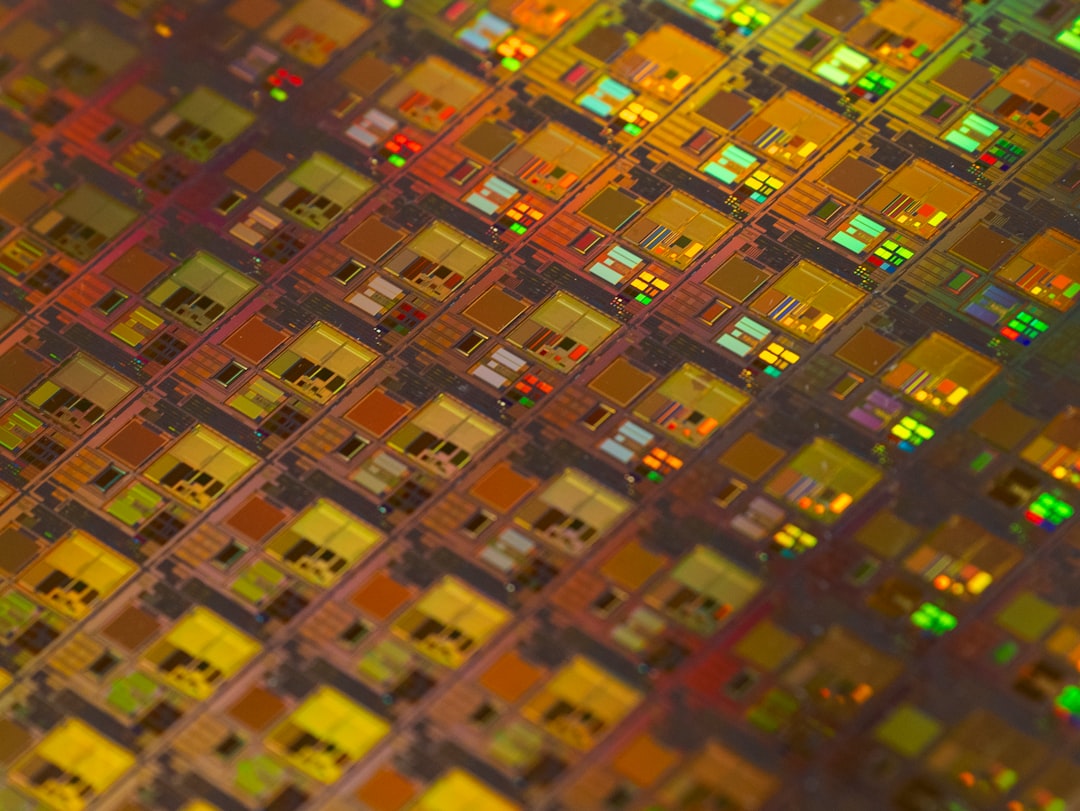
The Macro Landscape Shaping Semiconductor Stocks in 2026
Semiconductor equities have never existed in a vacuum, but in 2026, the web of macroeconomic variables feels tighter and more interconnected than ever. To understand why your NVIDIA, TSMC, or Samsung Electronics shares are moving the way they are, you really need to zoom out and look at at least four major macro forces pulling the sector in different directions simultaneously.
1. The Federal Reserve’s Rate Trajectory
As of Q1 2026, the U.S. Federal Reserve has maintained its benchmark rate in the 4.00–4.25% corridor following a cautious series of 25-basis-point cuts that began in late 2024. Here’s the key logic: semiconductor companies — especially fabless design firms like NVIDIA and AMD — carry significant R&D capitalization on their balance sheets. Higher discount rates compress the present value of future earnings, which is why rate-sensitive growth stocks in the chip sector often move inversely to yield expectations. When the 10-year Treasury yield nudges above 4.5%, you’ll typically see multiple compression in high-P/E chip names, even if their actual earnings guidance is strong. In 2026, the market is pricing in roughly two more rate cuts by year-end, which creates a mildly supportive backdrop — but it’s not a guaranteed tailwind.
2. The U.S. Dollar Index (DXY) and Its Ripple Effects
A stronger dollar is genuinely complicated for semiconductor companies. TSMC (Taiwan Semiconductor Manufacturing Company) reports earnings in New Taiwan Dollars, but invoices most of its clients in USD. When the DXY strengthens, TSMC’s USD-denominated revenues look better in local currency terms — boosting its NTD earnings — but conversely, it makes U.S. chip equipment exports (think ASML, KLA, Applied Materials) slightly more expensive for non-dollar customers. As of early 2026, the DXY is hovering around 103–105, which sits in a relatively neutral zone that doesn’t dramatically distort semiconductor trade flows in either direction.
3. Geopolitical Chip Restrictions and Export Control Regimes
This is perhaps the single most unpredictable macro variable in 2026. The updated U.S. Bureau of Industry and Security (BIS) export control framework — which significantly expanded restrictions on advanced chip architectures and EUV lithography tool exports to China in 2023 through 2025 — continues to reshape supply chains. China’s domestic push through companies like SMIC and Hua Hong Semiconductor has accelerated, but they remain technologically constrained at nodes below 7nm for high-volume production. The practical implication for investors: companies with heavy China revenue exposure (historically around 25–30% for some U.S. chip firms) face genuine top-line risk, while those pivoting to Southeast Asian and Indian manufacturing partnerships may be quietly building durable competitive moats.
4. AI Infrastructure Spending Cycles
Here’s where the narrative gets genuinely exciting. The hyperscaler capex boom — driven by Microsoft Azure, Google Cloud, Amazon AWS, and newer entrants — shows no structural signs of reversal in 2026. Data center GPU demand, particularly for AI training and inference workloads, continues to be the dominant demand driver for leading-edge logic chips. NVIDIA’s H200 and Blackwell-architecture products remain supply-constrained in meaningful ways. However, investors should track a critical leading indicator: hyperscaler capex guidance revisions in quarterly earnings calls. When Microsoft or Google trims forward capex estimates even by 5–8%, it historically precedes a 10–15% correction in GPU-adjacent semiconductor names within 60–90 days.
Real-World Examples: Domestic and International Signal Points
Let’s ground this in actual market behavior we’ve observed entering 2026.
Samsung Electronics (KRX: 005930) — The DRAM Bellwether
Samsung’s semiconductor division performance is essentially a real-time indicator of global memory market health. After the brutal DRAM and NAND oversupply correction of 2022–2023, the memory cycle has normalized. In 2026, average selling prices for DDR5 and HBM3e (High Bandwidth Memory) have stabilized at healthy margins, largely driven by AI accelerator stacking requirements. But here’s the nuance: Samsung’s foundry division (competing with TSMC for advanced logic) has struggled to capture premium fabless clients at 3nm and below, which means its stock narrative is split — bullish on memory, uncertain on logic foundry. Macro investors watch Samsung’s quarterly inventory levels as a proxy for broader tech demand health globally.
TSMC (NYSE: TSM) — The Geopolitical Swing Factor
TSMC’s Arizona fab (Fab 21) has ramped into commercial production of 4nm chips as of 2025–2026, representing a meaningful shift in geographic diversification. From a macro variable perspective, TSMC’s stock is uniquely sensitive to Taiwan Strait tension headlines — a geopolitical risk premium that no fundamental earnings model can fully price in. Investors in 2026 are essentially making a dual bet: on secular AI chip demand AND on geopolitical stability. TSMC’s management has been transparent about the cost differential between Arizona and Taiwan production (estimated 10–15% higher in Arizona), which compresses margin profiles slightly but reduces single-geography risk.
ASML (NASDAQ: ASML) — The Equipment Proxy Trade
If you want macro semiconductor exposure without betting on a single chip company’s product cycle, ASML remains the classic “picks and shovels” play. As the sole producer of EUV (Extreme Ultraviolet) lithography machines — which are absolutely essential for sub-7nm chip manufacturing — ASML’s order backlog functions as a forward-looking indicator for the entire industry’s capex appetite. As of Q1 2026, ASML’s backlog remains robust despite China export restrictions reducing one of its historically significant revenue streams. The macro read: the rest of the world is investing heavily enough in advanced semiconductor capacity to more than offset lost China revenue.

Key Macro Variables to Monitor — A Practical Watchlist
- U.S. 10-Year Treasury Yield: Watch the 4.3–4.7% range as a valuation inflection zone for high-multiple chip stocks.
- PCE Inflation Data (Monthly): Persistent inflation above 2.5% delays rate cuts and pressures growth stock multiples sector-wide.
- Philadelphia Semiconductor Index (SOX) Relative Strength: The SOX vs. S&P 500 ratio tells you whether institutional money is rotating into or out of chip exposure.
- DRAM Spot Prices (DRAMeXchange): A leading indicator of memory sector profitability 1–2 quarters ahead.
- Hyperscaler Capex Guidance: Microsoft, Google, Meta, and Amazon quarterly earnings calls are arguably more important than individual chip company guidance.
- U.S.-China Diplomatic Signals: Any commerce department rulemaking, BIS updates, or high-level trade meeting outcomes can move semiconductor ADRs significantly overnight.
- Taiwan Strait News Flow: Geopolitical risk premium can appear/disappear rapidly; position sizing matters here more than entry timing.
Realistic Alternatives Based on Your Risk Profile
Here’s where I want to be genuinely practical with you, because not every investor should be playing individual semiconductor names in this environment. Let’s think through a few realistic alternatives:
If you’re macro-aware but risk-averse: Consider semiconductor equipment ETFs (like SOXX or SMH) over single-stock exposure. Diversification across the value chain — from equipment makers to foundries to fabless designers — smooths out the idiosyncratic product cycle risks while preserving your exposure to the secular AI infrastructure theme.
If you’re comfortable with volatility: Direct positions in TSMC, NVIDIA, or ASML with clearly defined stop-loss levels tied to macro triggers (e.g., “I exit if the 10-year yield breaks above 4.75% and holds for two weeks”) can be productive. The key is having a pre-defined macro thesis and exit rule, not just a price target.
If you’re a domestic Korean market investor: Samsung Electronics and SK Hynix remain the primary vehicles, but their stock behavior is heavily influenced by both global memory cycle dynamics AND won/dollar FX movements. The Korean won’s relative weakness in recent periods has actually provided a margin tailwind for these exporters — a nuance that pure fundamental analysts sometimes underweight.
If you’re skeptical of the AI capex cycle’s sustainability: That’s a legitimate concern worth hedging. Semiconductor capital equipment companies with strong aftermarket service revenues (like KLA Corporation) tend to be more defensively positioned than pure-play leading-edge logic chip designers, because chipmakers need to maintain and measure their fabs regardless of where the demand cycle is heading.
The bottom line here is that semiconductor investing in 2026 is genuinely a multi-variable optimization problem. There’s no single macro indicator that reliably predicts sector performance — it’s the interaction between rate policy, dollar dynamics, geopolitical risk, and demand cycle timing that creates the actual return environment. Recognizing which variable is dominant in any given quarter is the analytical skill that separates thoughtful investors from reactive ones.
Editor’s Comment : Semiconductor stocks are one of those rare corners of the market where being intellectually honest about uncertainty is actually a competitive advantage. The investors who struggle most are those who latch onto a single narrative — “AI will always drive demand” or “China restrictions will crush revenues” — and ignore the complex interplay of macro forces. In 2026, the most resilient semiconductor portfolios I’m seeing are built on layered thesis construction: a core secular position in AI infrastructure beneficiaries, hedged with macro-aware position sizing that respects rate sensitivity and geopolitical tail risk. Think of it less like stock-picking and more like managing a dynamic equation with several moving variables. That mindset shift alone is worth more than any single analyst price target.
태그: [‘semiconductor stocks 2026’, ‘macro variables investing’, ‘AI chip demand analysis’, ‘TSMC NVIDIA ASML 2026’, ‘semiconductor ETF strategy’, ‘US China chip export controls’, ‘Fed rate impact on tech stocks’]