Picture this: a fab manager in Taiwan stares at an electricity bill that’s climbed 34% in two years, while the wafer yield on her latest 2nm line is already razor-thin. She doesn’t have a yield problem — she has an energy cost problem. And in 2026, she’s far from alone.
Energy expenses have quietly become one of the most disruptive forces reshaping semiconductor profitability. We don’t talk about it as loudly as we talk about AI chip demand or geopolitical supply chains, but the math is relentless. Let’s think through this together, because the implications touch everyone from chipmakers to the devices in your pocket.
Why Energy Is Now a Tier-1 Cost Driver
Traditionally, semiconductor profitability conversations centered on three pillars: equipment capex, labor, and raw materials (think ultra-pure silicon wafers, specialty gases). Energy was treated as a background utility cost — annoying but manageable. That calculus has fundamentally changed.
Modern fabs running at the 3nm node and below require continuous, ultra-stable power delivery across cleanrooms operating 24/7. According to industry analysis published in early 2026, a leading-edge logic fab now consumes between 300 to 500 megawatt-hours per day, comparable to powering a small city. When electricity spot prices in key manufacturing hubs — South Korea, Taiwan, the US Southwest, and the Netherlands — rose between 18% and 40% from 2023 to 2025, the impact on operating margins became impossible to ignore.
Here’s a rough way to frame it: for every $1 billion in quarterly revenue a major chipmaker generates, energy costs at advanced nodes can represent $40–80 million in operating expense. That sounds manageable until margins compress to 12–18% during a demand trough — which is exactly what happened across several memory and legacy logic segments in 2024–2025.
Breaking Down the Cost Structure: Where Energy Hurts Most
Not all semiconductor manufacturing is equally exposed. Let’s walk through the layers:
- Advanced Logic (2nm–5nm): Extreme ultraviolet (EUV) lithography machines alone consume extraordinary amounts of power — a single EUV scanner can draw 1+ megawatts continuously. With fabs running dozens of these machines, energy is directly embedded in every wafer pass.
- DRAM and NAND Flash Memory: Memory fabs run at extremely high utilization to justify their capital base. Energy intensity per bit produced has actually improved over generations, but absolute consumption keeps rising as capacity scales up.
- Mature Node / Specialty Chips (28nm and above): These fabs are often older and less energy-efficient per wafer, but they also sell into more price-sensitive markets where passing costs to customers is harder.
- Advanced Packaging (CoWoS, HBM stacking): A rapidly growing segment in 2026 due to AI accelerator demand — and one with its own significant thermal management and power requirements.
- Testing and Backend Operations: Often overlooked, but automated test equipment for high-bandwidth memory and complex SoCs runs at high power loads for extended periods.
Real-World Examples: How Chipmakers Are Responding
Let’s look at what’s actually happening on the ground in 2026.
Samsung Electronics (South Korea) has accelerated its on-site renewable energy procurement program, targeting 100% renewable electricity for its domestic fabs by 2027. In the meantime, the company signed long-term power purchase agreements (PPAs) at fixed rates — essentially hedging against spot market volatility. Their HBM3E production lines, critical for AI GPU memory, benefit directly from this cost stability.
TSMC (Taiwan) faces a structurally complex situation. Taiwan’s grid still relies heavily on natural gas and some remaining nuclear capacity, and electricity prices have risen sharply. TSMC has invested in direct solar farm partnerships and is reportedly exploring small modular reactor (SMR) feasibility studies for post-2030 planning — a striking signal of how seriously the company views long-term energy security for its 2nm and A16 production ramp.
Intel (USA) has leaned into the CHIPS Act incentive structure in part because US fab sites in Ohio and Arizona can negotiate favorable utility rates as large industrial customers, and some state programs offer direct energy cost subsidies. Intel’s CFO noted in a 2026 earnings call that energy cost management is now explicitly part of their manufacturing margin recovery strategy.
GlobalFoundries and UMC — both significant players in mature nodes — face a different squeeze. They can’t easily pass energy cost increases to fabless customers who are already shopping on price, yet their older fab infrastructure is less efficient. Several industry analysts have flagged this as a meaningful margin risk for specialty foundries through 2027.
The AI Demand Paradox: More Revenue, But More Energy Too
Here’s where it gets genuinely interesting. The AI boom has been a lifeline for premium chip demand — HBM, advanced logic, custom ASICs. But AI chips are also among the most energy-intensive products to manufacture and to operate in data centers. So chipmakers are caught in a feedback loop: AI demand drives revenue growth, but also energy consumption growth, in both the fab and the end customer’s data center.
This creates a fascinating strategic tension. Companies that can lower the energy cost per chip produced — through process efficiency, renewable energy contracts, or geographic arbitrage (moving some operations to regions with cheaper clean power) — will hold a structural profitability advantage. Those that can’t will see AI-driven revenue gains partially eroded at the margin level.
Realistic Alternatives and Strategic Paths Forward
So what are the practical options? Let’s think through a few realistic paths:
- Long-term Power Purchase Agreements (PPAs): Locking in electricity at fixed rates for 10–15 years is increasingly common. It requires financial sophistication but dramatically reduces exposure to spot market swings.
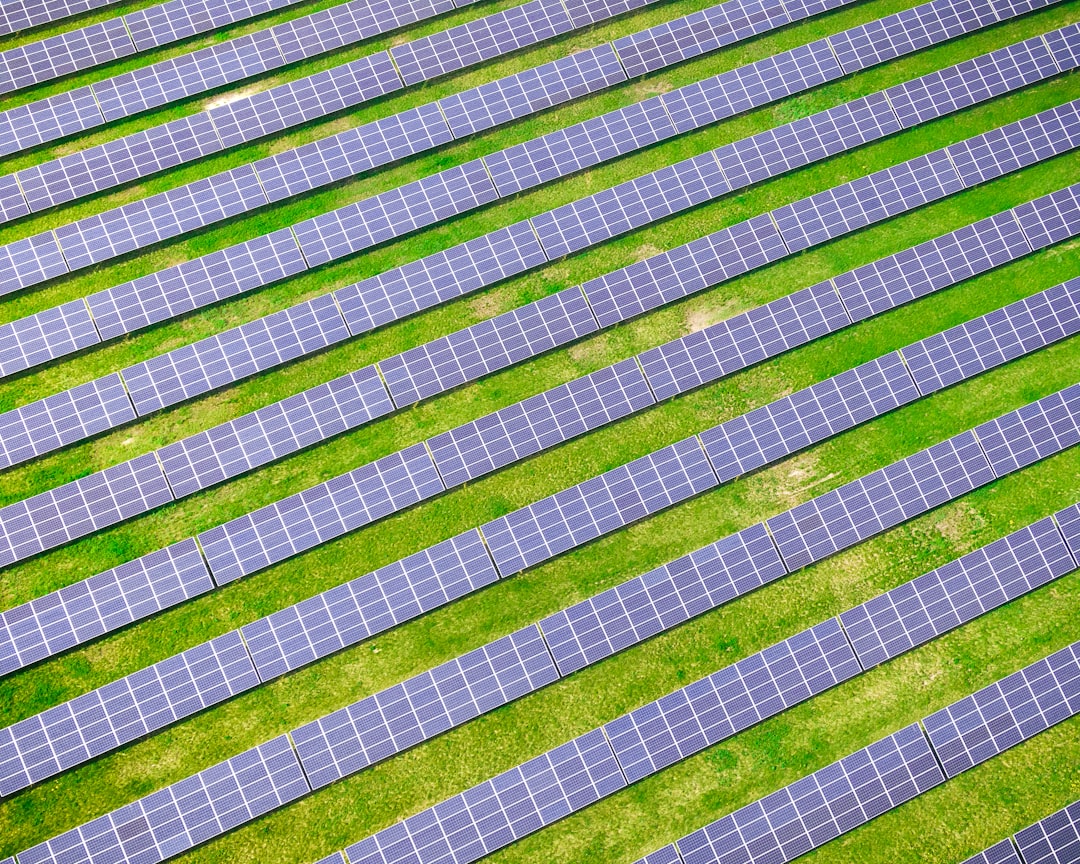
- On-site renewable generation: Solar and, where feasible, wind installations directly adjacent to fab campuses. The upfront capex is real, but the long-run cost certainty is valuable. Some fabs in sunny regions are finding this economically compelling by 2026.
- Process efficiency improvements: Each new node generation typically improves energy per transistor. Fabs that can accelerate their node transition roadmap improve their energy economics simultaneously — though the capex required is enormous.
- Geographic diversification: Locating new capacity in regions with abundant, low-cost clean energy — Nordic countries, parts of Canada, certain US states — is becoming a real factor in fab site selection, not just an ESG checkbox.
- Heat recovery systems: Fab processes generate enormous waste heat. Advanced heat recovery and reuse systems can meaningfully reduce net energy consumption — a technology that’s more mature in 2026 than it was even three years ago.
- Demand response programs: Partnering with utilities to shift non-critical loads during peak grid demand in exchange for rate discounts. Not all fab operations are equally time-sensitive.
What This Means for Investors and the Industry
If you’re watching semiconductor stocks or thinking about the industry’s competitive dynamics, energy cost management deserves a line item in your mental model. A chipmaker with structurally lower energy costs per wafer — through smarter procurement, geography, or efficiency — has a durable margin advantage that compounds over time, especially as advanced node capital intensity continues to rise.
The companies treating energy as a strategic resource rather than a utility bill are positioning themselves for 2027 and beyond. Those that haven’t started that transition are accumulating a quiet competitive disadvantage that will become very loud when the next margin squeeze cycle arrives.
The semiconductor industry has always been a game of compounding small advantages at massive scale. Energy costs, it turns out, are one of those advantages — hiding in plain sight on every fab’s operating statement.
Editor’s Comment : The energy-profitability story in semiconductors is one of those slow-burning structural shifts that doesn’t make for splashy headlines but absolutely shapes who wins the next decade of chip manufacturing. The companies I’d watch most closely in 2026 are those quietly executing on long-term energy strategies while everyone else debates demand cycles. That’s where the real moat is being built.
태그: [‘semiconductor energy costs’, ‘semiconductor profitability 2026’, ‘fab energy consumption’, ‘TSMC Samsung energy strategy’, ‘chip manufacturing margins’, ‘renewable energy semiconductors’, ‘advanced node manufacturing costs’]