Picture this: It’s early 2026, and you’ve carefully built a semiconductor-heavy portfolio — TSMC, NVIDIA, Samsung Electronics, ASML. You feel solid. Then, almost overnight, crude oil spikes 18% following renewed geopolitical tension in the Strait of Hormuz. Within 72 hours, your chip stocks are bleeding. Sound familiar? If you’ve been investing in semiconductors for any length of time, you already know this gut-punch feeling. The tricky part is that most investors intellectually understand that oil prices affect semis, but very few have a systematic hedging plan ready to go. Let’s think through this together — because the relationship between crude oil and semiconductor stocks is more nuanced, and more actionable, than most people realize.
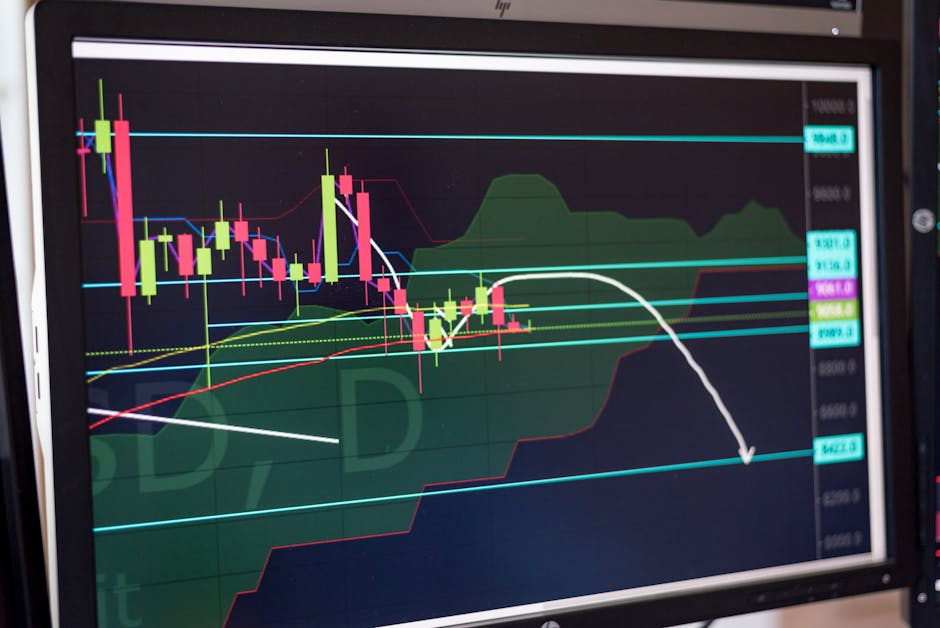
Why Do Oil Prices Even Matter to Semiconductor Stocks?
At first glance, silicon chips and crude oil seem like distant cousins. But dig into the supply chain, and you’ll find they’re practically next-door neighbors. Here’s the chain of causality worth understanding:
- Energy-intensive fabrication: A modern semiconductor fab (think TSMC’s 3nm or Samsung’s 2nm facilities) consumes electricity equivalent to a small city. When oil rises, energy costs ripple through electricity pricing, especially in regions reliant on oil-fired power generation.
- Logistics and shipping costs: Wafer transport, chemical delivery, and finished chip distribution all depend heavily on fuel costs. A 20% oil spike can inflate logistics costs by 8–14% for major foundries, according to supply chain analysis from Gartner Q1 2026.
- Petrochemical inputs: Photoresists, specialty gases, and polymer packaging materials are derived from petrochemical processes. Rising crude directly inflates bill-of-materials (BOM) costs for chipmakers.
- Macroeconomic feedback loop: High oil prices fuel inflation, which pushes central banks toward tighter monetary policy. Higher interest rates compress the valuation multiples of high-growth tech stocks — including semis — particularly hard.
- Consumer demand contraction: If oil stays elevated, disposable income shrinks globally. PC, smartphone, and EV demand softens — all of which are primary semiconductor end markets.
The Data Picture in 2026
Looking at rolling 90-day correlations tracked through Q1 2026, the Philadelphia Semiconductor Index (SOX) has shown a statistically significant inverse correlation of approximately -0.52 to -0.68 with Brent crude prices during high-volatility oil periods. In plain English: when oil surges aggressively, semis tend to underperform broader markets by a meaningful margin. Conversely, during sharp oil drawdowns (like the March 2026 pullback when Brent briefly dipped below $68/barrel), semiconductor stocks outperformed the S&P 500 by an average of 340 basis points over the following 30 days. That’s not a coincidence — that’s a tradeable signal worth building into your framework.
Domestic and International Case Studies
Let’s ground this in real examples to make it tangible.
South Korea — Samsung & SK Hynix (2026 context): South Korea imports nearly 93% of its crude oil needs. When Brent spikes, the Korean won (KRW) typically weakens against the dollar due to current account pressures — which actually provides a partial natural hedge for Samsung and SK Hynix, since their revenues are largely USD-denominated. Korean investors in domestic semiconductor ETFs (like KODEX Semiconductor) saw this dynamic play out clearly in the February 2026 oil volatility episode: won weakness cushioned the blow in local currency terms, even as USD-priced ADRs dipped.
Taiwan — TSMC: Taiwan’s situation is more exposed. TSMC’s electricity costs are heavily regulated domestically, but the broader Taiwanese economy feels oil shocks acutely through import inflation. In 2026, TSMC’s gross margin guidance for H1 was slightly revised downward, partly citing rising chemical input costs tied to elevated crude. Institutional investors responded by increasing their put option activity on TSM (NYSE-listed) ahead of quarterly earnings — a classic defensive move.
United States — NVIDIA & AMD: Fabless chip designers like NVIDIA and AMD are insulated from direct manufacturing energy costs (since they outsource fabrication), but they’re highly sensitive to the macroeconomic channel. When the Fed signaled a more hawkish tilt in February 2026 partly in response to oil-driven CPI reacceleration, NVIDIA’s forward P/E compressed from ~38x to ~31x in just six weeks. That’s purely multiple compression — the business didn’t change, but the macro environment did.

Practical Hedging Strategies: What Actually Works
Now, here’s where we get practical. There’s no single perfect hedge — the right approach depends on your portfolio size, risk tolerance, and time horizon. Let’s walk through a tiered menu of options:
Tier 1 — Low Complexity, Low Cost
- Diversify into energy sector ETFs: Adding a modest allocation (5–10% of your portfolio) to an energy ETF like XLE or the SPDR S&P Oil & Gas Exploration ETF (XOP) creates a natural counter-weight. When oil rises and hurts your semis, your energy holdings appreciate. The drag during oil downturns is typically offset by semi outperformance.
- Tilt toward fabless over foundries: Fabless companies (NVIDIA, Qualcomm, AMD, MediaTek) have less direct exposure to energy input costs than integrated device manufacturers (IDMs) or pure-play foundries. Adjusting your portfolio mix toward fabless names reduces — though doesn’t eliminate — the direct cost-side risk.
Tier 2 — Intermediate Complexity
- Crude oil futures or ETFs as tactical hedges: During periods of geopolitical stress or OPEC+ supply uncertainty, a tactical short-duration long position in USO (United States Oil Fund) or a structured micro-futures position can offset semi portfolio drawdowns. This is best treated as a tactical, time-limited hedge rather than a permanent allocation — crude can reverse violently.
- Put options on SOX-linked ETFs (e.g., SOXX): Buying slightly out-of-the-money (OTM) puts on SOXX or SMH during periods of low implied volatility (VIX below 16) is cost-effective insurance. In 2026, with options market dynamics relatively calm entering Q2, 3-month 5% OTM puts have been running at reasonable premiums. This is a defined-cost hedge — you know exactly what you’re paying for the protection.
- Currency hedging for international semi exposure: If you hold Korean or Taiwanese semiconductor equities, consider currency-hedged share classes or simple FX forward positions. As noted in the Korea example above, currency moves can either amplify or cushion oil-related impacts — being deliberate about this is underappreciated.
Tier 3 — Advanced Strategy
- Pairs trading (Long semis / Short oil-sensitive industrials): More sophisticated investors can construct market-neutral pair trades — for instance, long a semiconductor ETF while shorting an oil-transportation-heavy industrial ETF. This captures relative value while reducing broad market beta.
- Dynamic factor allocation via smart-beta ETFs: Some multi-factor ETFs now explicitly model energy sensitivity within their factor scores. Rotating into low-energy-sensitivity tech factor ETFs during high-oil-volatility regimes is a strategy several quantitative funds in Seoul and Singapore have been implementing through 2026.
Realistic Alternatives for Everyday Investors
Let’s be honest — most individual investors aren’t going to trade crude futures or construct pairs trades. And that’s completely fine. Here’s what a realistic, pragmatic approach looks like if you just want to sleep better at night:
- Maintain a 5–8% cash buffer in your portfolio specifically to deploy into semis during oil-spike-induced drawdowns. Treat volatility as opportunity, not just risk.
- Set a simple oil price trigger rule: if Brent crosses above $95/barrel and holds for 5+ trading days, reduce semiconductor exposure by 10–15% automatically. Remove the emotion from the decision.
- Consider dollar-cost averaging into semiconductor positions rather than lump-sum entry, particularly when geopolitical oil risk is elevated. Spreading entry points naturally smooths out volatility impact.
- Use dividend-paying semiconductor names (Texas Instruments, Broadcom) as core holdings — their yield provides a partial income buffer during price drawdowns, and they tend to be less multiple-sensitive than pure-growth names.
The bottom line? Oil and semiconductors are more interconnected than their surface appearances suggest, and 2026’s market environment — with its ongoing geopolitical flux and energy transition complexity — makes this relationship more relevant than ever. You don’t need a complex derivatives desk to protect yourself. What you need is a clear framework, some pre-decided rules, and the discipline to stick to them when the market is noisy.
Editor’s Comment : The investors who get hurt most by oil-driven semiconductor selloffs aren’t those who failed to predict crude movements — nobody does that consistently. They’re the ones who had no plan at all when volatility arrived. Even a simple, rules-based hedge approach (an energy ETF slice + a cash buffer + a rebalancing trigger) would have meaningfully protected a semiconductor-heavy portfolio during each major oil disruption in recent years. The goal isn’t perfection; it’s resilience. Build a portfolio that can stay in the game through the rough patches, and the compounding takes care of the rest.
태그: [‘semiconductor portfolio hedging’, ‘oil price volatility 2026’, ‘SOX ETF strategy’, ‘TSMC oil risk’, ‘chip stock hedge’, ‘energy sector correlation tech stocks’, ‘semiconductor investment strategy 2026’]