Last January, a friend of mine — a mid-level marketing manager who’d just started dabbling in ETF investing — called me in a mild panic. She’d loaded up on a popular semiconductor ETF right before a crude oil price spike rattled markets, and she couldn’t figure out why her chip stocks were suddenly bleeding red. “What does oil have to do with semiconductors?” she asked. Honestly? More than most people realize. So let’s think through this together, because the connection between global oil price forecasts and semiconductor ETF performance in 2026 is one of the most underappreciated dynamics in today’s market.
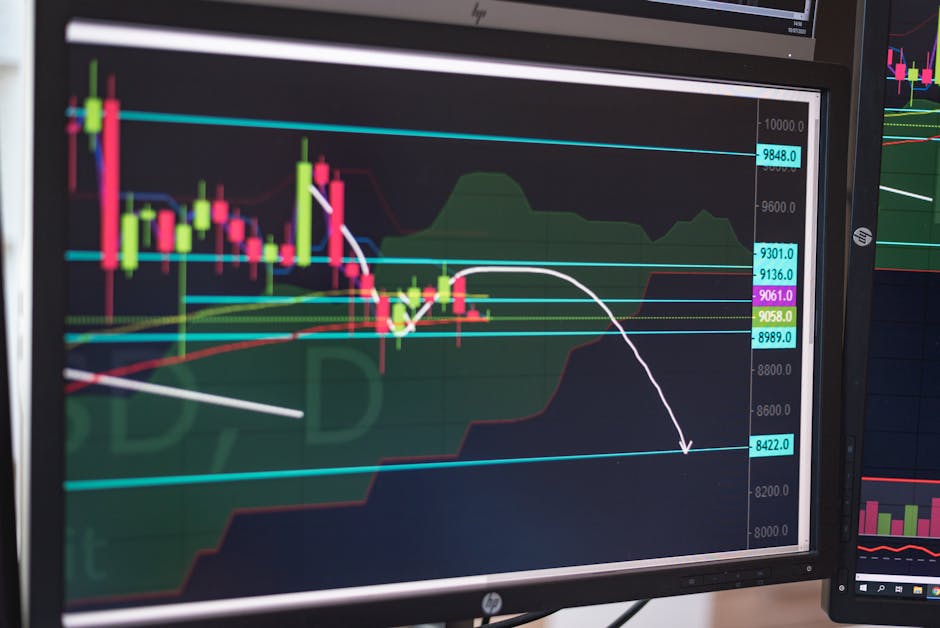
Why Oil Prices and Semiconductor ETFs Are More Connected Than You Think
On the surface, silicon wafers and crude barrels seem like they belong in completely different universes. But dig a little deeper and the links become surprisingly clear. Here’s the chain of logic:
- Energy costs in fab operations: Semiconductor fabrication plants (fabs) are among the most energy-intensive industrial facilities on the planet. TSMC’s Taiwan fabs, Samsung’s plants in South Korea, and Intel’s facilities in Arizona all consume staggering amounts of electricity — much of which is priced in markets sensitive to oil and natural gas costs. When energy costs spike, margins get squeezed.
- Logistics and supply chain inflation: Shipping raw materials like silicon, rare earth elements, and chemicals to fabs — and then distributing finished chips worldwide — relies on oil-dependent transport. Rising Brent crude directly inflates these supply chain costs.
- Macroeconomic sentiment: High oil prices tend to stoke inflation fears, pushing central banks toward tighter monetary policy. In a higher-rate environment, growth stocks — including the tech and semiconductor sector — typically face valuation compression.
- Geopolitical overlap: Many oil-sensitive regions (Middle East, Russia, Central Asia) also intersect with semiconductor supply chain chokepoints in ways that create correlated risk-off episodes.
Where Global Oil Prices Stand in 2026 — The Data Picture
As of early 2026, Brent crude has been oscillating in the $78–$94 per barrel range — a band that most energy analysts describe as “uncomfortable middle ground.” Here’s what’s driving that:
- OPEC+ production discipline: The alliance extended voluntary cuts into 2026, keeping supply tighter than the market initially anticipated. Saudi Arabia has been particularly firm about defending a floor near $80/bbl.
- U.S. shale resilience: American producers responded to higher prices with incremental output increases, capping the upside. The EIA’s March 2026 Short-Term Energy Outlook projects U.S. production averaging around 13.4 million barrels per day through mid-2026.
- Demand uncertainty from China: China’s economic recovery has been patchier than expected. Property sector headwinds and shifting manufacturing patterns have moderated Chinese oil demand growth — a key variable that most bulls had been counting on.
- Green energy displacement: Renewable energy adoption in Europe and Southeast Asia is beginning to structurally reduce oil demand in electricity generation, subtly capping the long-term ceiling for crude prices.
The consensus forecast among major institutions (Goldman Sachs, the IEA, and Morgan Stanley as of Q1 2026) sits roughly in the $80–$88/bbl range for Brent through year-end 2026, with tail risks skewed to the upside given Middle East tensions.
How Semiconductor ETFs Are Responding — Real-World Examples
Let’s look at some concrete cases that illustrate how this plays out in practice.
SOXX (iShares Semiconductor ETF, U.S.): This flagship semiconductor ETF has shown a notable inverse sensitivity to oil price spikes in 2026. During the brief oil surge to $93/bbl in February 2026 (triggered by Red Sea shipping disruptions), SOXX pulled back approximately 4.2% over two weeks before recovering as oil stabilized. The correlation isn’t perfect, but it’s real and repeatable.
KODEX Semiconductor ETF (South Korea): Korean investors have an additional layer of complexity — the won/dollar exchange rate. When oil spikes hit, the Korean won often weakens (as South Korea is a major oil importer), which actually provides a partial currency hedge for export-oriented chipmakers like Samsung and SK Hynix. The local ETF behaved somewhat differently than its U.S. counterparts during the same February episode, falling only about 2.1% — a good example of how domestic context shapes outcomes.
VanEck Semiconductor ETF (SMH): SMH’s heavy weighting toward TSMC and NVIDIA means it’s simultaneously exposed to Taiwan energy cost dynamics and to AI infrastructure demand — a bullish force that has been powerful enough in 2026 to partially offset oil-driven headwinds. Year-to-date through March 2026, SMH is still up roughly 11% despite the oil volatility noise.
Practical Strategies for Investors Navigating This Landscape
So what does a thoughtful investor actually do with all of this? Let’s think through some realistic approaches depending on your situation:
- If you’re bullish on semiconductors but worried about oil volatility: Consider a core-satellite approach — hold a broad semiconductor ETF as your core position, and add a small energy ETF satellite (like XLE or a global energy fund) as a natural hedge. When oil spikes hurt your chip ETF, your energy position cushions the blow.
- If you prefer simpler positioning: Focus on semiconductor ETFs that have significant AI infrastructure exposure (NVIDIA, TSMC, ASML). AI-driven demand has shown itself to be relatively oil-price-resistant in 2026 because the structural tailwind is so powerful — enterprises aren’t delaying AI capex because oil ticked up $5/bbl.
- If you’re risk-averse or newer to investing: Dollar-cost averaging (DCA) into a diversified tech ETF that includes semiconductors but isn’t pure-play chip exposure reduces your sensitivity to these macro cross-currents. Something like QQQ (Nasdaq-100 ETF) gives you significant semiconductor weight without the concentration risk.
- For more experienced investors: Watch the oil futures curve (specifically the 3-month Brent futures) as a leading signal. When the curve shifts into steep backwardation (futures prices well below spot), it historically signals the market expects supply tightness to ease — often a green light for re-entering semiconductor positions that pulled back on oil fears.
- Tax and timing considerations: If you’re in a taxable account and sitting on semiconductor ETF gains from the 2025 AI rally, a brief oil-driven pullback might be a good moment to harvest some losses in underperformers while maintaining your overall chip sector exposure through a similar-but-different ETF (mindful of wash-sale rules in your jurisdiction).
The Bigger Picture: 2026’s Investment Thesis in One Paragraph
The structural story for semiconductors in 2026 remains compelling — AI inference chips, automotive semiconductors, and advanced packaging are all in a genuine demand supercycle. But cycles live inside larger macro environments, and oil prices are a legitimate macro variable that you shouldn’t dismiss just because it feels unrelated to chip design. The investors who outperform aren’t necessarily those who pick the right chip company — they’re the ones who understand the full context their investment operates in, and build portfolios that can survive the turbulence without panic-selling at the worst moment.
My friend, by the way? Once she understood the oil-semiconductor link, she stopped seeing the dips as mysterious and started using them as structured entry points. She’s been averaging in on SOXX every time Brent crosses $90/bbl. It’s a simple rule, but it’s grounded in logic — and that’s worth more than any hot tip.
Editor’s Comment : The most underrated skill in ETF investing isn’t picking the hottest theme — it’s understanding what can temporarily knock your thesis off course without actually breaking it. Oil prices and semiconductor ETFs in 2026 are a perfect case study in that discipline. If you know why your investment is moving, you can act with intention instead of fear. Start with the logic, build your strategy around it, and let the macro noise work for you rather than against you.
태그: [‘semiconductor ETF 2026’, ‘global oil price forecast’, ‘SOXX investment strategy’, ‘oil price semiconductor stocks’, ‘ETF investing 2026’, ‘Brent crude impact on tech stocks’, ‘AI chip ETF portfolio’]