Picture this: it’s a cold January morning in Seoul, and the city’s electricity grid is humming at near-maximum capacity. Heating systems, EV charging stations, data centers powering AI workloads — the demand is relentless. Now imagine a compact, factory-built nuclear reactor the size of a few shipping containers quietly sitting on the edge of an industrial complex, supplying clean, stable power without the massive footprint of a conventional plant. That’s the promise of the Small Modular Reactor, or SMR — and in 2026, South Korea is pushing harder than ever to make it a domestic reality.
What Exactly Is an SMR, and Why Does It Matter?
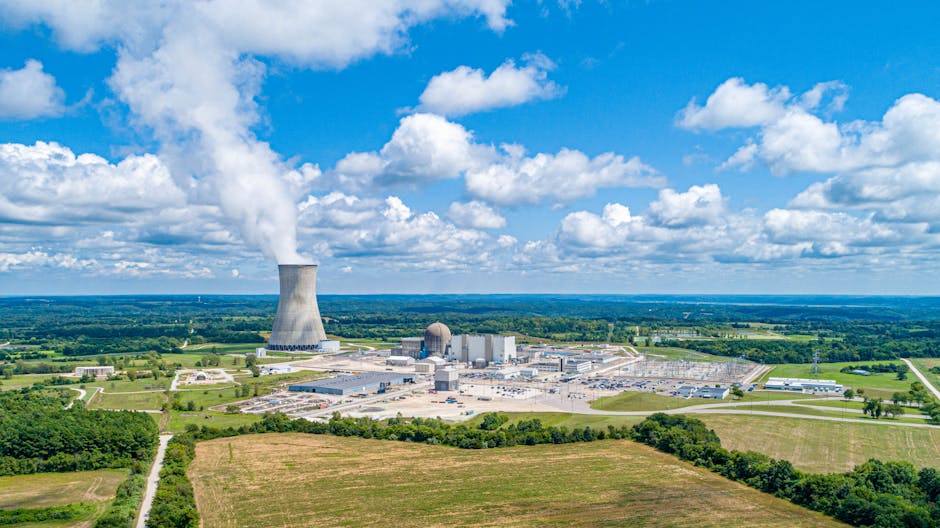
Let’s quickly level-set for anyone just joining this conversation. A Small Modular Reactor is a nuclear fission reactor with an electrical output of typically 300 megawatts or less — compared to the 1,000+ MW behemoths of conventional plants. The “modular” part means components are factory-manufactured and shipped to the site, dramatically cutting construction time and costs. Think of it like prefab housing versus traditional brick-and-mortar construction. The appeal? Faster deployment, lower upfront capital, scalable capacity, and — critically for a densely populated country like South Korea — a significantly smaller land footprint.
South Korea’s SMR Landscape in 2026: The Key Players and Programs
South Korea hasn’t been sitting on the sidelines. The country actually has a decades-long head start in SMR conceptual design, with the SMART (System-integrated Modular Advanced ReacTor) reactor developed by KAERI (Korea Atomic Energy Research Institute) receiving the world’s first SMR standard design approval from the NSSC (Nuclear Safety and Security Commission) back in 2012. But the real acceleration is happening right now.
- KAERI’s i-SMR Program: The flagship domestic initiative, the “innovative SMR” (i-SMR), targets a 170 MWe output and aims for standard design approval by 2028. As of early 2026, conceptual design completion has been confirmed, and the project is deep in pre-licensing consultation with regulators.
- KEPCO & KHNP Involvement: Korea Hydro & Nuclear Power (KHNP) has been designated the lead industrial partner, bringing its APR-1400 engineering pedigree to the table. KEPCO’s research arm is actively studying SMR grid integration economics.
- Government Budget Commitment: The Ministry of Science and ICT allocated approximately 400 billion KRW (roughly $300 million USD) across a multi-year SMR R&D framework through 2030, with 2026 marking a critical mid-point funding review.
- Export Ambitions: South Korea is in active discussions with Poland, the Czech Republic, and several Southeast Asian nations — particularly Vietnam and the Philippines — for potential SMR deployment partnerships.
How Does South Korea Stack Up Globally?
Here’s where it gets really interesting — and honestly, a little competitive. The global SMR race in 2026 looks something like this:
- United States: NuScale Power’s VOYGR design had a turbulent road, but Kairos Power and TerraPower’s Natrium reactor have secured DOE backing and are advancing toward first concrete. The U.S. leads in private-sector SMR investment by a wide margin.
- Canada: Ontario Power Generation broke ground on a GE Hitachi BWRX-300 SMR at Darlington — making it arguably the most advanced Western SMR deployment project as of 2026.
- China: The ACP100 “Linglong One” at Changjiang in Hainan Province is the world’s first grid-connected commercial SMR, having achieved criticality. China’s state-backed pace is simply formidable.
- United Kingdom: Rolls-Royce SMR is navigating the Generic Design Assessment with regulators, with commercial deployment targets around the early 2030s.
South Korea sits in a fascinating middle position: it has deep nuclear engineering expertise and a functioning regulatory framework, but it lacks the private-sector investment velocity of the U.S. and the state-command speed of China. The honest assessment? South Korea is a strong second-tier contender with genuine first-tier potential if policy continuity holds.
The Realistic Challenges Nobody Talks About Enough
Let’s not get caught up in pure enthusiasm — there are real headwinds worth thinking through together.
- Public Acceptance: Post-Fukushima sentiment still lingers in South Korean public discourse. Urban proximity deployments will face NIMBY resistance that rural industrial zones won’t.
- Regulatory Timeline Realism: The i-SMR’s 2028 standard design approval target is ambitious. Licensing processes are inherently iterative, and any design change can reset the clock. 2029-2030 is a more conservative realistic window.
- Cost Competitiveness: The “economies of factory production” argument for SMRs hasn’t been fully validated at commercial scale yet. Per-MWh costs need to prove competitive against rapidly falling solar+storage costs, especially for South Korea’s aggressive renewable targets.
- Supply Chain Localization: South Korea benefits from a strong domestic nuclear supply chain, but hyper-specialized SMR components may require new supplier development.
Realistic Alternatives and Strategic Paths Forward
So if you’re a policymaker, an industry stakeholder, or just someone deeply curious about South Korea’s energy future — here’s how I’d frame the realistic alternatives:
- Hybrid Deployment Strategy: Rather than waiting for fully domestic i-SMR certification, South Korea could pursue a parallel track — licensing a foreign design (like the BWRX-300) for early domestic deployment while i-SMR matures. This builds operational knowledge and public acceptance simultaneously.
- Industrial Heat Applications First: SMRs aren’t just for electricity. Targeting high-temperature process heat for industries like steel and chemicals — sectors where South Korea is a global heavyweight — could provide a less politically charged initial deployment pathway.
- Island Grid & Remote Deployment: South Korea’s outlying islands struggle with expensive diesel generation. Micro-SMR or very small modular reactor (vSMR) concepts below 50 MWe could serve as politically easier proving grounds.
- Joint International Ventures: A formal South Korea-Canada or South Korea-UK technology alliance could accelerate regulatory harmonization and shared licensing costs — reducing the burden on any single country’s budget.
The bottom line is that South Korea’s SMR story in 2026 is genuinely compelling — rooted in real engineering capability and serious government commitment. The trajectory is positive, but the finish line requires patience, regulatory wisdom, and a public dialogue that doesn’t shy away from complexity. We’re not at the revolution yet, but the foundation is being poured.
Editor’s Comment : What strikes me most about South Korea’s SMR journey is that the country is essentially betting on its nuclear engineering DNA at a moment when the global energy conversation is shifting back toward nuclear pragmatism. The i-SMR program isn’t a moonshot fantasy — it’s a methodical, credential-backed ambition. My honest take? The biggest variable isn’t the technology; it’s whether South Korea can maintain policy consistency across election cycles and bring the public along for the ride. That’s the real reactor that needs careful tending.
태그: [‘Small Modular Reactor South Korea’, ‘SMR 2026’, ‘i-SMR KAERI’, ‘nuclear energy Korea’, ‘KHNP SMR’, ‘clean energy technology’, ‘global SMR competition’]