Imagine you’re a city energy planner in 2026, staring at a spreadsheet that shows your region’s power demand doubling by 2035 while your coal plant license expires next year. You’ve heard the buzz about Small Modular Reactors (SMRs) — compact, factory-built nuclear units that promise to flip the economics of clean energy on their head. But then you see the per-kilowatt-hour cost estimate, and suddenly that spreadsheet doesn’t look so friendly. So, is SMR construction really economical, or is it still a “promise on paper” technology? Let’s think through this together.
What Exactly Is an SMR? (And Why Does It Matter for Cost)
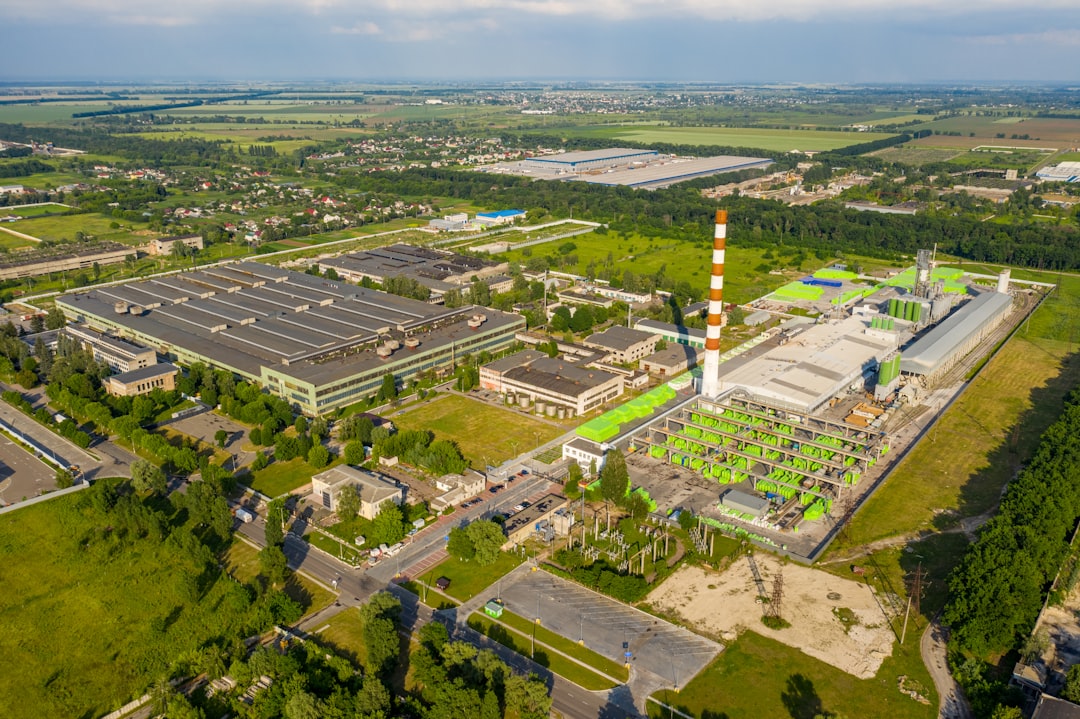
Before we dive into numbers, let’s set the stage. A Small Modular Reactor is a nuclear fission reactor with an electrical output typically under 300 MWe (megawatts electric), compared to conventional large reactors that run 1,000–1,600 MWe. The “modular” part is key: most SMR designs are intended to be manufactured largely in a factory environment and assembled on-site, much like LEGO blocks. This factory-fabrication model is where the economic promise lives — and where the current reality gets complicated.
Breaking Down the Numbers: Where Does the Money Actually Go?
To understand SMR economics, we need to unpack the cost structure. Nuclear project costs are typically divided into three buckets:
- Overnight Capital Cost (OCC): The theoretical cost if the plant were built instantly — no financing charges. For SMRs in 2026, estimates range from $5,000 to $8,500 per kWe for first-of-a-kind (FOAK) units. For context, a utility-scale solar farm runs roughly $900–$1,200 per kWe, and onshore wind is around $1,100–$1,500 per kWe.
- Financing & Interest During Construction (IDC): Because nuclear projects take 5–10 years to build, interest accumulates massively. IDC can add 30–50% on top of OCC, pushing total installed costs toward $9,000–$12,000 per kWe for early SMR projects.
- Operations & Maintenance (O&M) + Fuel: Here’s where nuclear quietly shines. Once running, SMRs have very low fuel costs and can operate for 60+ years with high capacity factors (often 90%+), which amortizes that steep upfront investment over decades.
The resulting Levelized Cost of Energy (LCOE) — the all-in lifetime cost per unit of electricity — for early SMRs in 2026 sits around $100–$140 per MWh, depending heavily on financing conditions and regulatory environment. That’s still above utility-scale solar ($30–$50/MWh) and onshore wind ($25–$45/MWh) in favorable locations. But here’s the critical nuance: SMRs produce dispatchable, 24/7 baseload power that solar and wind simply cannot replicate without expensive grid-scale storage.
The “nth-of-a-kind” Factor: Where the Economics Could Flip
The nuclear industry uses the term NOAK (Nth-of-a-Kind) to describe the cost once a reactor design has been built many times and manufacturing efficiencies kick in. Studies from the OECD Nuclear Energy Agency and MIT’s Energy Initiative suggest that NOAK SMR costs could drop to $3,500–$5,500 per kWe, potentially pushing LCOE toward $60–$90 per MWh. That’s competitive with dispatchable gas combined-cycle plants ($65–$85/MWh) even before carbon pricing is factored in. The catch? We need to actually build enough units to get there — the classic chicken-and-egg problem of industrial scale.
Real-World Examples: Who’s Actually Building SMRs in 2026?
Let’s ground this in what’s actually happening globally right now:
- NuScale Power (USA): NuScale’s VOYGR design — the world’s first SMR to receive NRC design certification — has faced a turbulent road. The Utah Associated Municipal Power Systems (UAMPS) Carbon Free Power Project was cancelled in late 2023 due to cost escalation, with projected costs hitting $89/MWh even before construction began. NuScale has since restructured and is targeting international markets including Romania and Poland, where grid reliability premiums make the economics more palatable.
- Rolls-Royce SMR (UK): The UK government has committed substantial funding (£210 million in grants through Great British Nuclear) to Rolls-Royce’s 470 MWe design. Rolls-Royce claims a target cost of £2,500–£3,200 per kWe through factory manufacturing at scale — an ambitious but technically coherent argument. Their first unit targeting grid connection by 2031–2032 will be the real test.
- BWXT PULSE (Canada): Ontario Power Generation is partnering with GE Hitachi on the BWRX-300, a 300 MWe boiling water SMR, with a target operational date of 2028–2029 at Darlington. Canada’s existing nuclear regulatory expertise and workforce make it a credible near-term proving ground.
- South Korea’s i-SMR: Korea’s Atomic Energy Research Institute (KAERI) has been developing the 170 MWe i-SMR with a target standard design approval by 2028. Korea’s shipbuilding and heavy manufacturing expertise gives it a genuine competitive advantage in factory-built modular construction — an angle many Western analysts underestimate.
- China’s ACP100 (Linglong One): China’s CNNC completed grid connection of the world’s first commercial SMR — Linglong One — in Hainan Province in late 2026, a landmark moment. With state financing and vertically integrated supply chains, China’s reported construction costs are significantly lower ($3,000–$4,500/kWe), though independent verification remains limited.
The Hidden Cost Variables Nobody Talks About Enough
Pure construction cost numbers don’t tell the whole story. Several factors dramatically shift the economic calculus:
- Grid Value Premium: In grids with high renewable penetration, firm dispatchable power commands a premium. Regions like the UK, Japan, and South Korea — where grid stability costs are rising — effectively offer SMRs a higher “true” market value than simple LCOE comparisons suggest.
- Carbon Pricing: At current EU Emissions Trading Scheme prices (~€60–€70/tonne CO₂ in early 2026), nuclear’s zero-carbon output provides a meaningful competitive boost against gas.
- Regulatory Velocity: Permitting and licensing can add 3–7 years and hundreds of millions in costs. Countries with streamlined nuclear regulation (Canada, South Korea, UAE) have a structural economic advantage.
- Industrial Heat Applications: SMRs operating at higher temperatures can supply process heat to heavy industries (steel, hydrogen production, chemical manufacturing), creating revenue streams beyond electricity and improving overall project economics by 15–25%.
- Waste and Decommissioning: While often cited as nuclear’s Achilles’ heel, modern SMR designs incorporate passive safety systems that simplify decommissioning. Some advanced designs (molten salt, fast reactors) actually consume existing nuclear waste — potentially turning a liability into a cost offset.
Realistic Alternatives: Matching the Solution to the Situation
Here’s where I want to be genuinely useful rather than just cheerleading for one technology. The honest answer is that SMR economics depend enormously on your specific context. Let me offer some realistic scenario-based thinking:
- If you’re a utility in a high-renewable grid (e.g., California, Denmark): SMRs may not make immediate economic sense for baseload. Long-duration storage + offshore wind is likely a lower-cost path through 2035. SMRs become more relevant post-2035 if storage costs plateau.
- If you’re an industrial energy consumer needing 24/7 reliable power (e.g., data center operators, semiconductor fabs): SMRs are genuinely worth serious evaluation, especially as tech giants like Microsoft, Amazon, and Google are actively signing nuclear power agreements in 2026.
- If you’re a country with limited renewable resources or grid stability challenges (e.g., Poland, South Korea, Philippines): SMRs are likely your most economically rational path to deep decarbonization. The dispatchability premium alone justifies the higher overnight cost.
- If you’re waiting for NOAK economics: Consider supporting policy environments that enable the first 10–15 builds. Every project built now is an investment in the cost curve that makes project 30 genuinely competitive with anything on the market.
The economic conversation around SMRs is too often framed as “expensive nuclear vs. cheap renewables” — a false binary. The real question is: what does a reliable, decarbonized grid actually cost, end-to-end, including storage, transmission, and backup capacity? When you frame it that way, SMRs start looking considerably more interesting.
Editor’s Comment : I’ve been following SMR economics for several years now, and what strikes me most in 2026 is how the conversation has matured. We’re past pure hype and past pure cynicism — we’re in the messy, productive middle where real projects are confronting real costs. The Linglong One grid connection in China and the Darlington project in Canada aren’t just engineering milestones; they’re the first hard data points that will either validate or reframe everything we think we know about SMR economics. My honest take? Don’t make a 30-year energy infrastructure decision based on today’s FOAK costs. Watch the NOAK trajectory over the next 5–7 years — that’s where the real story will be told.
태그: [‘SMR construction cost’, ‘small modular reactor economics’, ‘nuclear energy LCOE 2026’, ‘SMR vs renewable energy cost’, ‘modular nuclear power plant’, ‘clean energy investment analysis’, ‘next generation nuclear technology’]