Picture this: You’re scrolling through your investment portfolio on a Tuesday morning in March 2026, and you notice crude oil has just breached $95 per barrel — a level we haven’t seen in over two years. Your first instinct might be to check your energy stocks, but here’s the thing most retail investors miss entirely: the ripple effects of an oil price surge reach much further than your BP or ExxonMobil holdings. They quietly creep into the semiconductor supply chain, and suddenly, Korea’s tech giants — Samsung Electronics and SK Hynix — are sitting in a very uncomfortable spotlight.
Let’s think through this together, because the relationship between oil prices and chip stocks is genuinely fascinating — and far more nuanced than the financial headlines typically suggest.

🔍 Why Does Oil Price Even Affect Semiconductor Stocks?
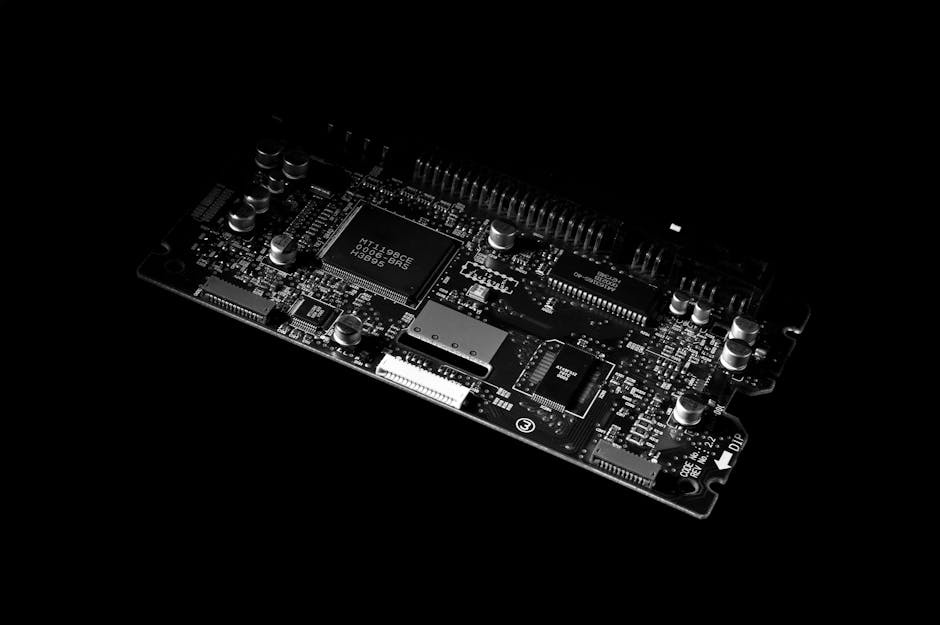
Before we dive into price targets and forecasts, it’s worth understanding the mechanism. Semiconductor manufacturing is an extraordinarily energy-intensive process. A single 300mm wafer fab can consume as much electricity as a small city. When oil prices spike, energy costs cascade upward across the entire supply chain:
- Electricity generation costs rise in countries with oil-dependent power grids, directly inflating fab operating expenses.
- Petrochemical feedstocks — used in photoresists, cleaning solvents, and packaging resins — become pricier almost immediately.
- Logistics and freight costs jump, squeezing margins on both input materials and finished product shipments.
- Consumer purchasing power erodes globally, which dampens demand for smartphones, PCs, and servers — the primary end-markets for DRAM and NAND flash chips.
- Currency dynamics shift: a stronger U.S. dollar (often correlated with oil shocks) can complicate Korean won-denominated earnings for export-heavy companies.
So when oil trades at elevated levels for a sustained period, we’re not just talking about a minor cost-line adjustment. We’re looking at a potential compression of operating profit margins at exactly the moment when Samsung and SK Hynix are trying to rebuild their balance sheets after the brutal memory downturn of 2023–2024.
📊 Where Samsung Electronics and SK Hynix Stand Right Now (March 2026)
Let’s anchor ourselves in current reality. As of mid-March 2026, Samsung Electronics (005930.KS) has been trading in the ₩72,000–₩78,000 range, reflecting a modest recovery from its late-2025 lows but still well below its all-time highs. The company’s HBM3E ramp-up — critical for AI server demand — has been a bright spot, though it’s still playing catch-up to SK Hynix in this specific segment.
SK Hynix (000660.KS), meanwhile, has been the stronger performer of the two in the AI memory race, benefiting from its first-mover advantage in supplying HBM chips to NVIDIA’s next-generation GPU platforms. Its stock has hovered around ₩185,000–₩200,000, with analyst consensus generally bullish on its AI exposure.
Now layer a sustained oil price surge on top of this picture. According to data from the Korea Energy Economics Institute, South Korea imports roughly 98% of its crude oil, making its industrial sector among the most vulnerable in Asia to external energy price shocks. A $10 rise in oil per barrel translates to approximately ₩15–18 trillion in additional annual import costs for the Korean economy — and that pain doesn’t stay in the energy sector alone.
🌍 International Precedents: What History (and 2026 Parallels) Tell Us
Let’s look at comparable situations. During the 2022 energy crisis triggered by the Russia-Ukraine conflict, Brent crude averaged above $100/barrel for much of the year. During that same period, Samsung’s operating profit fell sharply — though to be fair, a memory price collapse was the dominant factor. However, analysts at Goldman Sachs and Morgan Stanley both noted that energy cost inflation added roughly 2–4 percentage points of additional margin pressure on top of the demand-side collapse.
More recently, Taiwan Semiconductor Manufacturing Company (TSMC) has been a useful benchmark. During Q3 2025, TSMC reported that energy costs had risen to approximately 8.2% of total operating costs, up from 6.1% two years prior. While Taiwan has been aggressively expanding nuclear and solar capacity, the short-term exposure to fossil fuel pricing remains real. If TSMC — operating in a more diversified energy environment — feels this pressure, Samsung’s fabs in Pyeongtaek and Hwaseong, running on a grid still heavily reliant on LNG-fired power plants, face an even steeper challenge.
🤔 So Should You Be Worried — or Opportunistic?
Here’s where I want to reason through this carefully with you, because the knee-jerk reaction (“oil up = chip stocks down, sell everything”) is almost always the wrong move for medium-to-long-term investors.
Consider the counterbalancing forces at play right now in 2026:
- AI infrastructure buildout is structurally demand-inelastic. Hyperscalers like Microsoft, Google, Amazon, and Meta have multi-year capex commitments to data center expansion. A $10–15 oil price move doesn’t make them cancel server orders.
- HBM is supply-constrained, not demand-constrained. SK Hynix and Samsung aren’t struggling to find buyers for HBM3E/HBM4 — they’re struggling to make enough of it. Pricing power in this segment is exceptional.
- Samsung’s semiconductor division is undergoing a strategic restructuring focused on improving foundry yield rates and consolidating advanced node production, which should improve cost efficiency over the next 12–18 months regardless of energy prices.
- The Korean government has signaled energy subsidy support for strategic industries, including semiconductor manufacturing, as part of its 2026 industrial competitiveness framework — a policy buffer that partially offsets raw energy cost exposure.
That said, if oil sustains above $100/barrel into Q2–Q3 2026, we should realistically expect some downward revisions to near-term earnings estimates, particularly for Samsung’s legacy NAND business, which operates on thinner margins and is more sensitive to cost inflation.
💡 Realistic Alternatives for Your Investment Strategy
Rather than making an all-or-nothing call, here are some genuinely practical approaches depending on your investor profile:
- If you’re a long-term investor (3–5 year horizon): Oil-driven dips in Samsung or SK Hynix are historically excellent accumulation opportunities, as the structural AI memory supercycle remains very much intact. Consider adding on 5–8% pullbacks from current levels.
- If you’re more risk-conscious: Rotate a portion toward SK Hynix over Samsung for now — its HBM revenue concentration gives it better near-term earnings visibility that can absorb cost headwinds more cleanly.
- If you want energy-hedge diversification: Pair your chip stock positions with a small allocation to Korean energy infrastructure ETFs or global oil majors, creating a natural hedge within your portfolio. When oil hurts your chip stocks, your energy holdings cushion the blow.
- If you’re a shorter-term trader: Watch the ₩/$ exchange rate closely alongside oil. A weakening Korean won in a high-oil environment can actually boost the headline revenue figures for Samsung and SK Hynix (since they sell in dollars), creating a confusing but real partial offset worth monitoring on earnings days.
The bottom line is this: oil at $95–100/barrel is an irritant for these companies, not an existential threat. The more dangerous scenario for Samsung and SK Hynix isn’t energy costs — it’s a scenario where AI capex spending pauses, or where geopolitical disruptions to the Taiwan Strait interrupt the competitive dynamics of the entire semiconductor industry. Those are the tail risks worth keeping one eye on as we move through 2026.
Energy costs are a manageable headwind. Strategic positioning and execution quality will ultimately matter far more to where these stocks are trading 18 months from now.
Editor’s Comment : Oil price shocks are the kind of macro event that can trigger disproportionate panic in tech stocks — especially when headlines conflate energy exposure with fundamental business deterioration. For Samsung and SK Hynix specifically in 2026, the AI memory tailwind is powerful enough to absorb meaningful cost pressure, but that doesn’t mean you should ignore the signal entirely. Use the volatility as a time to revisit your cost basis, re-examine your position sizing, and — most importantly — distinguish between companies that are genuinely vulnerable to energy inflation and those that are simply caught in the emotional crossfire. In most cases, the semiconductor leaders in Korea fall into the second category.
태그: [‘Samsung Electronics stock 2026’, ‘SK Hynix stock forecast’, ‘oil price impact semiconductors’, ‘HBM chip investment’, ‘Korea tech stocks oil surge’, ‘semiconductor supply chain energy costs’, ‘DRAM stock outlook 2026’]