Let me paint a quick picture. It’s early 2026, and a friend of mine — a mid-career software engineer with zero background in commodities — calls me in a mild panic. “I keep hearing about agricultural ETFs and copper funds,” she says, “but I have no idea how they fit together or if I even need them.” Sound familiar? If you’ve ever stared at a brokerage screen wondering whether to buy a grain ETF, an oil fund, or a gold trust — and then just closed the tab — this post is for you.
Commodities have always been the “wild cousin” of traditional portfolios. They behave differently from stocks and bonds, they react to weather patterns and geopolitical tremors, and they carry a reputation for being complicated. But in 2026, with persistent supply-chain reshaping, energy transition pressures, and food security anxiety baked into the global conversation, a well-structured commodity ETF portfolio isn’t just interesting — it’s genuinely worth understanding.
Let’s think through this together, step by step.
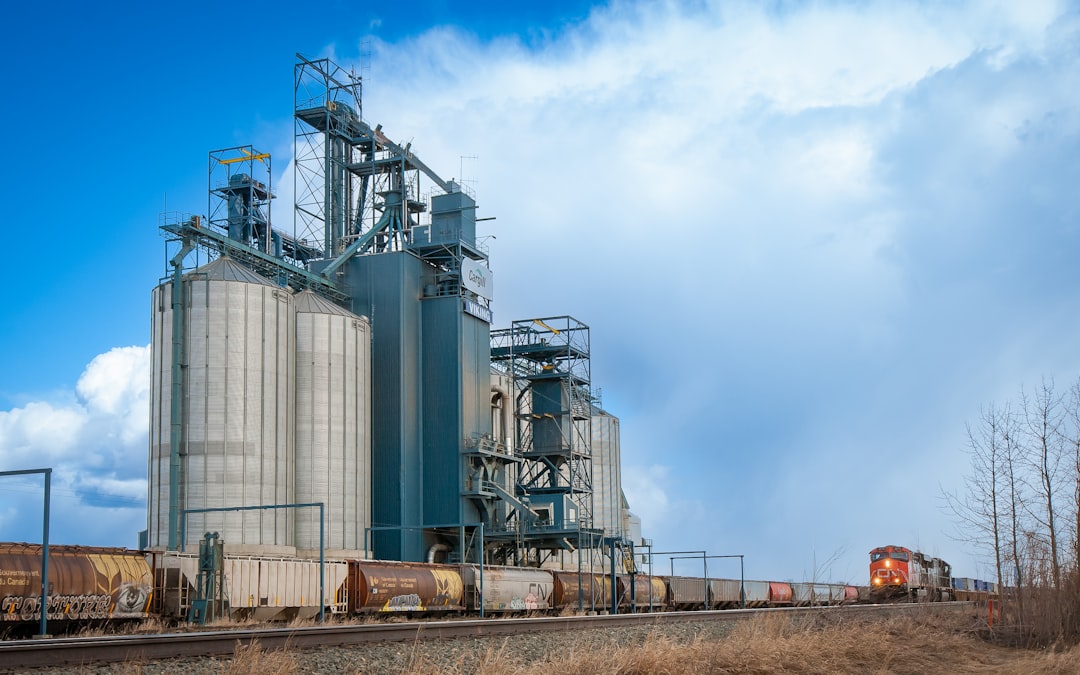
Why Commodities Deserve a Seat at Your Portfolio Table in 2026
Before we dive into specific ETFs, let’s establish the why. Commodities — physical goods like wheat, crude oil, copper, and gold — tend to move in low correlation with equities. That means when your stock portfolio is bleeding during a market correction, commodities sometimes hold steady or even rise. This is the core diversification argument.
In 2026, three macro forces are making this argument stronger than ever:
- Food security fragmentation: Grain export restrictions from key producers in Eastern Europe and Southeast Asia have kept agricultural commodities structurally volatile. The UN Food and Agriculture Organization’s 2026 Commodity Price Index remains elevated compared to the 2018–2020 baseline, making ag ETFs more reactive and, frankly, more interesting.
- Energy transition tension: The push toward renewables hasn’t killed fossil fuel demand — it’s created a dual-market reality. Natural gas demand spiked in parts of Asia and Europe through early 2026 as baseload energy needs outpaced green infrastructure buildout. Meanwhile, uranium quietly staged a multi-year run as nuclear re-entered the clean energy conversation.
- Industrial metal supercycle signals: Copper, lithium, and nickel are at the heart of EV batteries, grid infrastructure, and semiconductor manufacturing. The International Energy Agency (IEA) estimates that a net-zero pathway requires six times the current annual copper production by 2040. That’s a long runway for metals ETFs.
Breaking Down the Three Pillars: Agricultural, Energy, and Metals ETFs
Think of a commodity ETF portfolio as a three-legged stool. Each leg serves a different purpose, and removing any one makes the whole thing unstable.
Pillar 1 — Agricultural ETFs
Agricultural ETFs (often called “soft commodity” funds) track futures contracts on crops like corn, wheat, soybeans, sugar, coffee, and cotton. Key examples include the Invesco DB Agriculture Fund (DBA) and the iPath Bloomberg Agriculture Subindex Total Return ETN. In 2026, DBA has seen renewed institutional interest largely because its diversified basket reduces the single-crop risk that plagued pure wheat or corn plays. One thing to understand: most ag ETFs use futures-based strategies, not physical holdings. This introduces a concept called “contango” — where rolling futures contracts forward costs you money over time if near-term prices are lower than future prices. It’s not a deal-breaker, but it’s something to account for in your return expectations.
Pillar 2 — Energy ETFs
Energy ETFs split into two broad camps: fossil fuels (crude oil, natural gas, refined products) and clean energy (solar, wind, nuclear). For the fossil fuel side, the United States Oil Fund (USO) and the ProShares Ultra Bloomberg Crude Oil (UCO) are popular — though UCO is a leveraged product and best suited for traders, not long-term holders. On the clean energy side, the Global X Uranium ETF (URA) has become a significant conversation piece in 2026, as reactor restarts in Japan and new-build commitments in South Korea and Poland have pushed uranium spot prices to multi-decade highs. For a blended approach, consider SPDR S&P Oil & Gas Exploration & Production ETF (XOP) alongside a clean energy fund to capture the transition without betting entirely on one direction.
Pillar 3 — Metals ETFs
Metals break into two sub-categories: precious metals (gold, silver, platinum) and industrial/base metals (copper, aluminum, nickel, lithium). The SPDR Gold Shares (GLD) remains the gold standard (pun intended) for precious metal exposure, while the Global X Copper Miners ETF (COPX) and Sprott Uranium Miners ETF (URNM) give you equity-based exposure to the mining companies driving the metals supercycle. Equity-based metals ETFs are different from futures-based ones — you’re buying shares in mining companies, which means you get leverage to commodity prices but also company-specific risk. Keep that distinction in mind.
Real-World Portfolio Examples: What People Are Actually Doing in 2026
Let’s ground this in reality with two examples from different corners of the globe.
South Korean Retail Investor Approach: In South Korea, where individual investors (개인투자자) have shown growing appetite for thematic ETFs on the KRX (Korea Exchange), KODEX and TIGER funds have introduced commodity-linked products. TIGER 원자재선물Enhanced(H) and KODEX 에너지화학 are examples of funds that give Korean investors blended exposure without needing a foreign brokerage account. The interesting pattern in 2026? Korean retail investors are pairing agricultural commodity ETFs with domestic food manufacturer stocks as a hedge — if grain prices rise, your crop ETF gains while your food stock might dip, and vice versa. It’s a surprisingly elegant local hedge.
U.S. Institutional Approach: Endowment funds and pension managers at mid-sized U.S. institutions are increasingly running a “commodity barbell” — heavy allocations on gold and copper on one end (safe-haven + growth metal) with a lighter position in natural gas futures on the other (tactical energy exposure). A 2026 report from the CFA Institute noted that commodity allocations in diversified real-asset portfolios have crept back up to 8–12% from the 4–6% average seen in the early 2020s.
Building Your Own Portfolio: A Framework That Actually Makes Sense
Here’s a simple framework to think about allocation. This isn’t financial advice — it’s a thinking structure:
- Conservative (Capital Preservation Focus): 70% precious metals ETFs (GLD, SLV), 20% agricultural ETFs (DBA), 10% energy ETFs (XOP or clean energy). The goal here is inflation hedging and low volatility.
- Balanced (Diversified Commodity Exposure): 40% metals (mix of precious and industrial), 30% energy (split between fossil and nuclear/clean), 30% agricultural. This mimics a broad commodity index approach.
- Growth-Oriented (Riding the Supercycle): 50% industrial metals ETFs (COPX, lithium-linked funds), 30% energy transition ETFs (URA, clean energy), 20% agricultural. Higher volatility, but aligned with long structural tailwinds.
The Risks You Shouldn’t Ignore
Let’s be honest — commodity ETFs aren’t a one-way ticket. Here’s what can (and does) go wrong:
- Futures roll costs: As mentioned, contango in futures markets can silently erode returns in oil and gas ETFs over 12–24 month holding periods.
- Currency risk: Most commodity prices are denominated in USD. If you’re investing in non-USD currency, exchange rate movements can dramatically alter real returns.
- Geopolitical sensitivity: An agricultural ETF can gap down overnight on news of a bumper harvest in Brazil or gap up on drought warnings in the U.S. Midwest. These moves are hard to predict.
- Regulatory changes: Mining regulations, export bans, and energy policies shift. In 2026, Indonesia’s evolving nickel export policy is a live example of how government decisions can reshape metals ETF performance overnight.
Realistic Alternatives if ETFs Feel Like Too Much
Not ready to dive into the full commodity ETF world? Completely valid. Here are some gentler on-ramps:
- Commodity-linked equity ETFs: Instead of buying crude oil futures, buy an ETF of oil company stocks (like XLE). You get commodity exposure with more familiar equity mechanics.
- Diversified real asset funds: Some broad ETFs like iShares Global Inflation-Linked Bond ETF (GTIP) or diversified real-asset mutual funds blend commodity exposure with other inflation hedges — lower volatility, simpler story.
- Thematic ETFs with commodity overlap: A clean energy ETF (like ICLN or QCLN) will naturally hold companies dependent on copper and lithium. You get indirect commodity play with a growth-tech narrative that might feel more intuitive.
The key insight? You don’t have to choose between “all in on commodity ETFs” or “none at all.” The spectrum is wide, and the right entry point depends on your risk tolerance, time horizon, and how closely you want to follow commodity news cycles.
Editor’s Comment : The 2026 commodity landscape rewards curiosity more than conviction. Rather than betting hard on one asset class, the smartest approach I’ve seen is treating agricultural, energy, and metals ETFs as a conversation among three different market signals — food supply stress, energy transition pace, and industrial demand cycles. Build a little literacy in each, start with a small allocation, and let the portfolio teach you. Markets are the best professors, and commodity ETFs give you real skin in some of the most consequential economic stories playing out right now.
태그: [‘commodity ETF portfolio 2026’, ‘agricultural energy metals ETF’, ‘gold copper ETF investing’, ‘commodity diversification strategy’, ‘best ETFs for inflation hedge 2026’, ‘uranium agricultural energy ETF’, ‘real assets portfolio allocation’]