Picture this: it’s a cold January morning in a remote mining town in northern Canada. The diesel generators are running full blast, fuel costs are bleeding the local economy dry, and the nearest major grid connection is hundreds of miles away. Sound familiar? For decades, communities like this had no real alternative. But in 2026, that story is finally starting to change — and the technology at the center of it all is the Small Modular Reactor, or SMR.
I remember when SMRs were the “perpetually almost here” technology — always five years away, always promising, rarely delivering. Well, friends, we’ve crossed a threshold. Let’s think through what’s actually happening, what the data tells us, and whether this is the real deal or another round of expensive hype.
What Exactly Is an SMR? (And Why Should You Care)
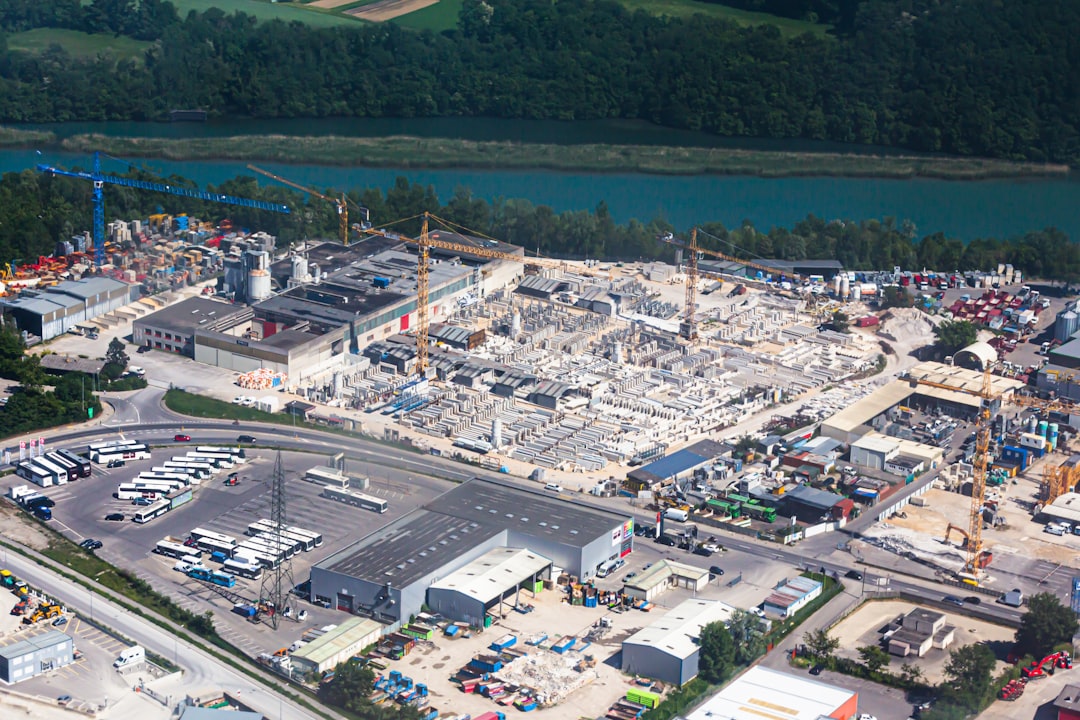
For anyone new to this space, let’s set the stage. A Small Modular Reactor is essentially a nuclear power plant that’s been dramatically scaled down and redesigned for modular, factory-based manufacturing. Traditional nuclear plants generate anywhere from 1,000 to 1,600 megawatts of electricity (MW) and require massive, custom-built facilities that can cost $10–20 billion and take 15+ years to construct. SMRs, by contrast, typically generate between 50 and 300 MW per unit, can be factory-assembled, shipped in modules, and deployed in a fraction of the time.
The logic is elegant: instead of one gigantic, expensive custom project, you build standardized units at scale — lowering costs through repetition, improving safety through passive cooling systems, and opening up markets that large reactors simply can’t serve.
The 2026 Landscape: Where We Actually Stand
Here’s where it gets genuinely exciting — and where we need to be honest about both the progress and the remaining challenges.
- NuScale Power (USA): NuScale’s VOYGR SMR design received NRC design certification in 2023, making it the first SMR to do so in the US. In 2026, the company is actively working with multiple utilities on site licensing, though the high-profile Carbon Free Power Project in Idaho faced cost revision challenges. Their current focus has shifted toward international markets, including partnerships in Romania and Poland.
- Rolls-Royce SMR (UK): The UK’s Rolls-Royce SMR program is arguably the most advanced in terms of commercial momentum in 2026. Their 470 MW design (technically at the upper end of the SMR spectrum) has received UK regulatory Generic Design Assessment (GDA) progression, and the UK government has committed over £210 million in support. Sites in Wales and England are under active consideration.
- BWRX-300 by GE-Hitachi: This is one of the hottest tickets in 2026. Canada’s Ontario Power Generation signed a contract to build the first BWRX-300 at the Darlington site — the world’s first grid-scale SMR project under active construction preparation in a Western nation. Expected online date is targeting the early 2030s, which is genuinely ambitious but increasingly credible.
- China’s HTR-PM (High-Temperature Gas-Cooled Reactor): China has been quietly ahead of the curve. The Shidaowan demonstration plant has been in operation, making China the first country to commercially operate a pebble-bed SMR design. In 2026, China is expanding this program and exporting the concept aggressively to developing nations under Belt and Road energy frameworks.
- Korea’s SMART Reactor & i-SMR: South Korea is pushing its next-generation i-SMR (Innovative SMR) program with a 170 MW design targeting domestic deployment by the early 2030s. KAERI (Korea Atomic Energy Research Institute) received additional government funding in 2025, and in 2026 the program is in detailed design phase with active export conversations happening with Middle Eastern and Southeast Asian partners.
The Economics: Getting More Real, But Not Simple Yet
Let’s be honest — the economics of SMRs are still the central debate. Early projections of $3,000–$5,000 per kilowatt (kW) of capacity have run into real-world friction. NuScale’s Idaho project saw cost estimates balloon to over $9,000/kW before being restructured. That’s a sobering data point.
However, here’s the nuance: most analysts in 2026 argue we’re still in the first-of-a-kind (FOAK) cost phase. The theory is that nth-of-a-kind (NOAK) costs — once manufacturing processes are standardized and supply chains mature — could realistically come down to the $4,000–$6,000/kW range. For comparison, offshore wind in complex environments is hitting $5,000–$8,000/kW, and large conventional nuclear is above $10,000/kW. The math starts working — but only if the scaling actually happens.
The International Energy Agency’s 2026 clean energy transition modeling now includes SMRs as a meaningful contributor to 2035–2050 decarbonization pathways, particularly for industrial heat applications, hydrogen production, and remote/off-grid power — areas where solar and wind face fundamental limitations.
Where SMRs Make the Most Sense Right Now
Rather than debating whether SMRs will replace all other energy sources (they won’t), let’s think logically about where they genuinely shine in 2026:
- Remote and island communities — High diesel dependency, limited grid access, consistent baseload need. SMRs are a strong fit.
- Industrial decarbonization — Steel, cement, and chemical plants need high-temperature heat 24/7. SMRs can provide that where renewables simply can’t.
- Data center power — The AI and cloud computing boom is creating enormous, location-flexible power demand. Several tech giants are in active SMR discussions.
- Coal plant replacement — Many retiring coal plants have grid connections, trained workforces, and cooling infrastructure. SMRs can slot in with lower transition costs.
- Hydrogen production — Green hydrogen via electrolysis needs cheap, clean, continuous electricity. SMRs could be a powerful enabler.
The Realistic Alternatives and Honest Caveats
If you’re a policymaker, investor, or energy planner reading this in 2026, here’s my honest take on navigating the SMR landscape:
For near-term power needs (before 2030), SMRs are almost certainly not your answer. Grid-scale batteries, wind, solar, and demand response are faster and cheaper to deploy right now. Don’t let SMR enthusiasm delay action on solutions that are available today.
For medium-term planning (2030–2040), SMRs deserve serious consideration, especially if you’re dealing with industrial heat, remote power, or grid reliability in regions with poor renewable resources. The BWRX-300 and Rolls-Royce programs should have operational data by then.
For long-term deep decarbonization, the scenarios that hit net-zero most efficiently almost universally include some nuclear — and SMRs offer a more flexible, scalable pathway than large conventional plants.
The waste management question hasn’t disappeared, public acceptance remains a variable, and regulatory timelines in many countries are still frustratingly slow. These aren’t dealbreakers, but they’re real factors that honest planning must include.
Editor’s Comment : SMRs in 2026 are at that fascinating inflection point — past “pure concept,” not yet “proven at scale.” The technology is real, the projects are real, and for the first time, the deployment timelines feel genuinely credible rather than perpetually optimistic. My honest read? SMRs won’t save us by themselves, but they’re becoming an increasingly important piece of a complex clean energy puzzle — especially for the hard-to-decarbonize corners of our economy that solar panels and wind turbines simply can’t reach. Watch the Darlington BWRX-300 project closely — it’s the one that will tell us the most about whether the economics can truly scale.
태그: [‘SMR small modular reactor 2026’, ‘nuclear energy trends 2026’, ‘clean energy technology’, ‘BWRX-300 GE Hitachi’, ‘Rolls-Royce SMR UK’, ‘energy decarbonization’, ‘future of nuclear power’]