A few months back, I was at an energy engineering conference in Vienna — the kind where coffee is terrible but the hallway conversations are worth the flight. A senior reactor physicist from South Korea’s KAERI pulled me aside and said something that stuck with me: “We spent decades building bigger reactors to get cheaper power. Now we’re building smaller ones to get smarter power. That’s the real revolution.” It made me rethink everything I thought I knew about the trajectory of nuclear energy.
That conversation kicked off about six months of deep-diving into next-generation nuclear technology — reading whitepapers at midnight, chatting with engineers who’ve actually turned wrenches on prototype systems, and yes, occasionally getting lost in the rabbit hole of regulatory filing databases. What I found was genuinely exciting — and occasionally humbling. Let’s unpack it together.
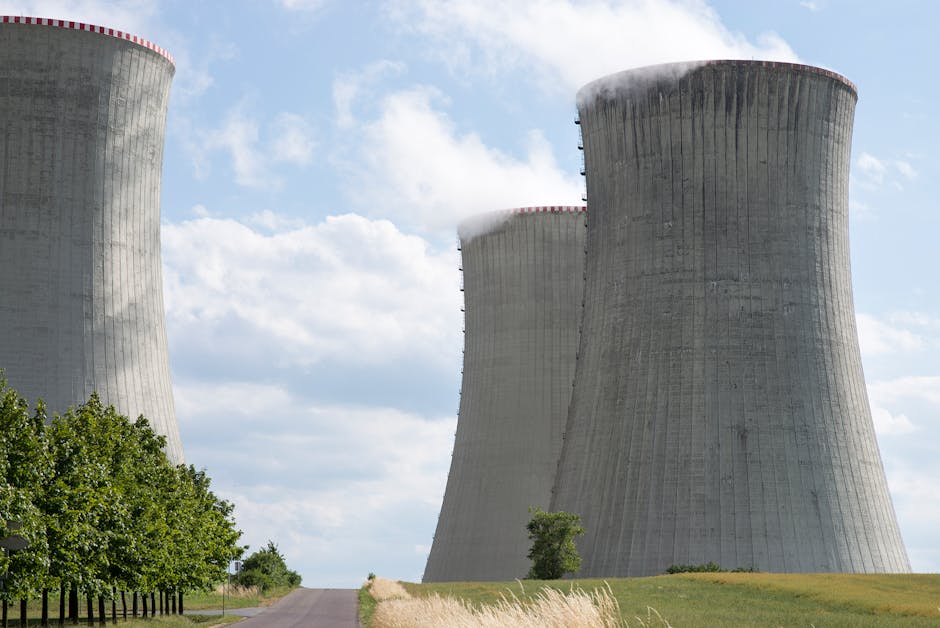
Why the Nuclear Renaissance Is Different This Time
The phrase “nuclear renaissance” has been floating around since the early 2000s. It mostly fizzled. Fukushima in 2011 did enormous damage to public trust, and the economics of large conventional pressurized water reactors (PWRs) became increasingly brutal — Vogtle Unit 3 in Georgia famously came in at over $35 billion, roughly double its original estimate, and took more than a decade to complete.
But here’s what’s genuinely different in 2026: the technology stack has matured in three parallel lanes simultaneously —
- Small Modular Reactors (SMRs): Factory-built, sub-300 MWe units with passive safety systems that don’t rely on active cooling pumps or operator intervention.
- Advanced Molten Salt Reactors (MSRs): Liquid-fuel designs that can’t melt down in the conventional sense because the fuel is already the coolant — a fundamental departure from solid-fuel reactor physics.
- High-Temperature Gas-Cooled Reactors (HTGRs): TRISO-fueled pebble-bed or prismatic designs capable of producing process heat above 700°C, unlocking industrial decarbonization beyond just electricity.
- Fusion (yes, really): With Commonwealth Fusion Systems’ SPARC tokamak entering operational testing phases and TAE Technologies pushing field-reversed configurations, fusion is no longer “always 30 years away.”
The Engineering Guts: What Actually Makes SMRs Tick
Let me get a bit technical here, because understanding the engineering is what separates the real opportunity from the marketing fluff.
A conventional large PWR operates by circulating pressurized water at around 155 bar and ~320°C through the primary loop. If you lose coolant flow — pump failure, pipe break — you have a very short window before fuel damage begins. That’s why traditional plants need massive emergency core cooling systems (ECCS), containment domes rated for catastrophic pressure spikes, and round-the-clock operator staffing at scale.
SMR designs like NuScale Power’s VOYGR or Rolls-Royce’s UK SMR flip this paradigm using natural circulation cooling. The reactor vessel is small enough that convective flow alone — hot water rises, cool water falls — can remove decay heat indefinitely without pumps. No pumps, no pump failure, no ECCS scramble at 3am. I’ve seen the thermal-hydraulic models on this, and the physics genuinely works. The debugging story gets interesting, though: early NuScale CFD (computational fluid dynamics) models badly underestimated turbulence effects in the helical steam generators, requiring a full redesign of the tube bundle geometry. That’s the kind of war story that doesn’t make press releases.
Molten Salt: The Coolest (Literally Hottest) Technology in the Room
If SMRs are the pragmatic near-term play, molten salt reactors are where things get genuinely exotic. The core concept dates back to Oak Ridge National Laboratory’s Molten Salt Reactor Experiment (MSRE), which ran successfully from 1965 to 1969. It was then shelved for political reasons (it couldn’t produce weapons-grade plutonium — useful fact for your next trivia night).
In 2026, companies like Terrestrial Energy (Canada), Moltex Energy, and China’s SINAP (Shanghai Institute of Applied Physics) have made serious progress. SINAP’s thorium-based MSR pilot reactor, the TMSR-LF1, began its extended operational testing phase in late 2024 and has been generating data that the international nuclear community is watching very closely.
The key engineering advantage: if a molten salt reactor loses power entirely, a freeze plug at the bottom of the vessel melts (counterintuitively, it’s cooled by active systems during operation) and the fuel salt drains by gravity into a subcritical geometry tank. The reaction simply stops. As one engineer described it to me: “It’s a reactor that fails to safety by doing nothing.” That’s a profound statement from a safety engineering standpoint.

Real-World Case Studies: Who’s Actually Building What in 2026
Let’s ground this in actual projects rather than PowerPoint slides:
- NuScale Power (USA): After the headline-grabbing UAMPS project cancellation in 2023 due to cost escalation, NuScale has pivoted toward international markets. Their VOYGR-6 (462 MWe) design received Canadian Nuclear Safety Commission (CNSC) Phase 1 pre-licensing review completion in 2025, with Romania’s Doicești site showing active project development momentum into 2026.
- Rolls-Royce SMR (UK): The UK government’s Great British Nuclear program has shortlisted the Rolls-Royce 470 MWe design. Site selection for a first-of-kind deployment is underway, with Wylfa in Wales emerging as a frontrunner. The design uses a conventional PWR architecture but factory-prefabricated modules — pragmatic rather than revolutionary, but the manufacturing cost thesis is credible.
- KAERI’s i-SMR (South Korea): Korea’s 170 MWe integral SMR received its preliminary design approval from the Nuclear Safety and Security Commission (NSSC) in early 2026. The design incorporates 60-year operational life targets and marine deployment capability — a fascinating dual-use case for island grid decarbonization.
- Commonwealth Fusion Systems (CFS): Their SPARC tokamak, using high-temperature superconducting (HTS) magnets generating >20 Tesla fields, demonstrated net energy gain conditions in controlled plasma experiments in late 2025. Their commercial ARC reactor timeline targets first power delivery in the early 2030s. Still ambitious, but for the first time, “ambitious” doesn’t feel synonymous with “impossible.”
- X-energy (USA): The Xe-100 pebble-bed HTGR recently broke ground for a demonstration project in partnership with Dow Chemical in Texas — specifically targeting industrial process heat, not just electricity. This is a market that conventional renewables literally cannot serve.
The Numbers That Actually Matter: Levelized Cost and Carbon Math
I know what you’re thinking — “nuclear is too expensive.” That narrative is real but increasingly nuanced. The Levelized Cost of Energy (LCOE) for large conventional nuclear in Western markets has been brutal: Hinkley Point C in the UK is locked into a strike price equivalent to roughly £92/MWh (2012 money), which inflates alarmingly in today’s terms.
But SMR proponents — and here’s where I urge careful thinking — argue the LCOE trajectory changes with learning rates and factory fabrication. The OECD NEA’s 2026 cost analysis modeling suggests that by the 5th-of-a-kind SMR unit from a given design, LCOE could reach the $60-90/USD per MWh range in favorable regulatory environments. That’s genuinely competitive with firm, dispatchable power — gas peakers, for reference, are running $80-120/MWh in many markets today.
The carbon math is already decisive: nuclear lifecycle emissions average 4-12 gCO₂eq/kWh, compared to natural gas at ~490 gCO₂eq/kWh and coal at ~820 gCO₂eq/kWh. Even accounting for construction energy, uranium mining, and decommissioning, nuclear is in the same emissions range as wind and solar.
The Regulatory and Waste Challenges: Let’s Be Honest
I’m not here to be a cheerleader without caveats. There are real engineering and policy challenges that deserve honest treatment:
- Regulatory bottlenecks: The NRC in the US and equivalent bodies worldwide were built to regulate large light-water reactors. Licensing novel reactor concepts through frameworks designed for 1970s technology creates genuine delays. The NRC’s Part 53 rulemaking — a technology-inclusive framework — only reached final rule status in 2025 after years of industry lobbying.
- High-level waste: No country has a licensed deep geological repository in operation yet. Finland’s Onkalo facility is the closest to operational (targeting mid-2020s acceptance of spent fuel), and Sweden’s Forsmark repository received final government approval. The waste problem is solvable — it’s a political and timeline problem more than a technical one — but it’s real.
- Supply chain for enriched fuel: Many advanced reactor designs require High-Assay Low-Enriched Uranium (HALEU) at 5-20% enrichment. Current global HALEU production capacity is severely limited, with Russia’s TENEX historically being the dominant supplier — a supply chain vulnerability that’s gotten acute attention since 2022. US domestic HALEU enrichment through Centrus Energy is scaling, but slowly.
- First-of-a-kind cost risk: Every generation 1 of a novel reactor design will be expensive. The question is whether subsequent units follow a learning curve or repeat the cost escalation pattern of large PWRs. This is the $64 billion question (literally).
What This Means for Engineers, Investors, and the Grid
If you’re an engineer considering this space, the skill sets in demand are fascinating: thermal-hydraulic modeling (RELAP5, TRACE), materials science for high-temperature alloys, digital instrumentation and control systems for passive-safety architectures, and increasingly, machine learning applications for real-time reactor state monitoring. The talent pipeline is tight — nuclear engineering enrollment is growing but from a low base.
For grid planners, the value proposition that’s increasingly clear is firm, dispatchable, low-carbon power that can provide baseload and load-following capability. As grids absorb more variable renewables, the value of firm capacity increases in wholesale electricity market structures. SMRs positioned as “always-on” partners to wind and solar makes more economic sense than SMRs competing head-to-head with solar on LCOE.
For communities near proposed sites: the conversation is changing. Co-location with industrial facilities (hydrogen production, desalination, district heating) creates local economic cases that pure electricity generation doesn’t. The X-energy/Dow collaboration is a template worth watching.
Realistic Paths Forward: Not a Binary Choice
The mistake I see made constantly in energy discourse is treating technology choices as binary — nuclear OR renewables, fusion OR fission. The engineering reality is that a deeply decarbonized grid almost certainly needs multiple firm, low-carbon sources. The International Energy Agency’s 2026 Net Zero Scenario calls for a doubling of nuclear capacity by 2050 alongside massive renewable expansion. These aren’t competing visions; they’re complementary ones.
My realistic take on the timeline:
- 2026-2030: First SMR demonstrations come online (likely Rolls-Royce UK, Korea’s i-SMR, possibly X-energy Xe-100). Cost data from these units will be the most important datapoint of the decade for nuclear economics.
- 2030-2035: If first-of-a-kind costs are managed, SMR order books could see genuine commercial scaling. MSR pilot plants in China and Canada provide operational data. Fusion remains pre-commercial but SPARC and potentially NIF-derived approaches publish more compelling Q>1 data.
- 2035+: Factory-manufactured SMRs with 5-10 units of learning behind them, fusion possibly entering its own demonstration phase, HTGRs serving industrial heat markets.
If you want to go deeper, the IAEA’s Advanced Reactors Information System (ARIS) database at aris.iaea.org tracks over 70 advanced reactor designs globally with technical specs — it’s an extraordinary resource that’s free and surprisingly readable. The Third Way think tank’s nuclear energy program also publishes excellent, balanced analysis on the policy and economics side.
Editor’s Comment : What struck me most in researching this piece is that the next-generation nuclear story isn’t primarily a story about revolutionary physics — most of these technologies have roots in 1950s and 1960s research. It’s a story about manufacturing maturity, regulatory modernization, and the hard-won credibility that comes from actually building things. The engineers in this space are fighting on three fronts simultaneously: the reactor itself, the regulatory framework, and public perception shaped by four decades of fear. That’s an enormous amount to ask. But if even two or three of these technology tracks successfully complete their first-of-a-kind demonstrations in the next four years, the trajectory of global decarbonization gets meaningfully better. That’s worth paying close attention to — whether you’re an engineer, an investor, or just someone who wants to understand where the lights of 2040 will actually come from.
📚 관련된 다른 글도 읽어 보세요
- 2026 Senior Health Checkup Items & Procedures: The Complete Guide Every Older Adult Needs
- 2026년 금 원유 ETF 종목 완전 비교 분석 | 어디에 투자해야 할까?
- 2026년 금 ETF 투자 전략: 지금 당장 알아야 할 핵심 가이드
태그: small modular reactors 2026, next generation nuclear power, molten salt reactor technology, SMR engineering, nuclear energy innovation, advanced reactor design, nuclear decarbonization