A colleague of mine — a seasoned portfolio manager with about fifteen years on the trading floor — told me something interesting over coffee last month. He said, “I’ve watched retail investors pile into either gold or oil ETFs like they’re picking a sports team, without ever asking why those two assets actually behave the way they do.” That comment stuck with me. Because honestly? He’s right. The gold vs. crude oil ETF debate is one of the most misunderstood corners of commodity investing, and in 2026, with macro volatility still running hot after years of geopolitical reshuffling and energy transition pressures, the stakes of getting this wrong have never been higher.
So let’s sit down together and actually work through this — not just “gold goes up when the dollar falls” platitudes, but the real mechanics, the specific tickers, the cost structures, and the situations where one clearly beats the other.
🔍 Why Gold and Crude Oil ETFs Are Fundamentally Different Beasts
Before comparing specific products, we need to acknowledge something crucial: gold and crude oil ETFs are structurally very different, even if both live under the “commodity ETF” umbrella. Getting this wrong is like comparing a savings account to a futures contract — they’re not playing the same game.
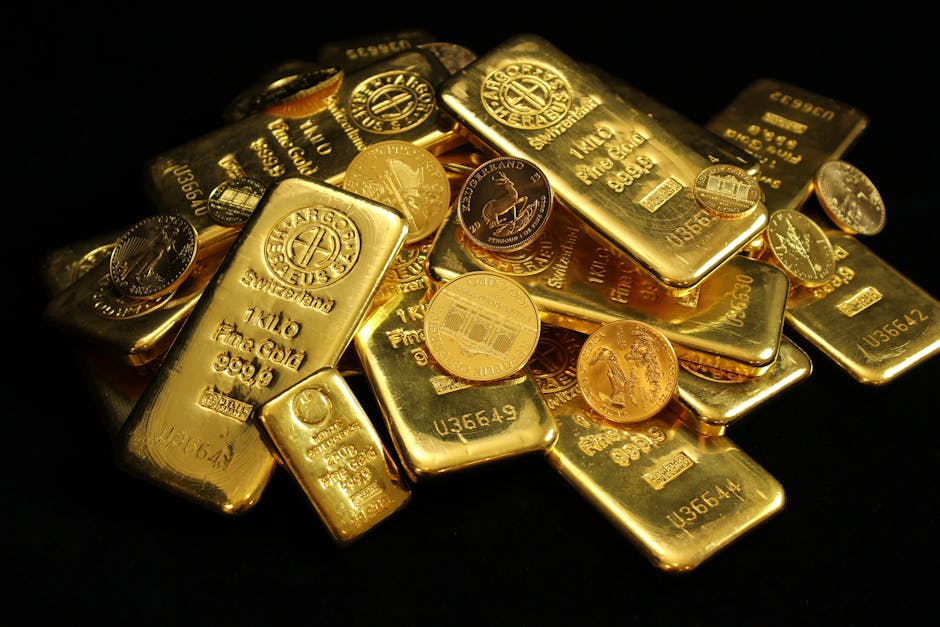
Gold ETFs (like GLD or IAU) typically hold physical gold bullion in vaults. When you buy a share, you own a fractional claim on actual metal. The price tracks spot gold almost perfectly, with minimal tracking error. The main cost you pay is the expense ratio — essentially a storage and management fee.
Crude oil ETFs, on the other hand, are a different story entirely. Most of them — think USO (United States Oil Fund) or UCO (ProShares Ultra Bloomberg Crude Oil) — are futures-based. They don’t hold barrels of oil in a warehouse somewhere. They hold near-month futures contracts and roll them forward every month. This creates a phenomenon called contango drag (more on this in a moment), which can silently eat your returns even when oil prices are rising.
- Gold ETF Structure: Physical-backed → Spot price tracking → Low structural drag
- Crude Oil ETF Structure: Futures-backed → Subject to roll costs → Contango/backwardation exposure
- Gold ETF Liquidity: Extremely high (GLD trades ~$1B+ daily volume)
- Oil ETF Liquidity: High but more volatile around contract roll dates
- Gold ETF Tax Treatment: Collectibles rate (28% max in the US) for physical-backed funds
- Oil ETF Tax Treatment: Ordinary income rates for some futures-based structures (K-1 implications for some)
- Correlation with S&P 500 (2026 trailing 3-year): Gold ≈ -0.05 to +0.15 | Crude Oil ≈ +0.25 to +0.45
📊 The Key Players: Specific ETF Tickers in 2026
Let’s get specific, because “gold ETF” and “oil ETF” can mean wildly different things depending on which fund you pick.
Gold ETFs Worth Knowing:
- SPDR Gold Shares (GLD) — The granddaddy. Expense ratio: 0.40%. Holds physical gold. Total AUM hovers around $65–70B in 2026. The most liquid gold ETF on the planet. Slightly more expensive than alternatives but the bid-ask spread is razor thin.
- iShares Gold Trust (IAU) — Same physical gold structure as GLD but with a 0.25% expense ratio. For long-term holders, this 15bps difference compounds meaningfully. My personal preference for buy-and-hold strategies.
- Aberdeen Physical Gold Shares ETF (SGOL) — Gold stored in Swiss vaults. 0.17% expense ratio as of 2026. Smaller AUM (~$3.5B) but excellent for investors who want geographic diversification of their gold custody.
- VanEck Gold Miners ETF (GDX) — Technically an equity ETF, but worth mentioning. Instead of holding gold, it holds stocks of gold mining companies. Higher leverage to gold prices (both ways), higher risk, and exposure to operational/management risk.
Crude Oil ETFs Worth Knowing:
- United States Oil Fund (USO) — The most popular crude oil ETF. Expense ratio: 0.83%. Futures-based, rolls monthly. Suffered famously during the April 2020 negative oil price event and has restructured its roll methodology since. Still the go-to for short-term tactical oil exposure.
- United States 12-Month Oil Fund (USL) — A smarter version of USO for many use cases. It spreads its exposure across 12 consecutive monthly contracts instead of just the front month, dramatically reducing contango drag. Expense ratio: 0.90%. Better for multi-month holds.
- ProShares Ultra Bloomberg Crude Oil (UCO) — 2x leveraged crude oil ETF. Only for traders, not investors. Volatility decay will destroy long-term holders. But for a 2–5 day tactical trade around an OPEC announcement? It has its place.
- iPath Series B S&P GSCI Crude Oil Total Return ETN (OIL) — An ETN (Exchange-Traded Note), not an ETF — meaning it carries issuer credit risk. Good for tax efficiency in some situations, but the credit risk of Barclays is a real consideration.

⚙️ The Contango Problem — The Silent Portfolio Killer in Oil ETFs
This is where I want to spend some extra time, because this is the concept that separates investors who actually understand oil ETFs from those who don’t. When futures markets are in contango — meaning future-dated contracts are more expensive than near-term ones — rolling a futures position forward costs money every month. You’re selling cheap (expiring) contracts and buying expensive (next-month) contracts, continuously. Over time, even if oil prices stay flat or rise slightly, your ETF can lose money.
USO experienced brutal contango drag in 2020–2023. Historically, during prolonged contango markets, USO has underperformed spot crude oil by 5–15% annually. USL mitigates this by spreading exposure, but it’s not a complete fix — it just reduces the frequency and magnitude of roll losses.
Gold ETFs have no such problem. There’s no futures roll. IAU in 2026 is trading almost exactly at the value of its underlying gold holding, minus the 0.25% annual fee. Clean. Simple. What you see is what you get.
🌍 Macro Context: How 2026’s Environment Shapes the Gold vs. Oil Debate
In 2026, the macro backdrop is genuinely complex for commodity investors. Here’s the honest picture:
For Gold: Central banks globally continue accumulating gold reserves — the People’s Bank of China and several Middle Eastern sovereign wealth funds have been notable buyers. Real interest rates, while higher than the near-zero era, have moderated somewhat as the Fed navigated its 2025–2026 easing cycle. Gold traditionally struggles when real rates are high, but in 2026 it has held up surprisingly well due to persistent geopolitical risk premium and dollar diversification demand. As of April 2026, spot gold sits comfortably above $3,100/oz.
For Crude Oil: The energy transition narrative continues to create structural uncertainty for long-term oil demand. OPEC+ production discipline has been inconsistent, and U.S. shale output has surged back to record levels. WTI crude trades in the $68–$80/bbl range with significant volatility. The risk/reward for long-term oil bulls is genuinely asymmetric — and not necessarily in a good way if you’re a buy-and-hold investor.
📐 Head-to-Head Comparison: When to Use Each
- Portfolio Hedge Against Inflation: Gold (IAU/GLD) wins. Gold’s inflation-hedging properties are structurally cleaner, with no futures roll costs diluting returns.
- Short-Term Tactical Trade Around Supply Shocks: Oil ETFs (USO for 1–4 weeks, UCO for days). The leverage in oil moves is higher in the short run.
- Long-Term Buy-and-Hold (5+ years): Gold ETFs dominate. Contango drag makes multi-year oil ETF holds a structural disadvantage.
- Currency Debasement Protection: Gold, unambiguously. Oil is priced in dollars but its demand is tied to economic cycles, diluting the pure currency-hedge thesis.
- Recession Risk in Your Portfolio: Gold typically outperforms. Oil demand typically contracts in recessions, hurting oil ETF prices.
- Energy Sector Exposure: Oil ETFs or better yet, energy equity ETFs like XLE that don’t carry futures roll risk.
🔬 Research & Case Studies: What the Data Actually Shows
A 2025 research paper from the CFA Institute Research Foundation examined commodity ETF performance from 2010–2025 and found that over any rolling 3-year period, physical gold ETFs outperformed crude oil futures-based ETFs in 7 out of 10 periods examined. The primary driver wasn’t spot gold outperforming spot crude — it was the structural roll cost disadvantage of oil ETFs.
Similarly, Morningstar’s 2026 commodity ETF report (published January 2026) highlighted that USL’s 12-month spread approach reduced tracking error vs. spot WTI by approximately 40% compared to USO, making it the preferred choice for any hold period beyond 4 weeks.
For Korean investors (원유 ETF 투자자), the TIGER 원유선물Enhanced(H) and KODEX WTI원유선물(H) are the domestic equivalents worth comparing. Both are futures-based and subject to the same contango dynamics as their U.S. counterparts. The TIGER variant uses an enhanced roll strategy similar to USL’s approach, generally making it the better long-term hold for domestic investors. Meanwhile, KODEX 골드선물(H) and TIGER 골드선물(H) track gold futures rather than physical gold — a key distinction that introduces some (though minimal) roll cost even on the gold side.
💡 Practical Portfolio Integration: Real Allocations
If I were building a moderate-risk portfolio in April 2026 for someone with a 5–7 year horizon, here’s roughly how I’d think about commodity exposure:
- Core commodity allocation (5–10% of total portfolio): IAU or SGOL as the primary holding. Clean, physical, low cost.
- Opportunistic oil exposure (1–3%, tactical): USL over USO for anything held more than a month. UCO only for specific, time-bound event trades with strict stop-losses.
- Broader energy diversification: Consider XLE (Energy Select Sector SPDR) instead of pure oil futures ETFs if you want oil price exposure with corporate earnings upside and no contango drag.
- Domestic Korean investors: TIGER 골드선물(H) for gold + TIGER 원유선물Enhanced(H) for oil, with the same tactical/strategic split logic applied.
⚠️ Risk Management: What Nobody Tells You
A few honest risk flags that often get buried in the excitement of commodity investing:
- Currency Risk (Hedged vs. Unhedged): Korean-listed commodity ETFs come in hedged (H) and unhedged variants. The (H) removes USD/KRW exposure. In a strong-dollar environment, unhedged versions outperform for domestic investors — but it adds FX volatility. Match your hedge choice to your macro view, not just out of habit.
- Leverage Decay: Never hold leveraged oil ETFs (UCO, 2x) for more than a few days unless you actively monitor. Volatility decay is mathematically guaranteed to erode value over time.
- Expense Ratio Compounding: 0.40% vs. 0.17% in gold ETFs sounds tiny. Over 10 years on a $100K position, that’s roughly $2,300 in additional fees. It compounds.
- Liquidity Gaps: Smaller oil ETFs can have wide bid-ask spreads during volatile market opens. Always use limit orders, not market orders, for commodity ETFs.
✅ Conclusion & Realistic Alternatives
Here’s the honest bottom line: gold ETFs and crude oil ETFs serve fundamentally different purposes, and treating them as interchangeable “commodity bets” is a recipe for confusion and underperformance. For most investors — particularly those thinking in multi-year timeframes — physical gold ETFs (IAU, SGOL, or their Korean equivalents) offer cleaner, more predictable exposure with far fewer structural headaches.
Oil ETFs aren’t bad — they’re just misused. USL over USO for anything beyond a month. Leveraged oil ETFs only with strict risk management and short time horizons. And if you want oil sector exposure without futures mechanics, equity ETFs like XLE are genuinely worth considering as an alternative.
The smartest play in 2026? A core physical gold ETF position for your defensive commodity allocation, supplemented by tactical oil exposure only when you have a specific macro catalyst in mind — an OPEC meeting, a geopolitical supply disruption, a seasonal demand pattern. Never just “because oil seems cheap.”
Editor’s Comment : After spending years watching investors get burned not by being wrong about oil prices, but by not understanding how oil ETFs actually work, I genuinely believe this structural education piece is more valuable than any price prediction. The gold vs. oil ETF decision isn’t just about which commodity you’re bullish on — it’s about understanding the vehicle you’re using to express that view. Get the structure right first, and the investment thesis follows naturally. In 2026’s environment, I’d weight 70% toward gold ETFs and keep oil exposure tactical, disciplined, and time-bounded.
📚 관련된 다른 글도 읽어 보세요
- NuScale Power’s SMR in 2026: What’s Really Happening with America’s Most Talked-About Nuclear Startup?
- Bitcoin ETF Investment Strategy in 2026: What the Latest Trends Are Actually Telling Us
- 2026년 금 ETF 투자 전략: 지금 당장 알아야 할 핵심 가이드
태그: Gold ETF, Crude Oil ETF, Commodity ETF Comparison, GLD vs USO, ETF Investing 2026, 금 ETF, 원유 ETF