Picture this: it’s 2022, and the energy world is buzzing with excitement. NuScale Power, a Portland-based nuclear startup, just became the first company in U.S. history to receive NRC design approval for a small modular reactor (SMR). Clean energy advocates were practically doing cartwheels. Fast forward to 2026, and the story has taken some genuinely fascinating — and complicated — turns that are worth unpacking together.
So let’s think through where NuScale actually stands right now, what went sideways, and — most importantly — what this means for the broader future of nuclear energy in America and beyond.
📉 The UAMPS Collapse: A Gut Punch That Changed Everything
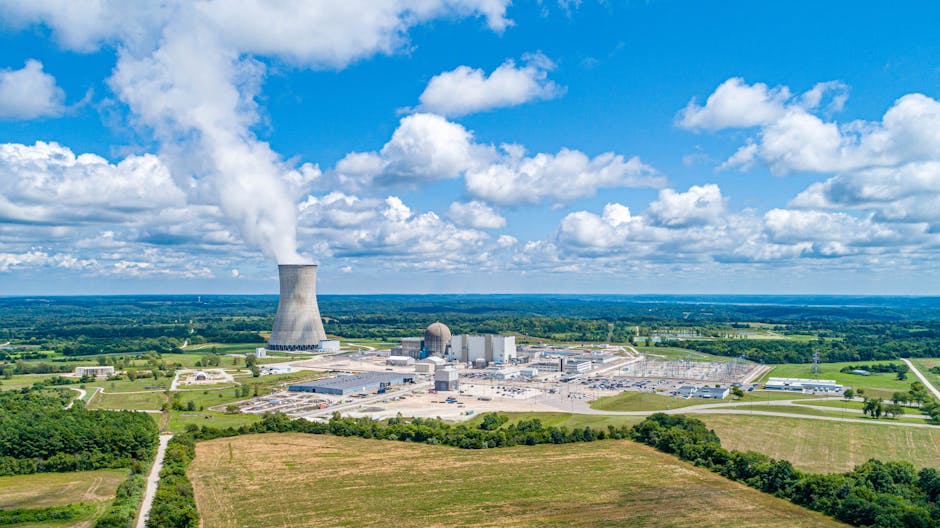
If you’ve been following the SMR space, you already know that NuScale’s flagship project — the Carbon Free Power Project (CFPP) in Idaho, backed by the Utah Associated Municipal Power Systems (UAMPS) — was cancelled in late 2023. The reason? Projected costs ballooned from roughly $58/MWh to over $89/MWh, and enough municipal utility subscribers pulled out to make the project financially unviable.
That was a serious credibility blow. But here’s where it gets interesting: canceling one project doesn’t necessarily kill a technology. Think of it like a restaurant closing its first location due to high rent — it doesn’t always mean the food is bad. The question is whether the recipe can be adapted.
By early 2026, NuScale has been actively repositioning itself, focusing on:
- International markets — particularly Romania, Poland, and South Korea, where energy security concerns are driving governments to look seriously at SMRs.
- Industrial decarbonization — targeting heavy industries like steel, aluminum, and chemical manufacturing that need reliable, high-temperature heat and can’t easily run on intermittent renewables.
- Defense and remote applications — working with the U.S. Department of Defense to explore SMR deployment on or near military installations.
- Revised cost modeling — NuScale’s engineering teams have been working on value-engineering the VOYGR design to reduce overnight construction costs, with updated figures expected to reflect lessons learned from the CFPP experience.
🌍 International Traction: Where NuScale Is Actually Gaining Ground in 2026
Let’s look at what’s happening globally, because this is where the story gets more optimistic. Romania’s Doicești site remains one of NuScale’s most active international prospects. The Romanian government, backed by U.S. Export-Import Bank financing discussions and strong political will to reduce dependence on Russian energy infrastructure, has kept the project alive through 2026 — albeit with slower-than-hoped progress on financing closure.
In Poland, interest in SMRs broadly — including NuScale’s VOYGR — remains strong. Polish industrial conglomerates and the government alike are looking at nuclear as a cornerstone of their 2040 energy transition plans. NuScale is one of several vendors competing for that market, alongside Rolls-Royce SMR (UK), GE Hitachi’s BWRX-300, and Korea’s SMART reactor.
South Korea is another angle worth watching. Following the global re-evaluation of nuclear energy, Korean energy companies have been exploring SMR partnerships both domestically and as export vehicles — and NuScale’s NRC-approved design still carries significant regulatory credibility internationally.
💰 The Financial Reality Check: Can NuScale Survive Long Enough to Succeed?
This is the tough conversation. NuScale went public via SPAC in 2022 and has faced significant share price pressure. By 2026, the company has been navigating a challenging capital environment, with higher interest rates making capital-intensive infrastructure projects harder to finance.
However, a few things are working in their favor:
- The Inflation Reduction Act’s nuclear production tax credits remain in place and apply to advanced nuclear, giving potential U.S. projects a meaningful economic boost.
- DOE loan guarantees through the Loan Programs Office continue to be available for advanced nuclear projects, reducing financing risk for utilities willing to take the plunge.
- NuScale’s NRC design certification is a genuine moat — competitors are still years away from achieving equivalent regulatory approval in the U.S.
- The growing demand for AI data center power has created a new class of potential customers: tech companies willing to sign long-term power purchase agreements for reliable, carbon-free baseload power.
⚡ The AI Data Center Angle: An Unexpected Lifeline?
Here’s a development that would have seemed speculative even two years ago: the explosive growth of AI infrastructure has fundamentally changed the power demand conversation. Companies like Microsoft, Google, Amazon, and Meta are collectively planning to deploy hundreds of gigawatts of computing capacity over the next decade — and they need firm, 24/7 carbon-free power, not just renewables that depend on weather.
This has created serious conversations between SMR developers (including NuScale) and hyperscalers about dedicated nuclear capacity. While no NuScale-specific deal has been publicly announced as of April 2026, the broader trend is real and could represent a transformative customer segment for the company.
🔍 Realistic Alternatives to Consider
If you’re an investor, policymaker, or energy professional trying to figure out where to place your bets in the SMR space, here’s how to think about it pragmatically:
- If you’re bullish on U.S. SMR manufacturing: NuScale’s regulatory head start matters, but watch GE Hitachi’s BWRX-300 closely — it’s gaining traction in Canada (Ontario Power Generation) and has strong utility backing.
- If you’re focused on deployment speed: China’s HTR-PM (pebble bed) and Russia’s RITM-200 are already operating, even if they’re not accessible to Western markets. These set a benchmark for what’s achievable.
- If you’re a utility or industrial buyer: Don’t bet exclusively on any single vendor. The SMR market in 2026 is competitive enough that issuing broad RFPs and maintaining optionality is the smart move.
- If you’re an energy policy advocate: The NuScale story reinforces that regulatory frameworks and financial de-risking mechanisms (loan guarantees, PTC) are just as important as the technology itself.
The bottom line? NuScale’s journey is genuinely one of the most instructive case studies in what it takes to commercialize breakthrough energy technology. It’s not a story of failure — it’s a story of a first-mover learning expensive lessons that will ultimately benefit the entire industry. The SMR race in 2026 is still very much on, and NuScale remains a serious player, even if the finish line looks different than it did three years ago.
Editor’s Comment : What strikes me most about NuScale’s 2026 situation is that the technology was never really the problem — it was the economics and project execution that needed to catch up. In a way, that’s actually encouraging news for nuclear energy’s future. The physics work. The NRC agrees. Now it’s an engineering-economics optimization problem, which is solvable. Keep an eye on those international projects and the AI power demand story — those could be the two threads that weave NuScale’s next chapter together.
📚 관련된 다른 글도 읽어 보세요
- 2026 Senior Health Insurance: What’s Actually Changed and What It Means for You
- 2026년 인플레이션 헤지, 원자재 ETF로 자산을 지키는 현실적인 방법
- 노인 근감소증 예방 운동 후기 – 70대 아버지와 함께 12주 직접 해봤습니다 (2026년 최신)
태그: [‘NuScale SMR 2026’, ‘small modular reactor news’, ‘nuclear energy future’, ‘SMR investment outlook’, ‘advanced nuclear power’, ‘clean energy technology’, ‘NuScale VOYGR update’]