My neighbor’s mother — a sharp, lively woman who used to grow tomatoes in her backyard and host monthly card games — gradually stopped doing both. Her family chalked it up to ‘just aging.’ It wasn’t until she refused to eat for three days straight that they realized something deeper was happening. She was diagnosed with late-life depression, and her family later told me, ‘We thought we were being patient. Turns out, we were missing all the signs.’
This story isn’t unusual. In fact, it’s heartbreakingly common. And in 2026, as global populations age faster than ever before, understanding elderly depression has become one of the most important — and underappreciated — family health skills we can develop. Let’s think through this together.

Why Elderly Depression Is So Easy to Miss
Here’s the tricky part: depression in older adults often doesn’t look like the depression we see portrayed in movies — tearful breakdowns, visible sadness, crying spells. In seniors, it tends to wear a disguise. It might show up as:
- Persistent fatigue or low energy — “I’m just tired” becomes a daily refrain, even after rest.
- Increased physical complaints — headaches, digestive issues, and chronic pain that don’t fully respond to treatment can sometimes be somatic expressions of depression.
- Cognitive changes — forgetfulness, difficulty concentrating, or confusion that mimics early dementia (sometimes called ‘pseudodementia’).
- Social withdrawal — skipping family dinners, declining calls from friends, giving up hobbies they previously loved.
- Irritability or agitation — rather than sadness, some older adults become unusually short-tempered or anxious.
- Loss of appetite or unexplained weight loss — often dismissed as a ‘normal’ aging change.
- Expressing feelings of worthlessness — phrases like “I’m just a burden” or “Nobody needs me anymore” are red flags, not just venting.
- Loss of interest in personal hygiene — stopping grooming habits they once maintained consistently.
The Numbers Don’t Lie: How Widespread Is This?
According to the World Health Organization’s 2025 Mental Health Atlas, depression affects approximately 7% of the global elderly population — but that figure likely represents a significant undercount, since many cases go undiagnosed or are attributed to physical illness. In the United States, the CDC estimates that nearly 20% of adults over 65 experience some form of mental health issue, with depression and anxiety being the most prevalent.
In South Korea — where the original topic keyword originates — the situation is particularly acute. Korea has one of the world’s fastest-aging populations, and according to data from the Korea Institute for Health and Social Affairs (한국보건사회연구원), depression rates among Koreans aged 65 and older hover around 13–15%, with rural elderly populations showing even higher rates due to social isolation and limited access to mental health resources.
What’s alarming is the link between untreated elderly depression and suicide risk. South Korea’s elderly suicide rate remains among the highest in the OECD — a sobering statistic that underscores why early family recognition is genuinely life-saving, not just quality-of-life improving.
Real-World Examples: What Early Intervention Looks Like
In Japan, a country well ahead of many nations in elder care infrastructure, community programs like ibasho cafes (居場所カフェ) — literally ‘places to belong’ — have been shown in 2024–2025 research to significantly reduce depressive symptoms in isolated elderly individuals by restoring a sense of social purpose. The key insight? It’s not always clinical treatment alone that helps — it’s reconnection.
In the United Kingdom, the National Health Service now includes a ‘social prescribing’ model for elderly patients, where GPs can refer older adults to community activities, volunteer programs, and befriending services alongside or instead of medication. Early results reported in the British Journal of General Practice (2025) suggest a meaningful reduction in depressive episodes among participants.
Closer to home for many American families, the AARP’s 2026 Family Caregiver Resource Hub now includes a dedicated section on elder depression screening — including printable tools families can use before a doctor’s appointment to articulate what they’re observing in clearer terms. This kind of structured, family-driven approach is increasingly recognized as best practice.
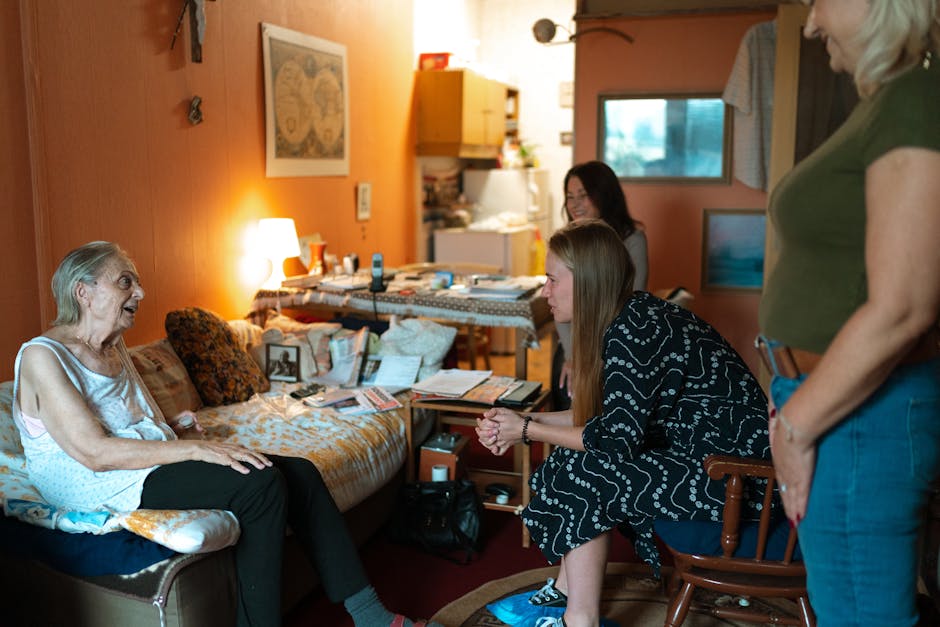
How Families Can Actually Help — Practically and Realistically
This is where I want to be honest with you: there’s a difference between wanting to help and knowing how. Well-meaning families sometimes accidentally make things worse by minimizing feelings (“You have so much to be grateful for!”) or over-medicalizing the situation right away. Here’s a more balanced approach:
- Start with observation, not interrogation. Keep a casual mental (or written) log of behavioral changes over 2–4 weeks before jumping to conclusions. Patterns matter more than single incidents.
- Open the conversation with curiosity, not concern. Instead of “Mom, I’m worried you’re depressed,” try “I’ve noticed you seem a bit quieter lately — how have you been feeling about things?” It’s less alarming and more inviting.
- Normalize mental health treatment for their generation. Many elderly people grew up in an era where ‘mental illness’ carried enormous stigma. Framing it as brain health — like treating high blood pressure — can reduce resistance.
- Accompany them to appointments. Older adults may not self-report mood symptoms to their doctor (studies show they’re more likely to mention physical complaints). Being present as a family member and gently adding observations can be pivotal.
- Reduce structural isolation. Think creatively: a weekly video call schedule, a shared hobby project, even helping set up a tablet for a senior so they can join online communities — small structural changes compound over time.
- Ask directly about suicidal thoughts if warning signs are present. This feels scary, but research consistently shows that asking does not plant the idea — it opens a door that may save a life.
- Take care of yourself, too. Caregiver burnout is real. You can’t pour from an empty cup, and family members who are depleted often pull back precisely when their elderly loved ones need them most.
When to Seek Professional Help — And What Kind
If symptoms have persisted for more than two weeks and are interfering with daily function, it’s time to move beyond family support alone. A geriatric psychiatrist (a specialist in mental health among older adults) is ideal but not always accessible. A primary care physician, geriatrician, or licensed clinical social worker experienced with older adults can all be excellent starting points.
Treatment options vary and often combine:
- Psychotherapy — Cognitive Behavioral Therapy (CBT) adapted for older adults has strong evidence behind it. Problem-Solving Therapy (PST) is particularly effective for seniors who feel a loss of control.
- Medication — SSRIs are commonly prescribed, though careful management is essential given potential interactions with other medications older adults often take.
- Lifestyle-based interventions — structured physical activity (even gentle walking programs) has demonstrated antidepressant effects comparable to mild medication in several meta-analyses.
- Community and peer support programs — increasingly covered by Medicare and Medicaid in the US as of 2026 policy expansions.
Realistic Alternatives for Families Facing Barriers
Not every family has the time, proximity, or financial resources for ideal intervention. If you’re a long-distance caregiver, consider partnering with a local senior center or church community to serve as informal ‘eyes on the ground.’ Telehealth mental health services have expanded dramatically in 2025–2026 and can now reach rural elderly populations far more effectively than before. If medication is a concern (your parent refuses, or there are interaction worries), non-pharmacological options like structured social engagement and light therapy for seasonal-component depression are valid conversations to have with their doctor.
The goal isn’t perfection. The goal is movement — toward awareness, connection, and care.
Editor’s Comment : Depression in the elderly is one of those conditions that hides in plain sight, often mistaken for ‘normal aging’ or personality changes. But here’s what I keep coming back to: the families who catch it early almost always describe the same thing — they started paying attention to patterns, not just moments. You don’t need a medical degree to notice that your dad used to light up at grandkids’ visits and now barely looks up. Trust that observation. Act on it gently. And remember — reaching out for help, whether for your loved one or for yourself as a caregiver, is never a sign of failure. It’s the most human thing we can do.
📚 관련된 다른 글도 읽어 보세요
- Crypto ETF Risk Management in 2026: What Every Investor Needs to Know Before Diving In
- 행운의 숫자를 찾아라! 로또 번호 추첨기로 당첨의 꿈을 현실로
- 유가 충격이 반도체 ETF를 흔들 때, 지금이 매수 타이밍일까? 2026년 투자 전략 총정리
태그: [‘elderly depression symptoms’, ‘senior mental health 2026’, ‘how to help aging parents with depression’, ‘late-life depression signs’, ‘family caregiver mental health’, ‘geriatric depression treatment’, ‘elderly isolation and depression’]