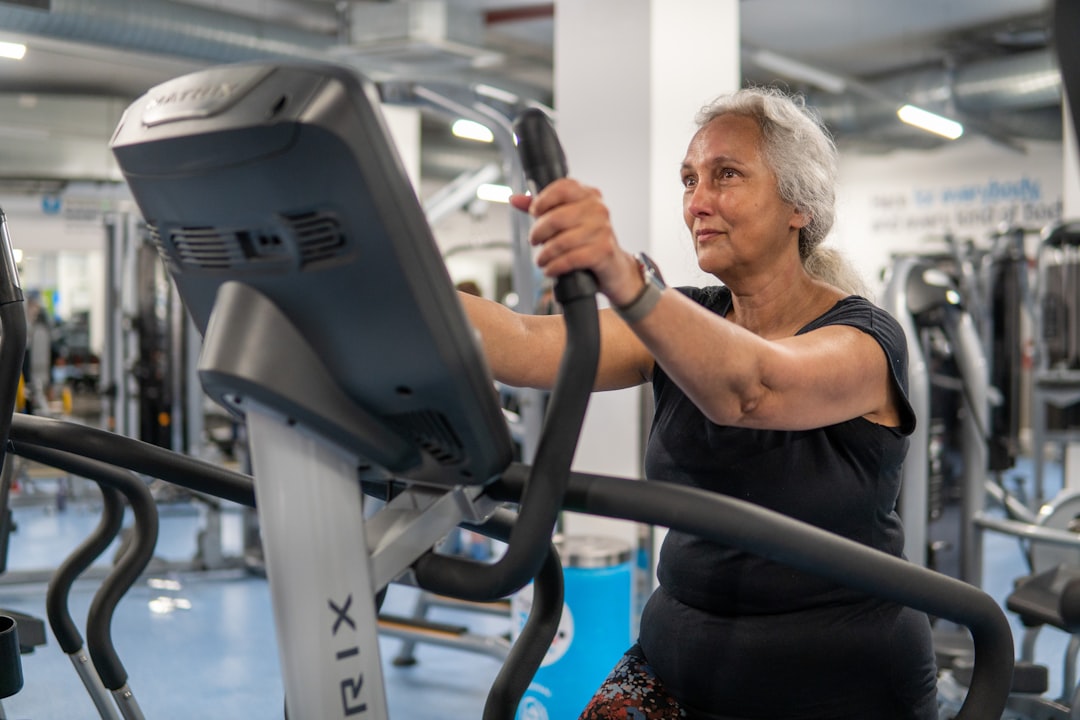
Picture this: a 72-year-old retired schoolteacher named Margaret who used to walk five miles a day without breaking a sweat. By the time she turned 70, she noticed climbing stairs left her breathless and her grocery bags felt impossibly heavy. Her doctor ran tests, and the diagnosis wasn’t a dramatic disease — it was sarcopenia, the gradual, silent erosion of muscle mass that affects nearly half of all adults over 70. Margaret’s story is not unique. It’s unfolding in kitchens, living rooms, and doctor’s offices around the world right now.
So let’s dig into this together — what actually causes sarcopenia in older adults, why it matters more than most people realize, and — most importantly — what can realistically be done about it through targeted exercise therapy.
What Exactly Is Sarcopenia?
The word sarcopenia comes from the Greek: sarx (flesh) + penia (poverty). It was formally recognized as an independent disease (ICD-10 code M62.84) in 2016, but it’s only in the last few years — particularly heading into 2026 — that mainstream healthcare has started treating it with the urgency it deserves. Sarcopenia refers to the progressive loss of skeletal muscle mass, strength, and function that comes with aging.
According to the Asian Working Group for Sarcopenia (AWGS) 2023 revised criteria, a person is considered sarcopenic when they exhibit low muscle mass combined with either low muscle strength (grip strength under 28 kg for men, 18 kg for women) or low physical performance (gait speed under 1.0 m/s). By 2026, updated global screening programs have brought these benchmarks into primary care settings across the US, EU, Japan, and South Korea.
The Root Causes: It’s Not Just “Getting Old”
This is where things get genuinely fascinating — and a little counterintuitive. While aging is the primary backdrop, sarcopenia isn’t simply an inevitable tax on living long. Multiple converging mechanisms drive it:
- Hormonal decline: Testosterone, estrogen, growth hormone (GH), and insulin-like growth factor-1 (IGF-1) all drop significantly after age 60. These hormones are critical for muscle protein synthesis. Without them, your muscles essentially lose their “rebuild” signal.
- Chronic low-grade inflammation (“inflammaging”): Elevated cytokines like IL-6, TNF-α, and CRP create a catabolic environment — meaning the body breaks down muscle faster than it builds it. A 2024 longitudinal study published in The Journals of Gerontology found that older adults with the highest IL-6 levels lost muscle mass at 2.3x the rate of their peers.
- Mitochondrial dysfunction: Aging muscle cells accumulate damaged mitochondria, reducing energy output and accelerating cell death. Think of it as the muscle’s power plants slowly going offline.
- Motor neuron loss: After age 60, humans lose roughly 1% of their alpha motor neurons per year. Fewer motor units means fewer muscle fibers being recruited — even when you try to use your muscles fully.
- Insufficient protein intake: Many older adults eat less than the recommended 1.2–1.6 g of protein per kg of body weight daily. Their digestive systems also become less efficient at absorbing amino acids — a phenomenon called anabolic resistance.
- Physical inactivity: This one compounds everything. Disuse accelerates atrophy at a cellular level. Even two weeks of bed rest can cause older adults to lose as much muscle as younger people lose in two months.
- Comorbid conditions: Diabetes, heart failure, COPD, and depression all independently accelerate muscle loss through overlapping metabolic and behavioral pathways.
By the Numbers: How Big Is This Problem in 2026?
Let’s ground this in some real data, because the scale of the issue is genuinely staggering:
- The global prevalence of sarcopenia in adults over 60 is estimated at 10–27%, depending on diagnostic criteria used (source: Journal of Cachexia, Sarcopenia and Muscle, 2025 meta-analysis).
- In South Korea — a country that has become a leading research hub for sarcopenia due to its rapidly aging population — national health surveys from 2025 report sarcopenia affecting approximately 13.1% of men and 11.8% of women over age 65.
- Sarcopenic individuals have a 2–4x higher risk of falls and fractures, and a significantly increased risk of hospitalization, metabolic syndrome, and all-cause mortality.
- The economic burden in the United States alone is projected to exceed $40 billion annually by 2027, primarily through fall-related hospitalizations and long-term care costs.
Exercise Therapy: The Most Powerful Tool We Have
Here’s the genuinely good news — and I want to be specific here, because vague advice like “just exercise more” isn’t useful. The science on exercise interventions for sarcopenia has matured enormously by 2026, and we now have very clear guidance on what works.
Resistance Training (The Gold Standard)
Progressive resistance training (PRT) is, without question, the most evidence-backed intervention for sarcopenia. A landmark 2025 meta-analysis in The Lancet Healthy Longevity (covering 87 randomized controlled trials and 6,400+ older adults) confirmed that PRT performed 2–3 times per week for at least 12 weeks produces statistically significant gains in muscle mass, grip strength, and functional mobility — even in adults over 80.
The key principles for older adults are:
- Progressive overload: Starting light is fine, but the resistance must gradually increase. The body only adapts to challenge.
- Multi-joint compound movements: Squats, leg press, seated rows, and chest press recruit more motor units than isolation exercises.
- Velocity-based training: Moving the weight with intent and speed (even if it moves slowly) recruits fast-twitch Type II muscle fibers — exactly the ones lost fastest in aging.
- Frequency: 2–3 sessions per week with at least 48 hours of recovery between sessions targeting the same muscle groups.
- Supervision matters: A 2025 study from the University of Tokyo found that supervised PRT programs produced 34% greater muscle mass gains compared to unsupervised home programs over 6 months.
Aerobic Exercise: The Supporting Cast
While resistance training takes the lead, aerobic exercise plays an important supporting role by improving mitochondrial function, reducing inflammation markers, and enhancing cardiovascular efficiency. Walking programs, cycling, and swimming are excellent low-impact options. High-Intensity Interval Training (HIIT) adapted for older adults — sometimes called “silver HIIT” — has shown promising results in boosting mitochondrial biogenesis in people over 65.
Balance and Functional Training
Tai Chi, yoga, and balance board exercises specifically target the neuromuscular coordination deficits that make falls so dangerous. South Korean national health programs and Japanese kaigo yobou (care prevention) initiatives have integrated these approaches into community center programs with measurable reductions in fall rates.
Real-World Examples: What’s Working Globally in 2026
South Korea’s SMRC Program: Since 2024, South Korea’s National Health Insurance Service has expanded the Sarcopenia Management and Rehabilitation Centers (SMRC) model to over 180 community health centers. Participants aged 65+ receive personalized 16-week exercise prescriptions combined with nutritional counseling. Early outcome data from 2025 shows a 22% average improvement in grip strength and a 19% reduction in fall incidents among program completers.
Japan’s “Locomotive Syndrome” Initiative: Japan’s orthopedic community coined the term locomotive syndrome to encompass sarcopenia, osteoporosis, and joint disease together. Their national screening tool, the 25-question “Locomo 25,” is now used in annual health checkups, and community gyms specifically designed for older adults (called gen-ki stations) have expanded to over 3,000 locations nationwide.
US Medicare’s 2025 Exercise Benefit Expansion: Starting in early 2025, Medicare expanded coverage for medically supervised exercise programs for beneficiaries diagnosed with sarcopenia, frailty, or fall risk. This policy shift was partly driven by data showing that every $1 invested in exercise therapy saves approximately $3.20 in downstream fall-related medical costs.
European SarQoL Framework: Across the EU, the Sarcopenia Quality of Life (SarQoL) questionnaire has been integrated into geriatric assessments in 14 countries, allowing for standardized tracking of both physical and psychological outcomes of exercise interventions.
Realistic Alternatives for Different Situations
Not everyone has access to a gym or a supervised program, and that’s completely okay. Let’s think through realistic options:
- For those with mobility limitations: Chair-based resistance exercises using resistance bands, water bottles as weights, or bodyweight seated leg extensions are effective entry points. Even light resistance done consistently beats inactivity by a wide margin.
- For those in rural or underserved areas: Telehealth-delivered exercise programs have shown surprisingly strong results. A 2025 trial in rural Appalachia found that video-guided resistance training sessions produced muscle strength gains within 80% of in-person supervised results.
- For those with comorbidities: Always coordinate with a physician or physical therapist for a tailored program. Conditions like osteoporosis, joint replacements, or heart disease don’t disqualify someone from exercise — they just require modification.
- For caregivers of older adults: Encouraging even 10-minute “movement snacks” throughout the day — standing up from a chair 10 times, walking to the mailbox, light gardening — can contribute meaningfully to maintaining muscle function.
The honest truth is that there is no pharmaceutical shortcut that matches exercise. Several drugs (myostatin inhibitors, selective androgen receptor modulators) are in clinical trials as of 2026, but none have yet achieved approval for sarcopenia treatment. Nutrition — particularly leucine-rich protein sources and vitamin D supplementation — is a critical co-intervention, but it works best when paired with physical activity, not as a replacement for it.
Margaret, by the way? She started a supervised resistance training program at her local senior center in January 2025. Within six months, she was back to carrying her own groceries — and she’d found a new community of people who, like her, refused to accept muscle loss as their destiny.
Editor’s Comment : Sarcopenia is one of those conditions that sneaks up quietly but has a thunderous impact on quality of life. The encouraging part — and I genuinely mean this — is that the human body’s capacity to rebuild muscle responds to the right stimulus at virtually any age. The research in 2026 isn’t just hopeful; it’s actionable. If there’s one takeaway here, it’s this: starting a resistance training program at 65, 70, or even 80 is not too late. It’s actually one of the highest-return health investments a person can make. Don’t wait for the diagnosis — start moving with purpose today.
태그: [‘sarcopenia treatment 2026’, ‘muscle loss in elderly’, ‘exercise therapy for seniors’, ‘resistance training older adults’, ‘aging and muscle health’, ‘sarcopenia causes prevention’, ‘senior fitness program’]