Let me take you back to early 2026, when drone strikes near key oil infrastructure in the Persian Gulf sent shockwaves through global markets almost overnight. Within 48 hours, semiconductor stocks — from memory chips to logic fabs — dropped between 4% and 9% across major indices. Investors who had been riding the AI-driven chip wave suddenly found themselves asking: wait, what does the Middle East have to do with my NVDA shares? As it turns out, quite a lot. Let’s think through this together.
Why Middle East Instability Hits Semiconductor Stocks Harder Than You’d Expect
On the surface, chips and crude oil seem like they live in different universes. But dig a little deeper and the connections multiply fast. Here’s what’s actually happening under the hood:
- Energy cost sensitivity: Semiconductor fabrication is one of the most energy-intensive manufacturing processes in the world. TSMC’s fabs in Taiwan, Samsung’s plants in South Korea, and Intel’s facilities in the U.S. all consume enormous amounts of electricity. When oil prices spike due to regional conflict, energy costs ripple into operating margins within one to two quarters.
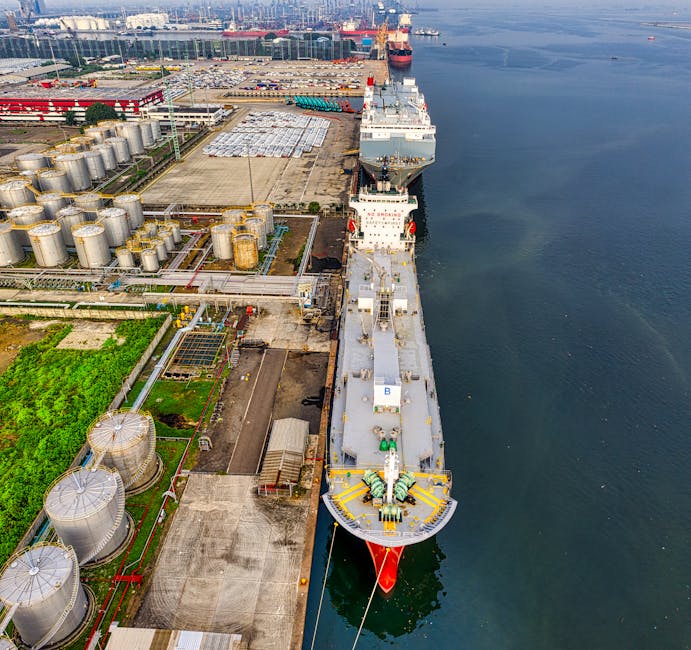
- Shipping lane disruptions: The Strait of Hormuz handles roughly 21% of global petroleum liquids. Any escalation that throttles this corridor can delay chemical shipments — including ultra-pure hydrogen peroxide and specialty gases — that are critical to chip manufacturing.
- Risk-off sentiment: Geopolitical flare-ups trigger institutional investors to rotate out of high-beta growth stocks (hello, semiconductors) and into safe havens like gold, U.S. Treasuries, and the Japanese yen. Even if your chip company has zero direct exposure to the Middle East, its stock price takes a hit purely from market psychology.
- Oil-linked sovereign wealth funds: Gulf Cooperation Council (GCC) sovereign wealth funds — including Saudi Arabia’s Public Investment Fund and Abu Dhabi’s ADIA — have quietly become significant holders of global tech equities. Conflict-driven capital reallocation at home can mean unexpected sell-offs in chip stocks abroad.
The Data Picture in 2026: Where Volatility Is Actually Coming From
According to data tracked through Q1 2026, the PHLX Semiconductor Index (SOX) has shown a beta correlation of approximately 0.67 with the CBOE Volatility Index (VIX) during geopolitical spike events — notably higher than its 10-year average beta of 0.54. In plain terms: when global fear goes up, semiconductors now fall harder and faster than they used to. That’s largely because the sector has attracted a massive influx of retail and momentum investors since the AI supercycle began in earnest.
Meanwhile, Brent crude’s price volatility has been running at roughly 28% annualized in early 2026, compared to a 10-year average closer to 22%. Higher baseline volatility in oil means faster and more severe transmission of shocks into energy-sensitive sectors — and semiconductors are firmly in that club.
Real-World Examples: How Investors Have Navigated This Before
Let’s look at some instructive cases — because history, even recent history, is a genuinely useful teacher here.
Samsung Electronics (005930.KS) — The Korean Playbook: During periods of elevated Middle East tension in 2026, Samsung’s institutional investors in Korea have increasingly used options collars (buying protective puts while selling covered calls) on their semiconductor holdings. This isn’t exotic hedging — it’s a practical way to cap downside while staying in the game if tensions de-escalate quickly. The Korean National Pension Service, which holds a significant Samsung position, reportedly increased its derivatives hedging budget by approximately 15% in response to Q1 2026 volatility.
TSMC (TSM) — The Geographic Diversification Story: TSMC’s ongoing fab expansion into Arizona and Japan isn’t just about U.S.-China tensions — it’s also about reducing single-point supply chain fragility. From a stock risk perspective, TSMC’s expanding geographic footprint makes it comparatively more resilient to Middle East-originated supply shocks than pure-play logic chip stocks with no geographic diversification in manufacturing.
ASML (ASML.AS) — The Equipment Maker’s Hidden Resilience: ASML, the Dutch company that makes the EUV lithography machines every leading fab depends on, tends to show lower short-term volatility during geopolitical events compared to fabless chip designers. Why? Because its backlog-driven revenue model insulates it from immediate demand shocks. This makes it a favorite “defensive position within semiconductors” for European institutional investors during Middle East flare-ups.
Practical Risk Management Strategies You Can Actually Use
Alright, so we’ve established the risks are real and multidimensional. Now let’s talk about what you can realistically do — whether you’re managing a $10,000 retail portfolio or a much larger institutional book.
- Diversify within the semiconductor value chain: Don’t hold only fabless designers (high volatility) or only pure memory makers. Balance exposure across equipment makers (like ASML, Lam Research), IDMs (integrated device manufacturers like Intel or Samsung), and fabless designers (NVIDIA, AMD, Qualcomm). Each segment responds differently to geopolitical shocks.
- Use inverse ETFs as short-term hedges: Products like SOXS (3x inverse SOX ETF) can serve as tactical hedges during elevated tension periods — but treat these as insurance, not speculation. They decay in value over time due to daily rebalancing, so holding them long-term is costly.
- Watch the oil-VIX relationship as a leading indicator: Before geopolitical risk fully prices into chip stocks, Brent crude typically spikes first. Setting price alerts for Brent at key resistance levels (currently around $95/barrel for 2026) gives you a heads-up to rebalance before the panic hits semiconductor indices.
- Consider gold or energy exposure as a natural hedge: A small allocation (5–10%) to energy stocks or gold ETFs in a semiconductor-heavy portfolio can partially offset losses during the exact events that hurt your chip holdings. They’re not perfect hedges, but they move in opposite directions at the right moments.
- Assess your time horizon honestly: If you have a 3–5 year horizon, short-term geopolitical volatility in chip stocks is largely noise. The structural AI and advanced logic demand trends don’t reverse because of a 3-month regional conflict. But if you’re within 12 months of needing this capital, trimming exposure during calm periods makes sense — not waiting for the crisis.
The Realistic Alternatives: What If You Want to Reduce Exposure Entirely?
Let’s say you’re genuinely uncomfortable holding concentrated semiconductor risk right now. That’s a completely valid position. Here are some thoughtful alternatives that keep you in the tech growth story without the same volatility profile:
- Semiconductor-adjacent infrastructure plays: Data center REITs, high-voltage transformer manufacturers, and cooling technology companies benefit from the same AI-driven chip demand — but with significantly lower beta to geopolitical events.
- Broad tech ETFs with sector caps: Products like QQQ have semiconductor exposure but cap any single sector at a portfolio level, so you’re not as concentrated as owning individual chip stocks.
- Defense and cybersecurity stocks: Somewhat counterintuitively, elevated Middle East tensions tend to be tailwinds for defense tech companies. Companies working in electronic warfare systems and cybersecurity infrastructure often benefit from the same geopolitical environment that hurts semiconductor consumer demand.
Conclusion: Risk Management Is About Staying in the Game
The most important thing to understand is this: the goal of risk management during Middle East instability isn’t to predict which way the conflict goes — nobody consistently gets that right. The goal is to ensure that a worst-case scenario doesn’t force you out of your long-term positions at the worst possible moment. Volatility isn’t the same as permanent loss. But panic-selling at the bottom of a geopolitical dip? That is a permanent loss.
Think of your semiconductor portfolio like a ship navigating rough seas. You don’t abandon the ship every time there’s a storm — but you absolutely should check your life vests, reduce unnecessary weight, and make sure you know where the exits are. That’s essentially what good risk management looks like in practice: preparation, not prediction.
Middle East tensions in 2026 are unlikely to derail the multi-year AI chip supercycle. But they will create air pockets of sharp volatility along the way. Navigate them thoughtfully, and those dips might actually become your best entry opportunities.
Editor’s Comment : One thing I keep coming back to when writing about geopolitical risk and tech stocks: the investors who panic least are almost always the ones who did their scenario planning before the headlines hit. If today’s Middle East situation is making you anxious about your chip holdings, that anxiety is actually useful data — it’s telling you your position size might be larger than your true risk tolerance allows. There’s no shame in sizing down. Sleeping well is genuinely part of a sound investment strategy.
태그: [‘semiconductor stocks risk management 2026’, ‘Middle East geopolitical risk investing’, ‘chip stocks volatility hedge’, ‘TSMC Samsung NVIDIA geopolitical exposure’, ‘SOX index risk 2026’, ‘semiconductor portfolio diversification’, ‘oil price impact tech stocks’]